A grave marker could also be a lid
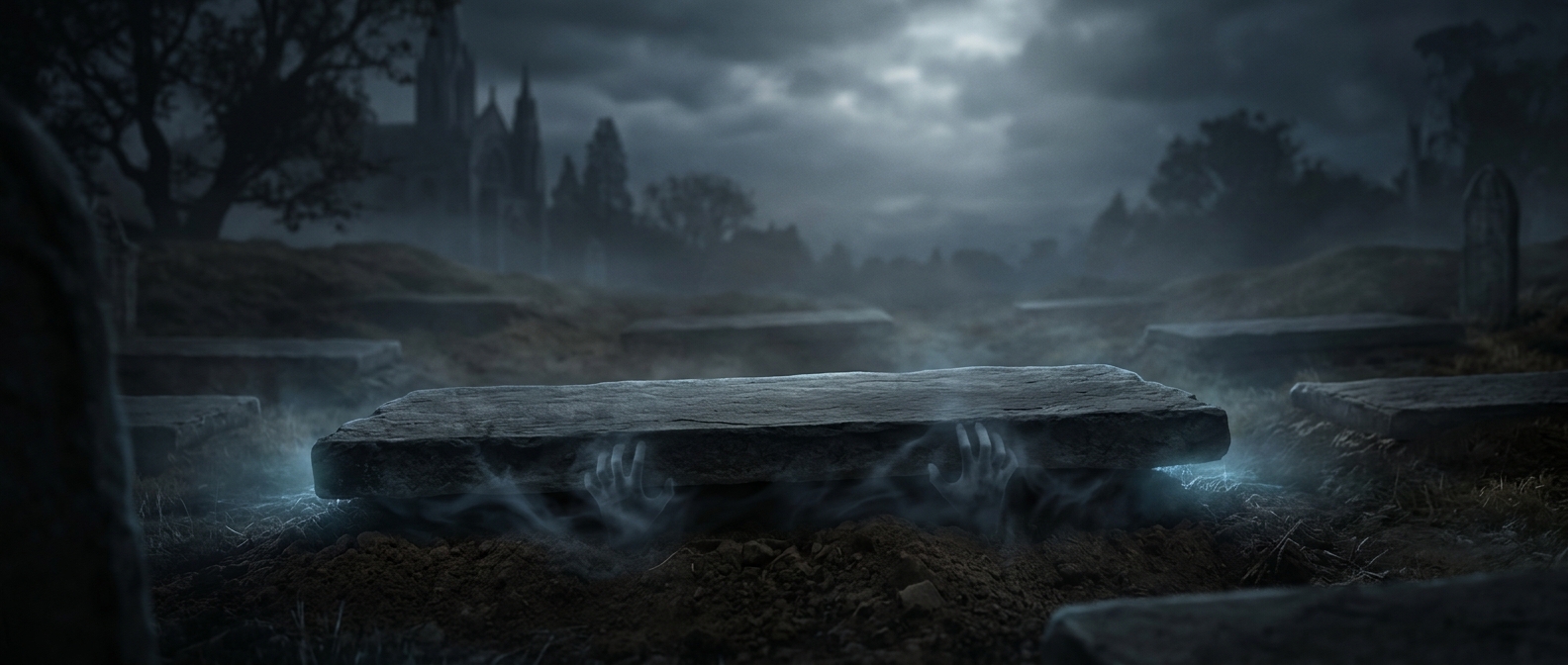
An upright headstone identifies a burial; a heavy slab laid across the grave does something more physical. It covers the place where the body rests, making the stone resemble a lid. In communities where people feared that the dead might rise, that weight could carry a protective meaning: the stone was meant to keep the body below ground.
The belief did not make the slab a simple piece of memorial decoration. Its position and mass mattered. A marker standing beside a grave named or commemorated the person; a slab placed over it turned the grave itself into the focus of the gesture.
Stone made the belief tangible
Granite’s weight gave the idea a visible form. The stone could not guarantee that the dead would remain at rest, but it made the intended barrier unmistakable: earth below, heavy rock above. That is why some flat grave coverings were understood as more than a way to mark a burial. They embodied the hope—or fear—that the boundary between the living and the dead would hold.