A meal could keep a relationship alive
For the Etruscans, burial did not necessarily mark a clean break between the living and the dead. Food placed at a tomb could serve as an offering to the deceased, while a meal shared by mourners near the grave brought the living together in the dead person’s presence. The same act therefore had two audiences: it honored the person who had died and renewed ties among those who remained.
That practice gives funerary banquets more than a decorative meaning. A feast was a familiar social occasion, but at a tomb it also became a way to imagine care continuing beyond death. The dead were treated not simply as absent, but as members of a community whose bond with the living could be maintained through ritual.
The tomb as a lasting place of company
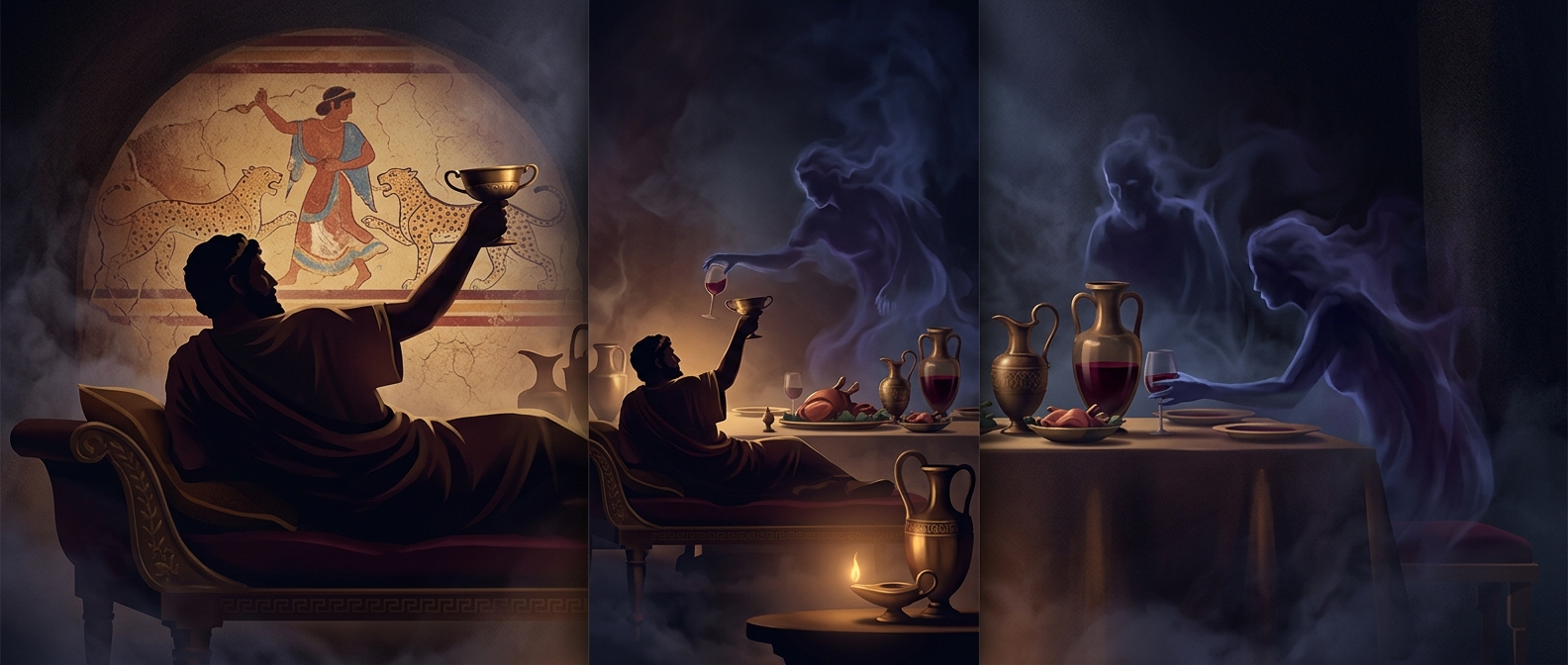
In Tarquinia’s Tomb of the Leopards, painted figures recline at a banquet while musicians play. The scene turns the burial chamber into a setting of continued social life: music, company, and shared food are presented as part of the world awaiting the deceased. Rather than showing death as isolation, the image gives the afterlife the recognizable shape of a feast.
Paintings like this also mattered to the living who entered or gathered around a tomb. They made the connection between ritual and hope visible, preserving a vision of the deceased among companions. The banquet could be both an offering made for the dead and an image of the life the dead were expected to enjoy.