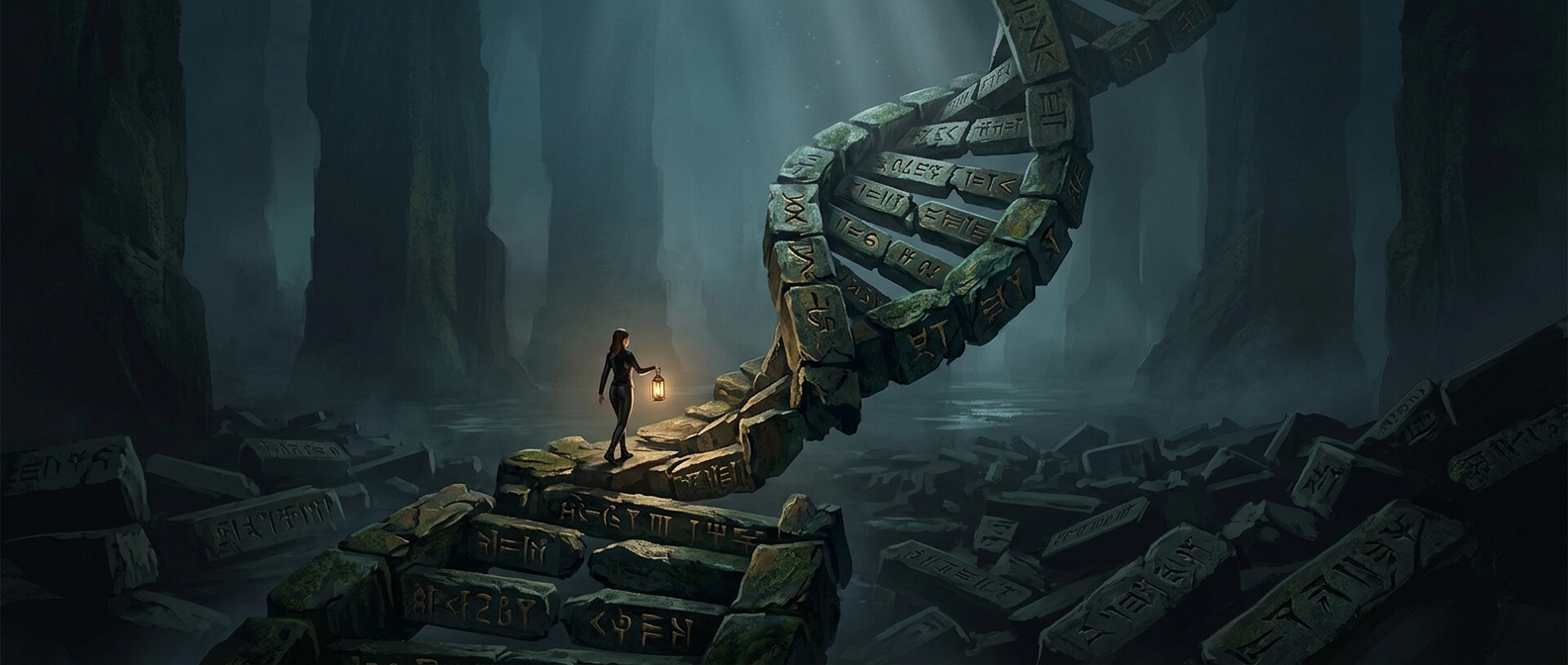
How a viral gene became hereditary
Some of the oldest viral traces in human DNA come from retroviruses. Unlike viruses that simply use a cell and move on, retroviruses copy their genetic instructions into DNA and insert that copy into the cell’s genome. If the infected cell is an egg, sperm, or a cell that later gives rise to one, the insertion can pass to offspring.
Across generations, descendants inherit the insertion as they do other DNA. Most such sequences gradually collect changes that break the instructions needed to make a working virus. They become genetic fossils: recognizable remnants, but generally unable to assemble into infectious particles.
A remnant can still affect its surroundings
A viral insertion does not have to make a virus to matter. DNA contains regulatory stretches that influence when nearby genes are switched on or off, and viral sequences can sometimes supply or alter those controls. In other cases, cells have repurposed a viral gene for a different task.
One striking example is syncytin, a protein involved in joining cells to help form the placenta. Its gene originated from an ancient retrovirus. The viral machinery that once helped a virus merge with a cell was adapted for a role in pregnancy. This is an unusual outcome, not the fate of every viral remnant.
The inheritance is the important part
These sequences are not evidence that a person has an ongoing viral infection. They are part of the genome inherited through family lines, and most are inactive. Their story shows how evolution can preserve a chance insertion: once it enters the reproductive lineage, it can be passed along, altered, silenced—or, occasionally, put to work in a new biological role.
A piece of ancient viral DNA can therefore remain in people not because the virus is still there, but because its genetic trace became part of the material from which later generations were made.