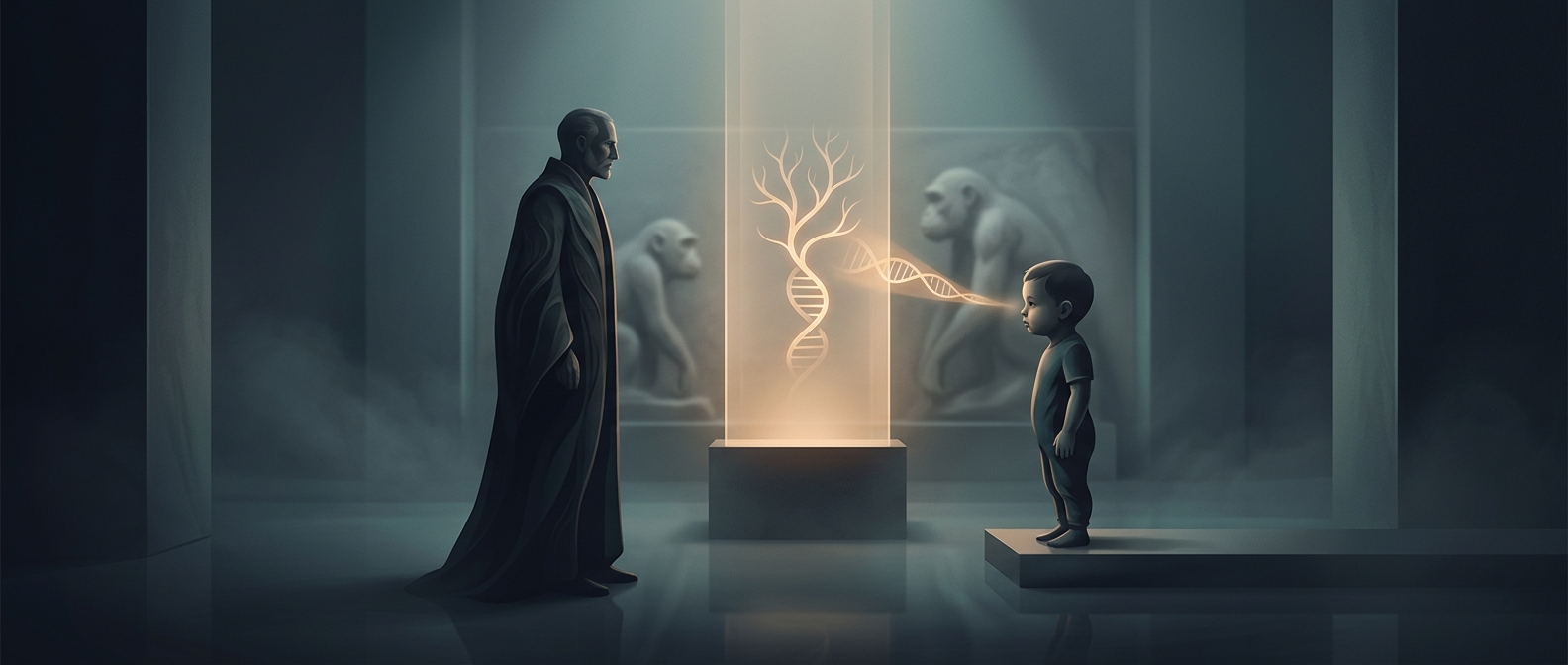
A longer childhood changes the timetable
Human development is spread across more years than it is in many other animals. The body does not simply grow at one steady rate: different tissues and abilities mature on different schedules. In humans, childhood lasts a long time, and reproductive maturity arrives relatively late. That extended timetable gives the brain and body more time to develop while a child depends on caregivers.
Biologists use neoteny for one pattern in which an adult retains features that are juvenile in a related species. It does not mean that a grown person is literally a child, or that every part of the body develops slowly. Rather, evolution can shift the timing of development, so some traits change later—or less—than they do in close relatives.
Time for learning, with a cost
A long childhood creates room for learning skills that cannot be supplied by instinct alone. Children absorb language, social rules, and practical knowledge through repeated interaction with other people. The tradeoff is a prolonged period of dependence: young humans need protection and care well after they can move around on their own.
Maturation also continues after childhood. Hormonal changes at puberty trigger major physical transitions, while some capacities—including aspects of brain development—keep changing into young adulthood. These processes overlap, but they are not the same clock: becoming sexually mature does not mean every system has finished developing.
The result is a species whose growing-up period is unusually extended. A human adult may retain some developmentally youthful characteristics, but the more consequential inheritance is the long stretch in which learning and growth can still be shaped by experience.