The pea is only part of the trick
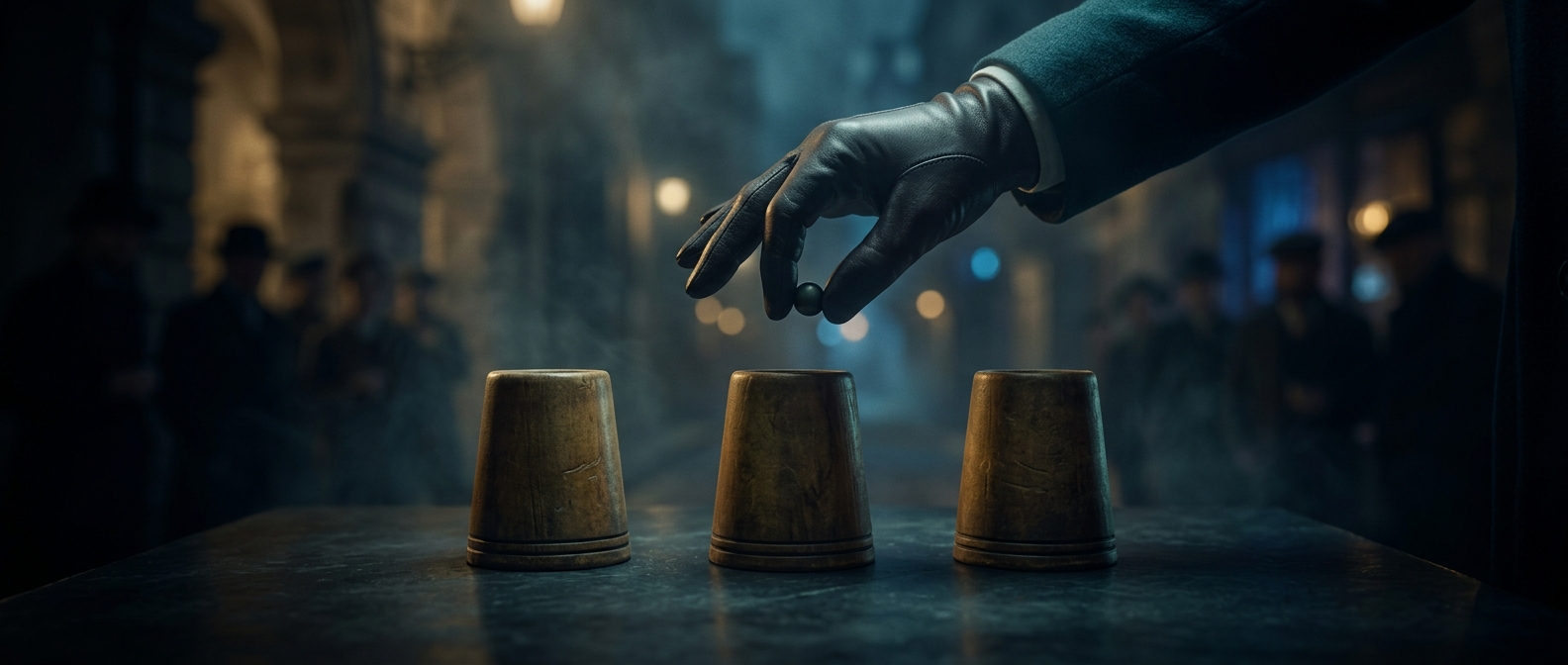
A shell game seems to ask a simple question: Which cup covers the pea? But the operator controls more than the cups. A small, practiced movement can move the pea into a hand or conceal it while the cups continue sliding. The audience then follows the visible objects and mistakes that movement for evidence of where the pea went.
Why watching closely can still fail
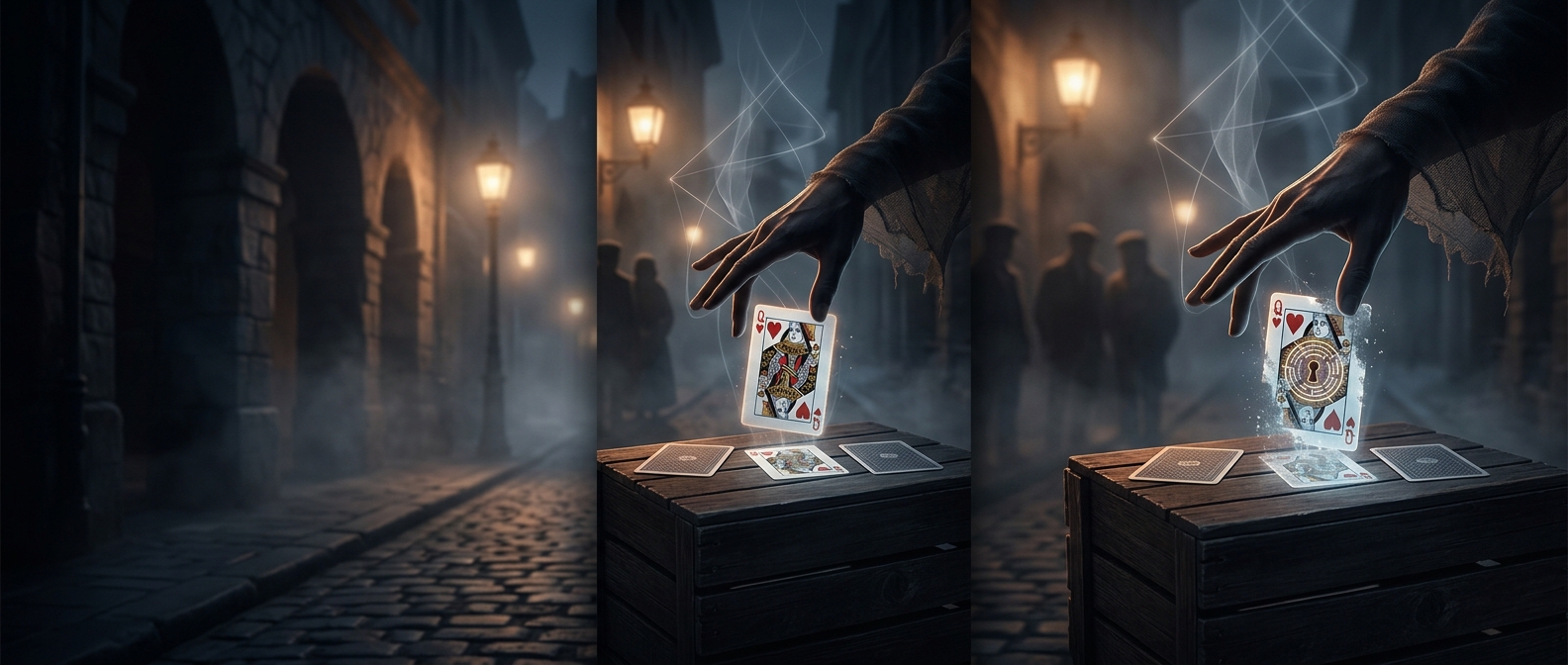
People naturally track the most noticeable action: a cup lifting, a quick shuffle, or a hand sweeping across the table. The crucial move may happen in the same moment, but in a less obvious place. Because the operator’s gestures make the sequence feel continuous, viewers often believe they have watched the pea’s path when they have actually watched only the cups.
This is visual misdirection: attention is guided toward one event while another is hidden in plain sight. The operator does not need to make the pea move impossibly fast; the trick works by making the audience monitor the wrong thing.
The wager changes the experience
In a performance, the puzzle can be enjoyed as a demonstration of how easily attention is steered. In a street game, money and confidence can make the viewer commit to a choice—and encourage them to keep playing after a loss. The revealing question is not just which cup looks right, but whether the pea is still under a cup at all.