A crease turned into a political omen
Palmistry, also called chiromancy, is the practice of interpreting the lines and shapes of a hand as signs of a person’s character or future. Its appeal was not just personal: in a courtly world where war and succession could hinge on uncertain choices, a prediction about victory offered a way to make uncertainty feel readable.
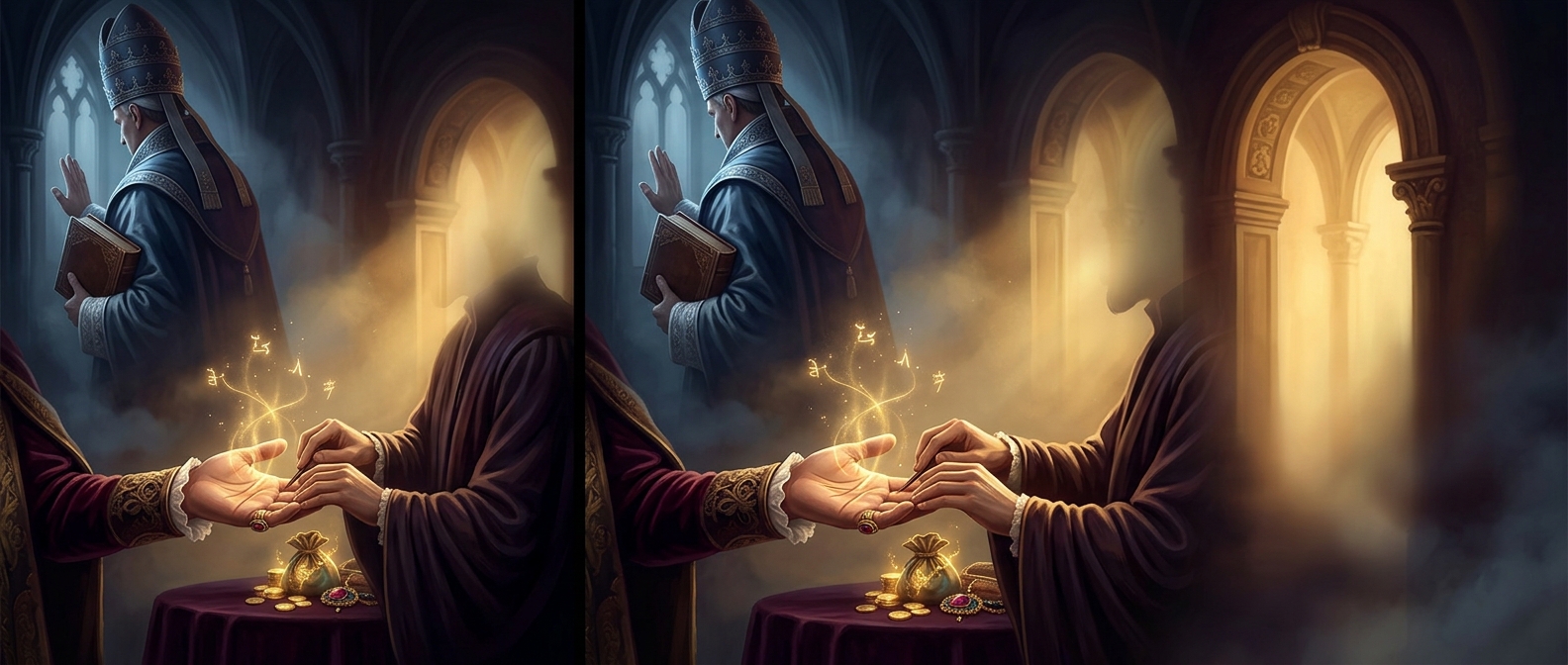
The wrinkle on the thumb mattered because palmists treated bodily marks as a symbolic system. A line did not need to provide evidence in the modern sense; within the practice, it could be read as a clue about fortune. For aristocrats contemplating conflict with France, such a reading could give hope—or apparent confirmation—to a decision already under consideration.
Condemned in principle, sought out in practice
The Catholic Church’s condemnation of palmistry reflected a broader religious objection to divination: claiming to discover the future through signs could be seen as crossing a boundary between human judgment and knowledge that belonged to God. That did not make the practice disappear. Courtly interest in predictions could persist alongside official disapproval, especially when rulers and nobles faced choices whose outcomes were impossible to know in advance.
That tension helps explain why palmistry could attract elite support without becoming an accepted authority. A reading might be privately sought, discussed, or used to bolster confidence, while still remaining religiously suspect. Its influence lay less in proving what would happen than in giving powerful people a vivid sign to interpret when the stakes were high.
A thumb crease could not settle a war—but for someone preparing to risk one, it could make the future seem to have already offered an answer.