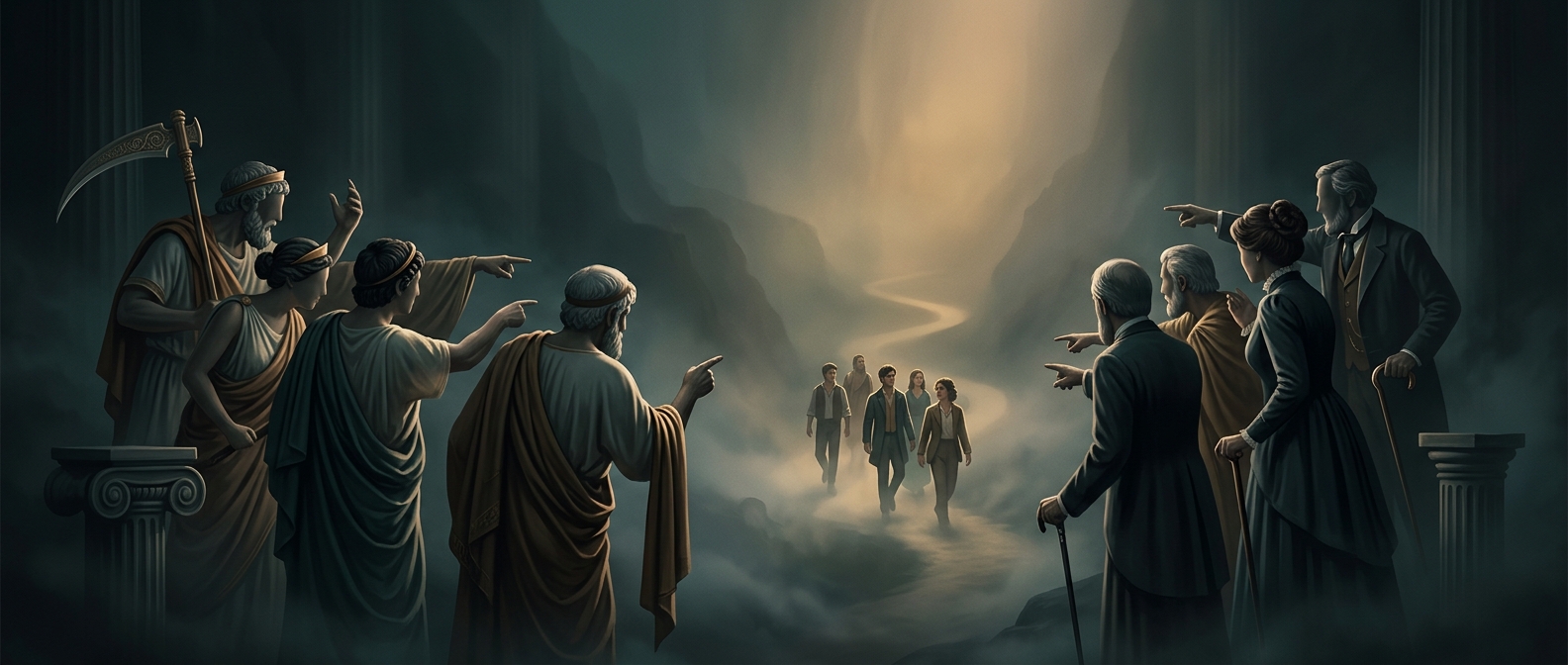
An ancient complaint about unruly youth
In Plato’s Republic, written in the fourth century BCE, Socrates describes a society in which young people show little deference to their elders. The passage appears in a discussion of democracy and political disorder: Socrates uses the breakdown of everyday authority—between children and parents, pupils and teachers—as part of a larger picture of rules losing their force.
That context matters. It is not simply a timeless joke about teenagers; it is also a warning, voiced through a philosophical dialogue, about what happens when a society’s hierarchy seems to be changing. The scene shows that anxiety about young people challenging older standards was already available as a way to talk about wider social change.
Why the complaint keeps returning
Each generation grows up with its own habits, expectations, and ideas about what counts as respect. As those habits change, older people may read unfamiliar behavior as a decline rather than as a difference. Meanwhile, younger people often judge the rules they inherit by standards their elders did not grow up with.
The pattern can repeat without every generation behaving alike. A complaint preserved in writing becomes evidence that the fear itself is old—and later readers can recognize the same argument in their own time. The joke is not that young people never change; it is that adults have long used young people’s supposed decline to describe a world that feels out of their control.