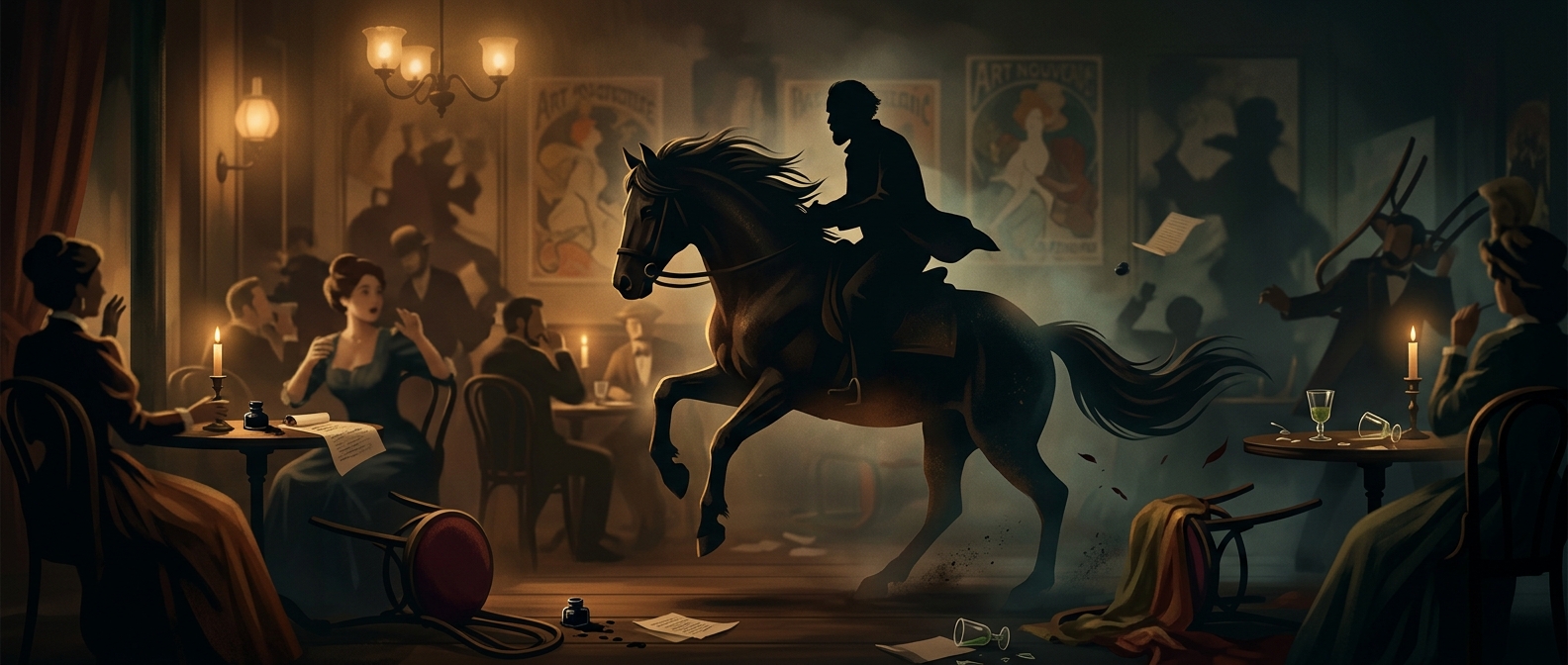
A Horse Was a Poor Prop for a Paris Tavern Entrance
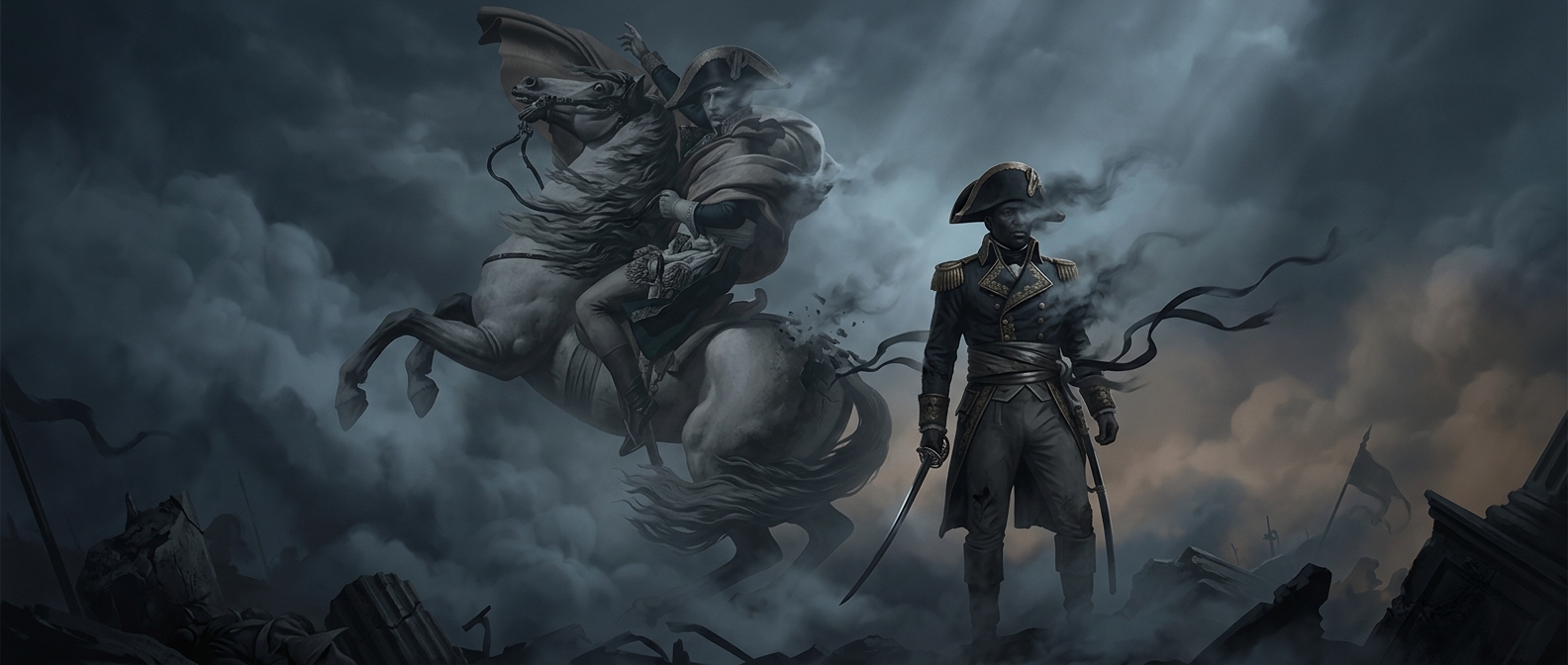
The poet’s plan depended on treating a horse like a theatrical accessory: guide it through the doorway, and the entrance would make its point. But a narrow door in a crowded room is not a neutral passage for a large, unfamiliar animal. People, noise, and tight space can all make a horse wary; an untrained horse is especially unlikely to move smoothly just because someone is urging it forward.
The Trouble Was Built Into the Staging
A grand entrance needs control over timing and movement. A horse brings its own weight, balance, and responses to its surroundings. At a tavern door, there was little room to adjust if it hesitated, turned, or balked. The crowd made the passage harder still: what looked like a dramatic threshold to the poet was a constriction the animal had reason to resist.
That mismatch is the story’s comic engine. The poet imagined the horse as part of the performance; the horse turned the practical conditions of the scene into the performance. The intended spectacle began before anyone got through the door.