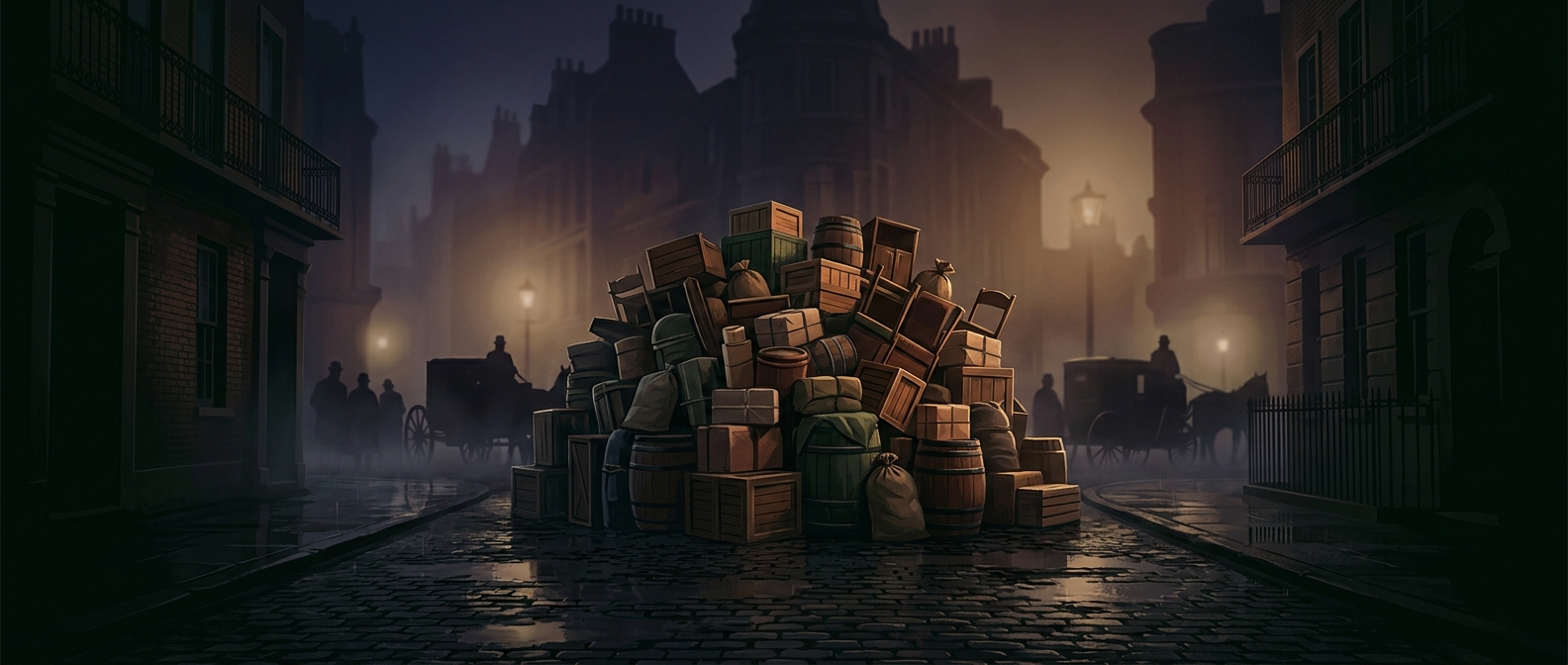
How One Address Became a Delivery Trap
The trick worked because each request looked ordinary on its own. A chimney sweep, a coal seller, a baker, and a piano mover could all reasonably expect that someone at a London house had asked for their service. The prankster’s real coordination happened before the deliveries began: he directed separate businesses to the same destination and arranged for their visits to coincide.
That turned a collection of routine errands into a problem no individual delivery worker could solve. Each arrived expecting to serve one customer, not to join a crowd of unrelated tradespeople. Large or bulky loads made it harder for others to pass, while every new arrival added another obstacle to a street with limited room.
Why the Hoax Could Spread So Quickly
The plan exploited a gap between local trust and shared information. A business had reason to trust the request it received, but no easy way to know that other businesses had received similar instructions. Without a central booking system to flag duplicate appointments, the separate requests stayed separate until they converged in person.
Once the street filled, the consequences multiplied: a blocked route delayed not just the deliveries but ordinary movement through the neighborhood. The prank’s scale came less from any single spectacular shipment than from making many independent people act on the same false premise.
The episode is a vivid reminder that coordination can create a bottleneck even when every participant is simply doing their job. On Berners Street, the joke became visible only when all those individually plausible trips arrived at once.