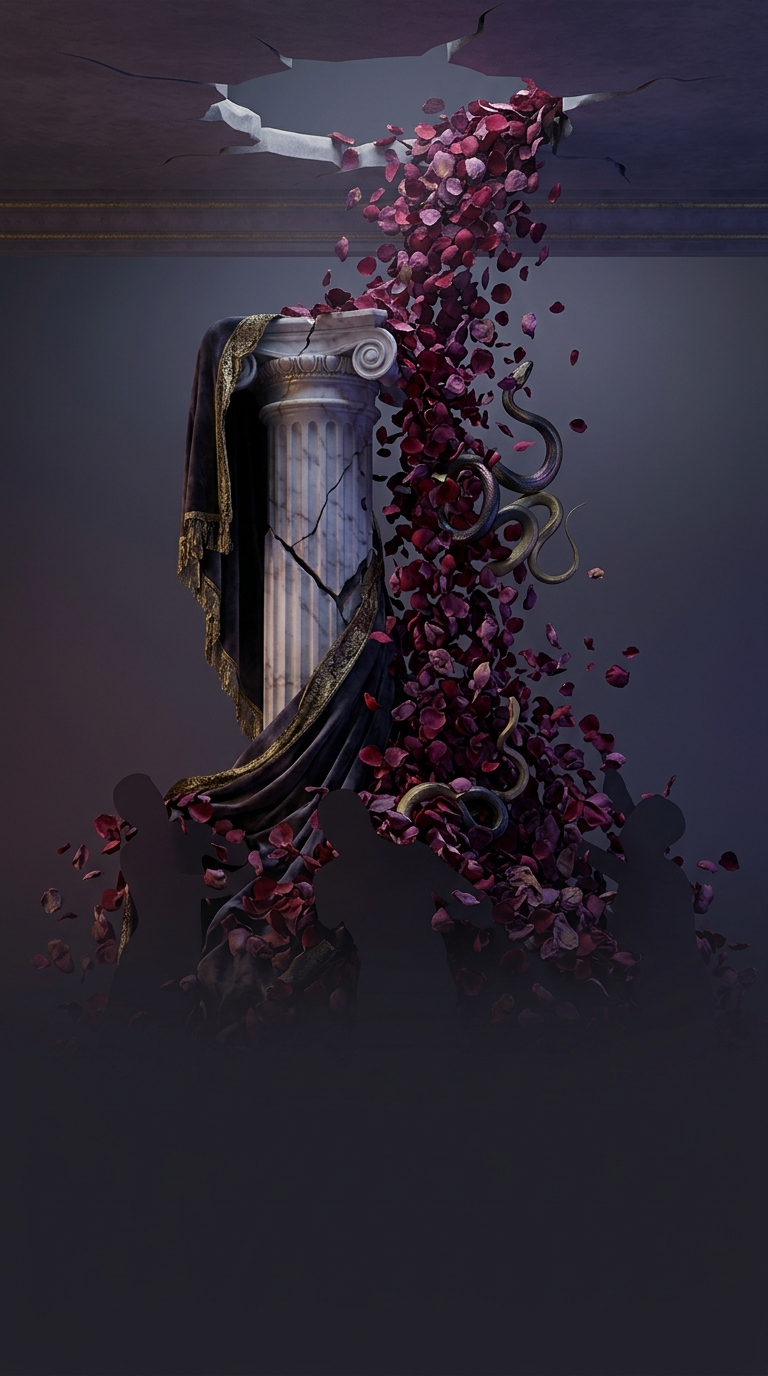
When a Prank Became an Imperial Threat
Stories about Elagabalus describe banquet tricks that crossed the line from humiliating to potentially lethal: guests supposedly buried under a cascade of flower petals, and snakes hurled into a crowd at a gladiatorial event. The tales survive in ancient accounts written by authors hostile to the emperor, so they cannot be treated as verified reports. But their extreme details reveal how those writers wanted readers to understand his rule: as a court where spectacle and danger blurred together.
The Power Behind the Performance
A practical joke among equals depends on everyone being able to object—or leave. An emperor’s guests had no such freedom. A patrician invited to dine with the ruler was inside a political hierarchy, not simply at a party. Laughing along could be a way to stay in favor; protesting could look like defiance. That imbalance made even a staged surprise frightening, especially if guests could not tell whether the danger was real.
The stories also draw on the Roman elite’s anxiety about who deserved to wield power. Elagabalus became emperor as a teenager, and accounts of his reign cast his youth, behavior, and court entertainments as evidence that he was unfit to rule. The lurid banquet episodes turn that criticism into a vivid scene: a ruler treats other people’s safety as part of his amusement.
Whether every detail happened as told is uncertain. The lasting point of the anecdotes is the threat their setting makes imaginable: under an emperor, a joke could be an order, and a guest’s laughter might be the safest response.