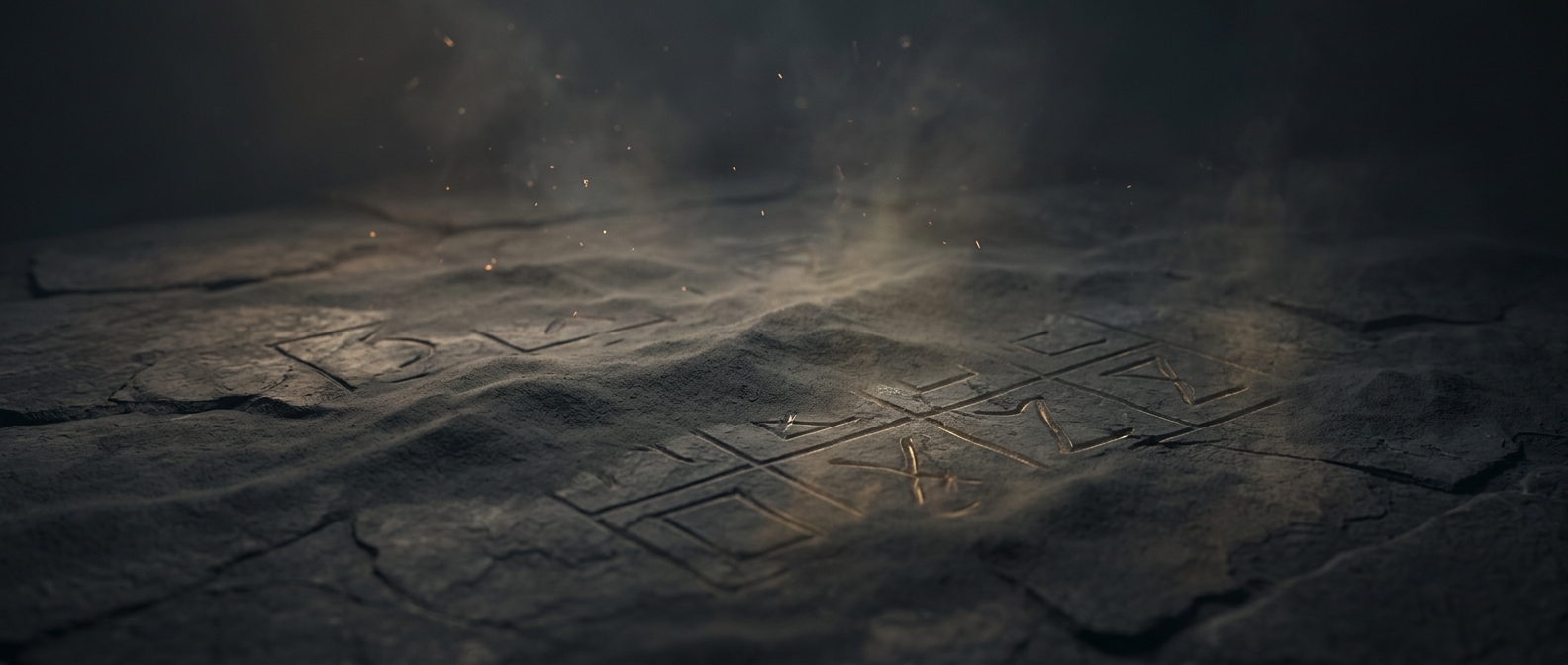
A square built from five words
The pattern is known as the Sator square, after its first word. Written in a five-by-five grid, its lines are SATOR, AREPO, TENET, OPERA, and ROTAS. The arrangement has a neat structural trick: it is symmetrical across its diagonal, so reading the columns produces the same five words as reading the rows. The central word, TENET, is itself a palindrome—a word that reads the same backward and forward.
The words are Latin, but the phrase is hard to translate. Sator can mean “sower” or “creator,” and rotas means “wheels”; Arepo is especially obscure and may be a name or an invented word. That uncertainty makes it difficult to tell what the square was meant to say, if it was meant as a sentence at all.
A pattern with more than one possible use
The square appears in surviving Roman-era inscriptions, including examples at Pompeii, and later turned up in other parts of Europe. Its appearance in different places and periods leaves room for competing explanations: it may have functioned as a word puzzle, a protective charm, or a sign with religious meaning.
A Christian reading comes from rearranging the letters: they can form two intersecting instances of PATER NOSTER—“Our Father”—with the letters A and O left over. Those can be read as Alpha and Omega, the first and last letters of the Greek alphabet. This makes the square intriguing as a Christian symbol, but it does not settle who first made it or what early users intended.
The same compact design could be copied, turned, and interpreted in several ways. Its survival records not a single clear message, but a durable habit of treating letters as both language and pattern.