Why Roman Dodecahedra Resist a Single Explanation
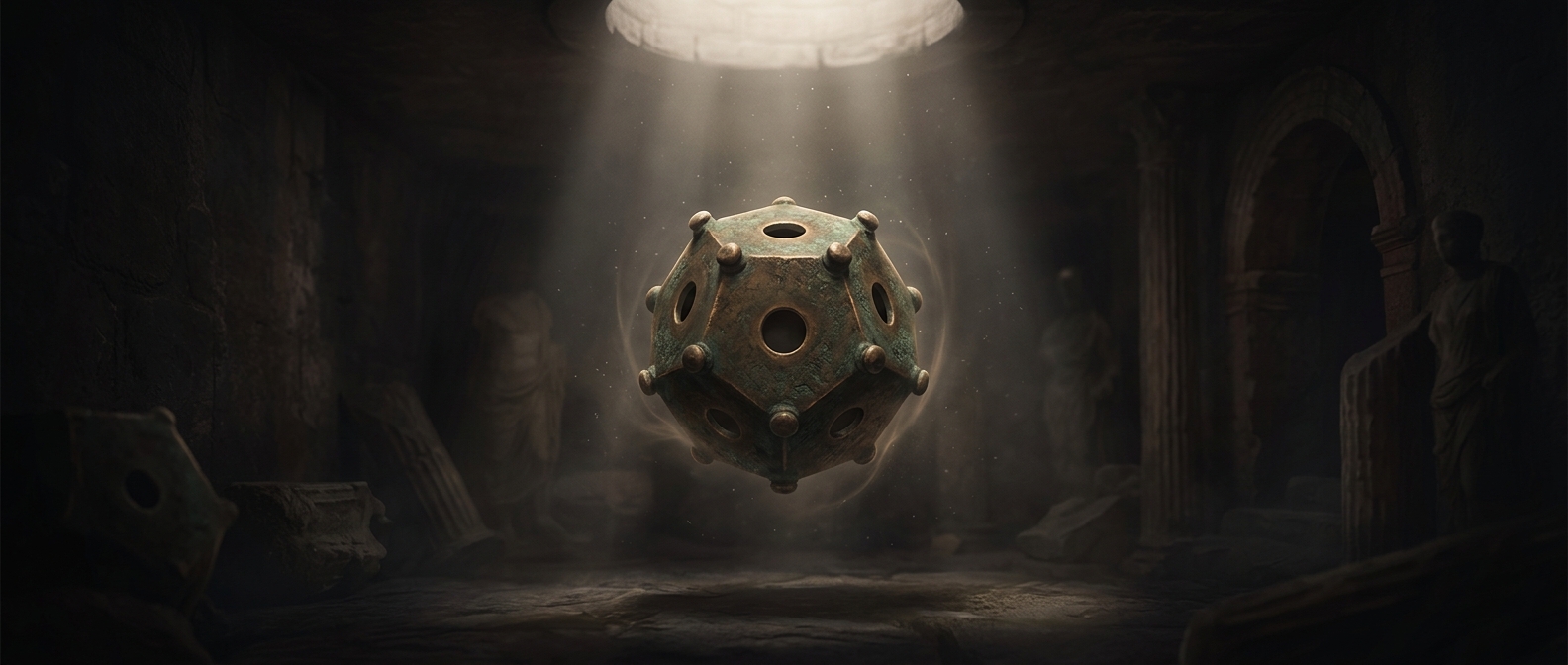
A Roman dodecahedron is a hollow object with 12 five-sided faces, each pierced by a circular opening. Small knobs project from its corners. The holes are not all the same size, and their arrangement varies from object to object. That variation is a clue: any proposed use has to explain not just the striking shape, but why makers produced different combinations of openings.
Shape Offers Clues, Not Instructions
Researchers have suggested that the objects could have served as measuring or surveying tools, candleholders, gaming pieces, or items used in ritual. Each idea makes the shape seem practical in one way. Different-sized holes, for example, could help compare or fit objects; the hollow center and knobs could also suit other kinds of handling or display.
But a plausible use is not the same as a demonstrated one. To identify a tool confidently, archaeologists would hope for clues such as a consistent relationship between its dimensions and a task, distinctive wear, or a clear association with other equipment. The surviving evidence has not established one use that accounts for the range of forms and finds.
The Missing Link
The objects turn up across Europe, but their makers left no surviving instructions explaining what they were for. Without that link between form and practice, the same unusual features can support competing interpretations. A dodecahedron may look like a purpose-built instrument, yet its exact purpose remains unresolved—and any new explanation has to fit the variations, not just the most photogenic example.