A gladiator bout was a contest, not an execution
The arena’s violence was real, but a match was not simply a fight with no rules until one man died. Gladiators trained in specialized fighting styles and were paired for bouts organized around recognizable matchups. A referee, often carrying a staff, could interrupt the action when a fighter broke the rules or needed a pause. His presence made it possible to judge the contest rather than leave every decision to the fighters’ weapons.
Surrender left a decision to the sponsor
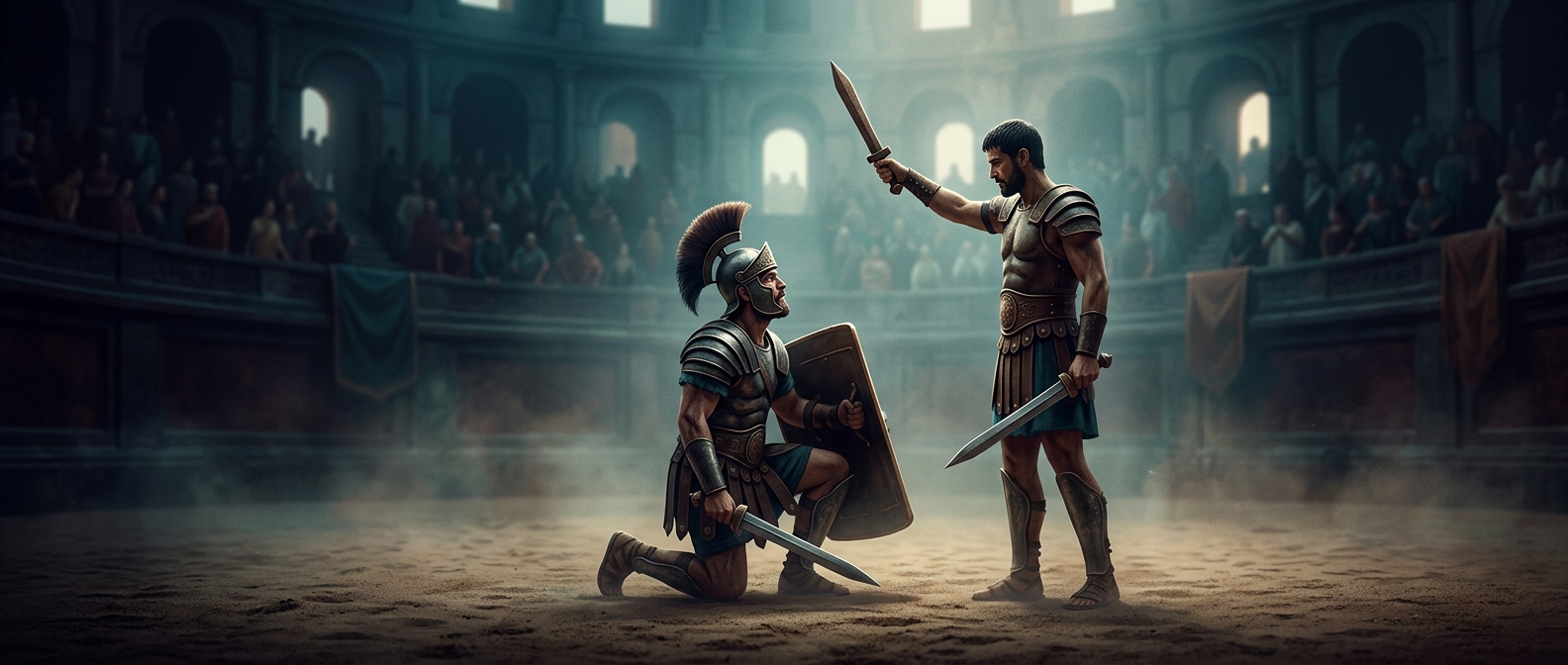
A defeated fighter could signal that he was giving up. That did not automatically guarantee survival: the person sponsoring the event could decide whether to grant mercy or order the fight to continue. The outcome therefore reflected more than the fighters’ skill. It also depended on the sponsor’s judgment, the crowd’s response, and the value of keeping a trained performer alive for future bouts.
That value was substantial. Gladiators needed years of training and care, and their owners or managers had invested in making them arena-ready. A needless death meant losing that investment. At the same time, sponsors had to offer the crowd a compelling spectacle, and a fighter who had surrendered might still be killed. The system balanced the drama of danger against the practical cost of destroying a skilled fighter.
The risk was part of the spectacle
Survival was not assured, and the possibility of death helped make a bout gripping. But treating every contest as a fight intended to end in death misses how the arena worked: trained opponents fought under supervision, and a defeat could end with either mercy or a fatal decision. The fighter who returned to the training school could be expected to face another crowd another day.