How peaches grew from small fruit into orchard crops
The peach familiar today is the result of many generations of cultivation. Its wild ancestors were much smaller and less juicy than modern peaches, making them a very different eating experience from the soft, fragrant fruit sold in summer.
Selection changed the fruit, one harvest at a time
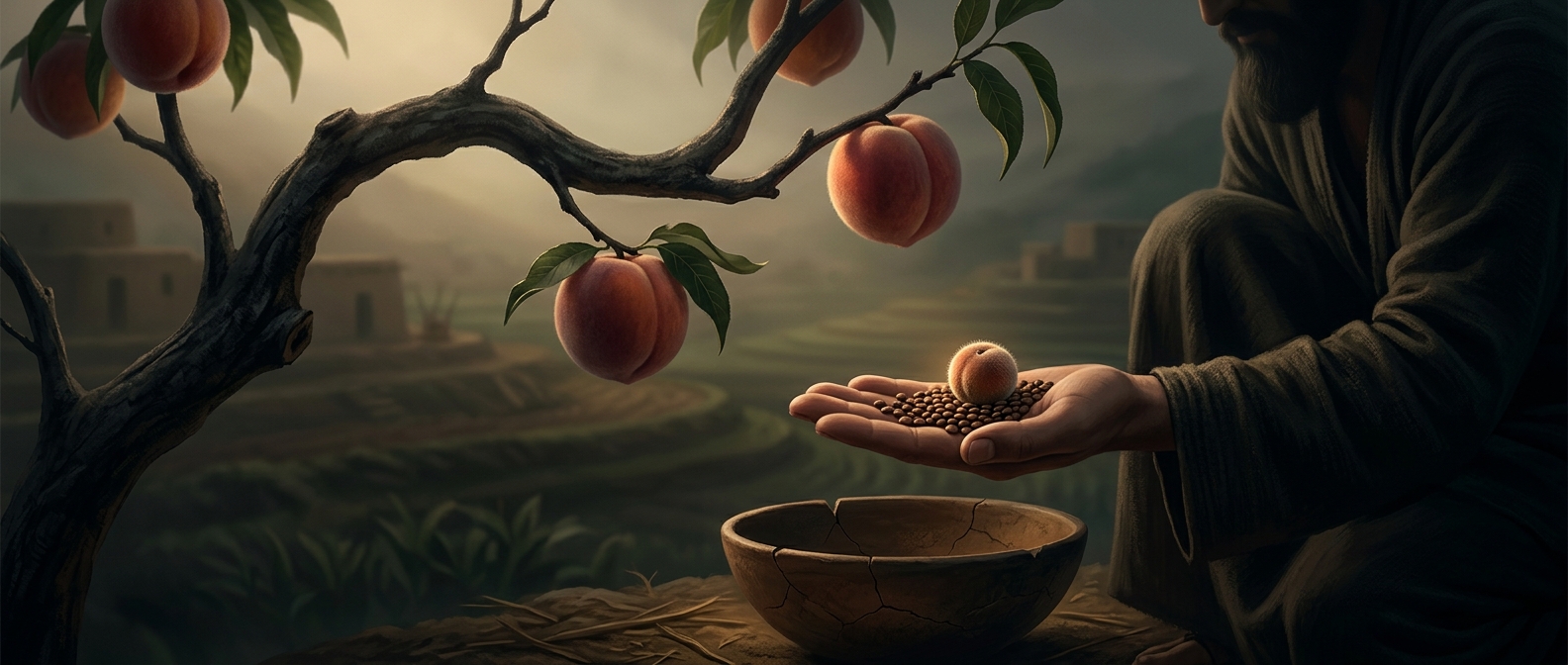
Growers did not need to understand genetics to steer peaches toward larger, sweeter fruit. They could save pits from trees whose peaches had desirable qualities, then plant them. Because offspring vary, some trees produced fruit a little larger or more flavorful than others. Repeating that choice over generations made those traits more common in cultivated orchards.
This slow process is called selective breeding: people choose which plants reproduce based on qualities they want. In peaches, size and sweetness mattered, but so did flesh texture and the ability to produce a useful harvest. A fruit that tasted better was valuable; one that also grew reliably was more practical to cultivate.
A wild fruit becomes a familiar staple
The transformation was gradual, not a single breakthrough. Each generation offered growers another chance to favor a better harvest, and the accumulated changes made peaches plumper and more appealing to eat. The result is a reminder that familiar foods can carry a long history of human choices: a modern peach is not simply a wild fruit picked at its best, but the product of repeated decisions about which trees deserved to be planted again.