When Rain Became a Military Tool
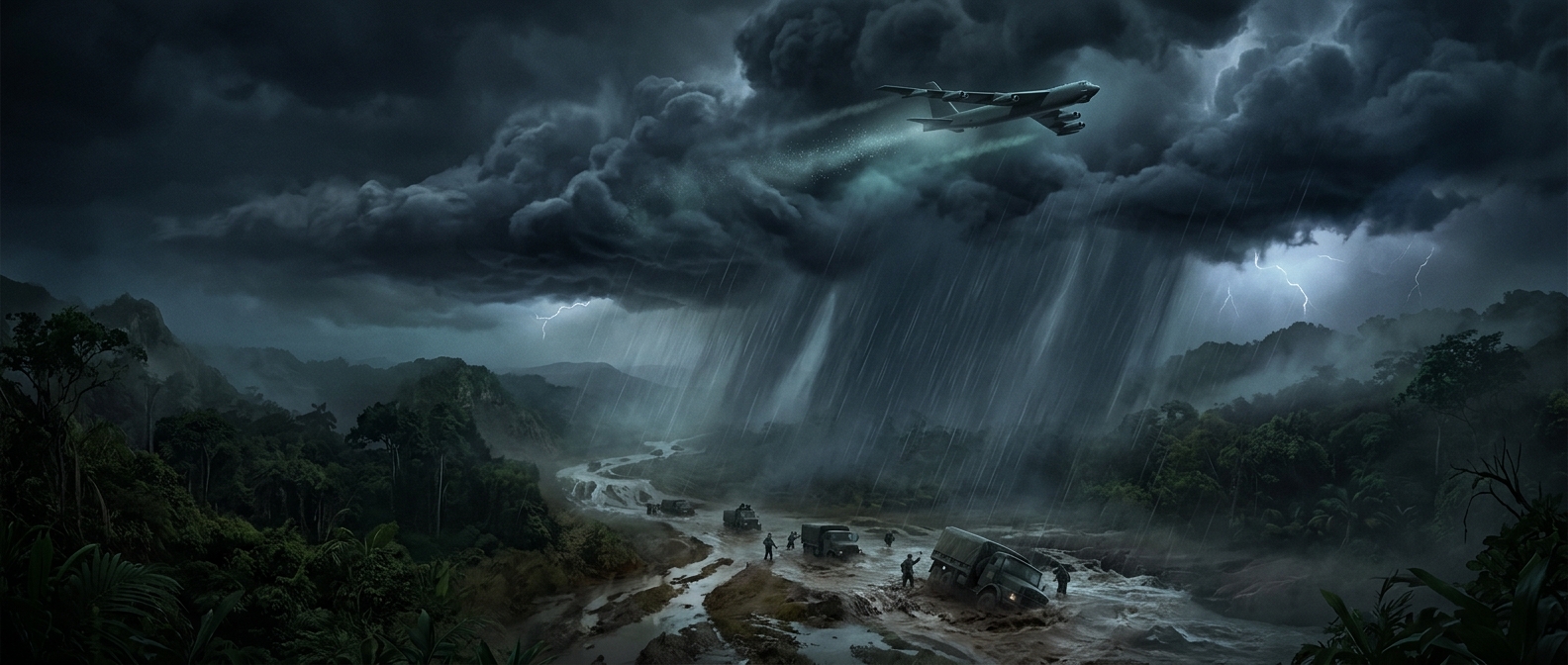
During the Vietnam War, the U.S. military tried to make the monsoon season last longer over parts of Southeast Asia used by North Vietnamese forces to move supplies. The effort, known as Operation Popeye, targeted routes associated with the Ho Chi Minh Trail. Its aim was not to destroy trucks directly, but to make travel harder: rain could turn dirt roads into mud, swell streams, and increase the risk of washouts and landslides.
How Cloud Seeding Was Supposed to Work
Aircraft released silver iodide into suitable clouds. The material can help ice crystals form inside some clouds; as those crystals grow and fall, they may contribute to precipitation. Seeding does not create a storm from clear skies, and its effects depend on cloud conditions. The military plan was to encourage additional rain where clouds were already capable of producing it, extending the period when routes were difficult to use.
That made the project an attempt to interfere with logistics—the movement of people and supplies—by changing the conditions on the ground. A muddy road could slow vehicles, force repairs, or make a crossing impassable, consuming time and effort even when no attack took place.
A Weapon With an Uncertain Effect
The operation ran from 1967 to 1972 and was kept secret while underway. But weather is difficult to control: rainfall varies naturally, and it is hard to separate the effect of seeding from the monsoon itself. The effort illustrates a striking military idea, not a guarantee that cloud seeding could reliably stop traffic.
The larger consequence was political as well as tactical. Using weather modification against an enemy raised concerns about environmental damage and the risks of turning natural systems into weapons. The episode helped bring those concerns into public debate—and left a memorable question about warfare: what happens when the battlefield includes the weather?