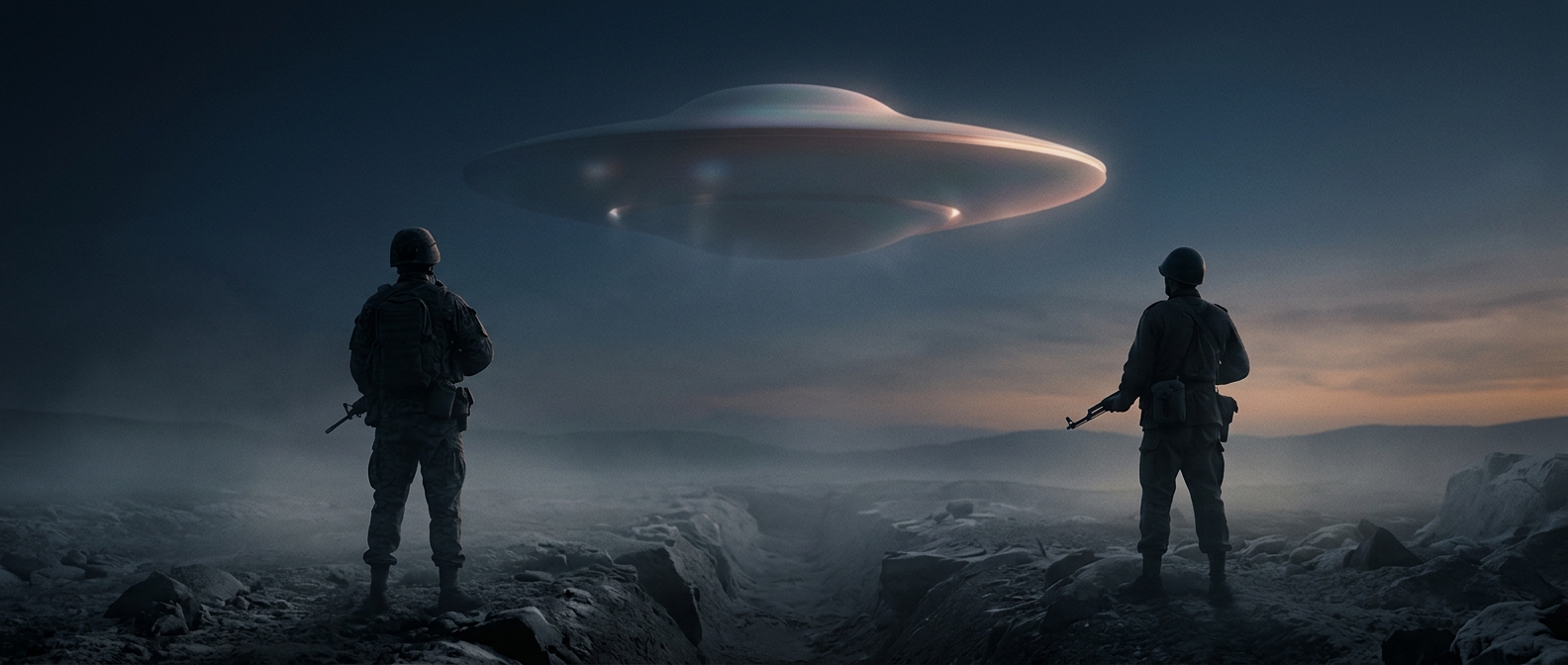
A shared enemy, imagined at Geneva
When Ronald Reagan met Mikhail Gorbachev in Geneva in 1985, their countries were still rivals in an arms race, each wary of the other’s military power. In that tense setting, Reagan raised a startling hypothetical: if Earth faced an invasion from space, would the United States and Soviet Union join forces? Gorbachev later recalled agreeing that they would.
It was not a treaty proposal or a plan for a real threat. Its force came from the contrast it created: the two governments could imagine cooperation more easily when the danger came from beyond either superpower than when it came from each other.
Why the thought mattered
The scenario captured a basic problem of the Cold War. Both sides had reasons to fear the other’s weapons, but that mutual danger also made communication and arms control urgent. An extraterrestrial attacker offered a clean thought experiment: if both countries were in danger, their rivalry would suddenly look less important than their shared survival.
Reagan returned to the idea publicly in a 1987 address to the United Nations, suggesting that an outside threat might make worldwide differences disappear quickly. The alien invasion remained imaginary; the political point was not. By giving cooperation an extreme, vivid test, Reagan made it easier to picture the two adversaries acting as partners—even if only for the length of a hypothetical.