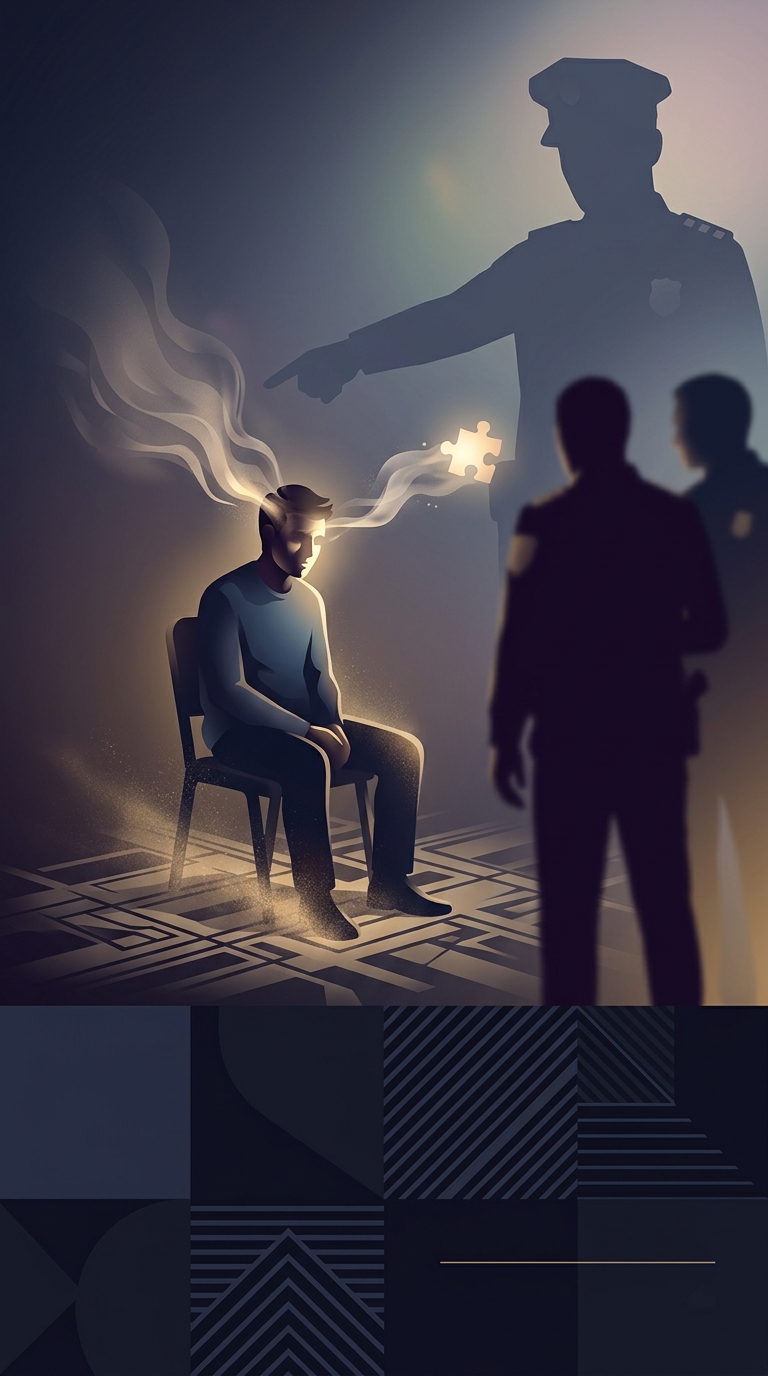
How an interrogation can make innocence feel uncertain
A person who knows they did not commit a crime may still become unsure of what happened—or of what they remember. Under intense questioning, repeated claims that evidence proves guilt can make someone doubt their own memory. Stress, exhaustion, isolation, and a long interrogation can make it harder to think clearly and resist the suggestion that a different account must be true.
This is especially risky when an interrogator presents a confident narrative: the person was at the scene, a witness identified them, or some other evidence points their way. The suspect may begin searching for a way to reconcile those claims with their own recollection. If they already have gaps in memory—for example, about an ordinary evening—suggestions can help fill those gaps with imagined or misremembered details.
Why a confession can seem like the way out
Questioning can also create pressure to choose between two bad-seeming options. An interrogator may imply that denying the accusation will bring harsher consequences, while admitting to a lesser or understandable version will make things easier. The suspect may then treat confession not as a public declaration of guilt, but as a way to stop the questioning, satisfy the interrogator, or get a promised break.
Once a person starts agreeing, the account can grow more detailed. They may repeat information supplied during questioning, or build a story around what they have been told. Those details can sound persuasive later—even to the person who gave the account—without proving that it is true.
How the mistake can compound
Interrogators can sincerely believe they have identified the culprit and interpret hesitation or changing answers as evidence of guilt. That belief may shape the questions, while the suspect’s answers appear to confirm it. A confession can then become the centerpiece of the case, overshadowing contradictory evidence.
The disturbing implication is that confidence and detail are not guarantees of accuracy. A confession has to be checked against evidence independent of the interrogation, especially when it emerged after sustained pressure or information was supplied to the person being questioned.