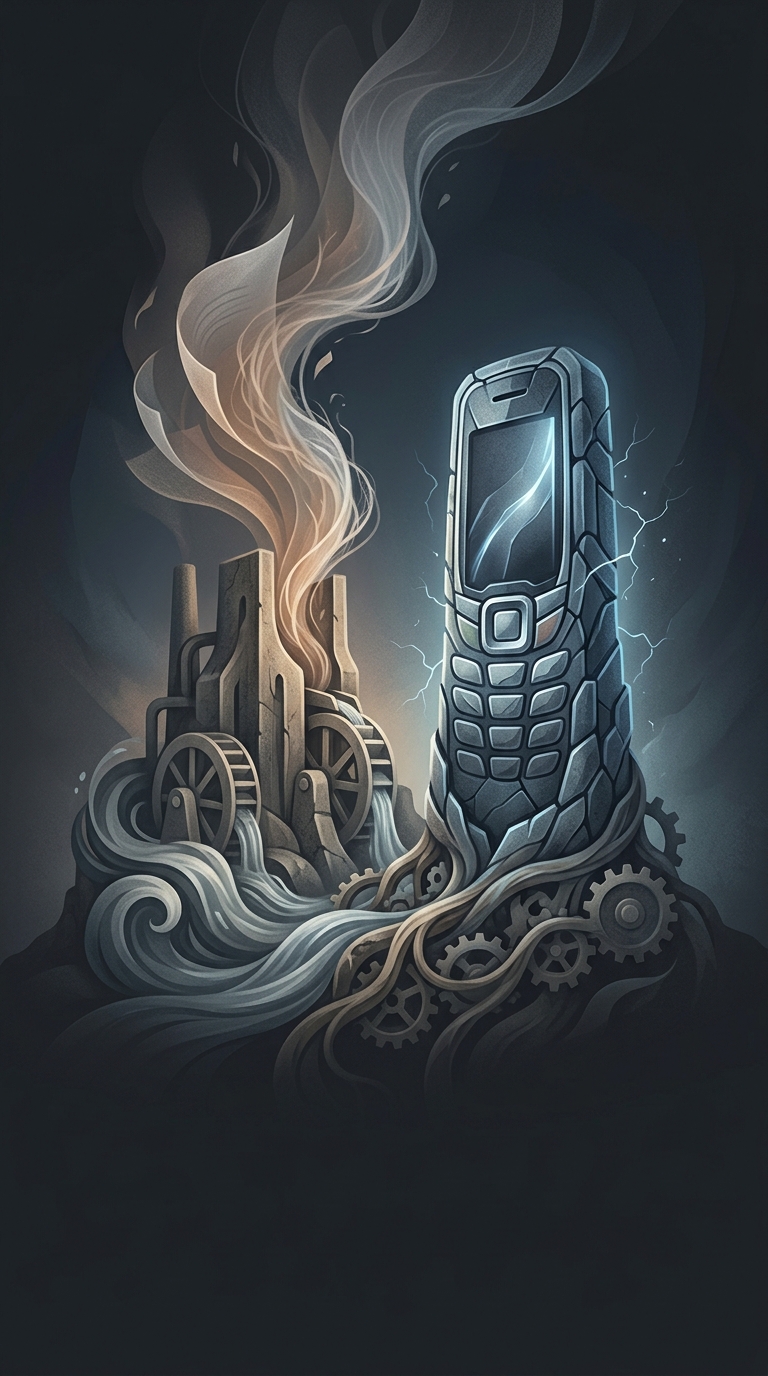
Nokia began with wood pulp and a river-powered mill
In 1865, mining engineer Fredrik Idestam established a wood-pulp mill in southwestern Finland. The mill turned timber into pulp, the fibrous raw material used to make paper. A second mill opened near the town of Nokia, beside the Nokianvirta River, whose flowing water could power industrial machinery. The town’s name eventually became the company’s.
Paper was a practical business in a country rich in forests. Rather than selling only logs, a mill could process wood into a more valuable material for printing and other uses. Waterpower helped make that processing possible before electricity was widely available.
From paper company to industrial group
The company’s later expansion did not happen in one leap from paper to phones. Nokia merged with a Finnish rubber manufacturer and a cable company in 1967, bringing several distinct businesses under one corporate roof. Rubber goods and cables, in turn, connected the company to new industrial markets and technologies.
That history explains why Nokia’s later identity could change so dramatically: it had already grown beyond its original product long before mobile phones became its best-known business. Its starting point, however, was a mill making paper from Finnish wood.