A manpower system built around force
A warship could not fight without people to sail it: crews had to handle ropes and sails, steer, maintain guns, and keep the vessel operating for long stretches. When the Royal Navy could not recruit enough sailors, it used impressment—compulsory enlistment enforced by press gangs. The name came from “pressing” people into service, not from printing.
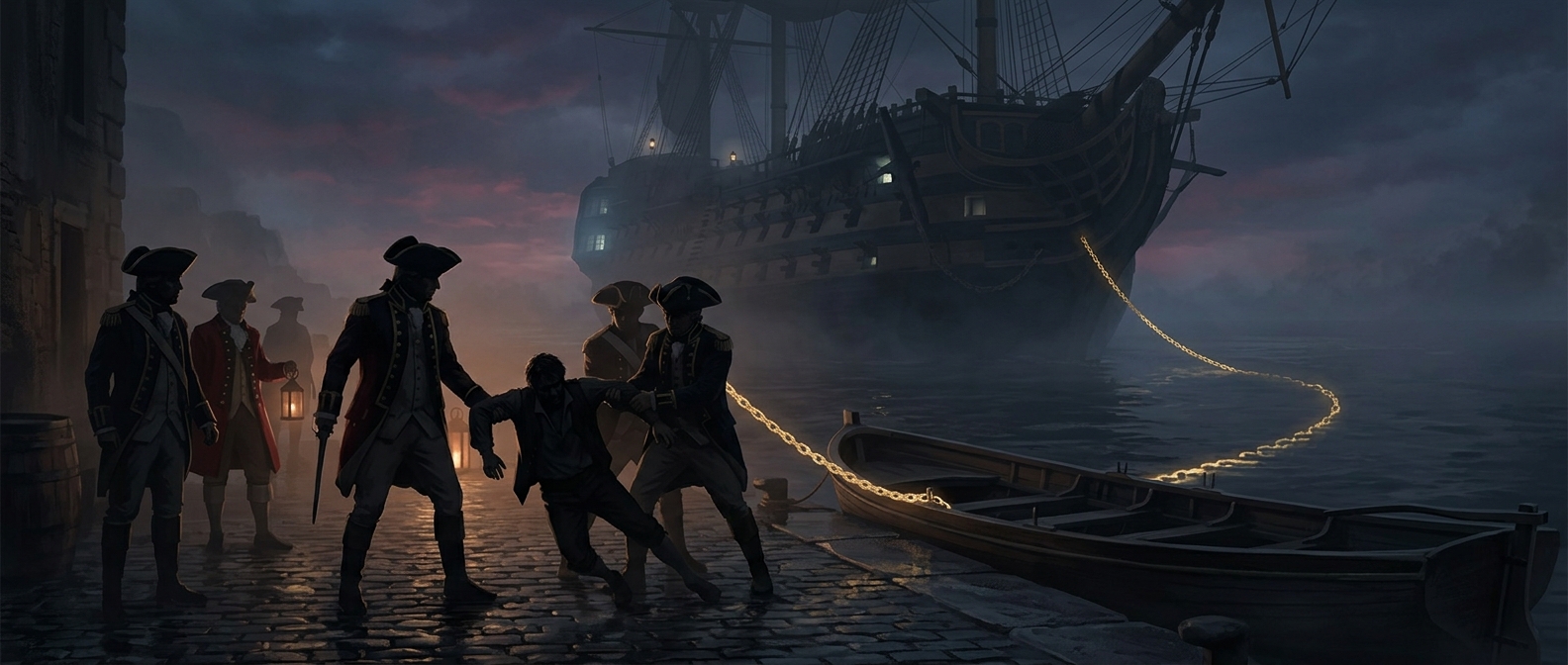
The system focused especially on experienced seamen, whose skills were difficult to replace quickly. Gangs searched ports and waterfront gathering places, then took men to ships or holding points where officials assessed them for service. Pressing was not simply a general draft of everyone in Britain, but the pressure to fill crews could blur the line between finding trained sailors and seizing whoever was available.
When the wrong person was taken
A civilian who had never worked at sea could still be caught up in a raid. In crowded port towns, a gang might mistake someone for a sailor, act on a doubtful claim of experience, or take a person in the rush to meet a quota. The distinction mattered little to the person being dragged away: removal from home and work could mean a sudden, involuntary voyage under naval discipline.
Impressment shifted the cost of naval readiness onto individuals and their communities. A merchant sailor might be removed from a civilian ship; a non-sailor might lose wages and family support without warning. The Navy gained manpower, but the method also made the waterfront a place where ordinary people could fear that a visit to a tavern or a walk through port might end in service at sea.