A failed lock opened a route to safety
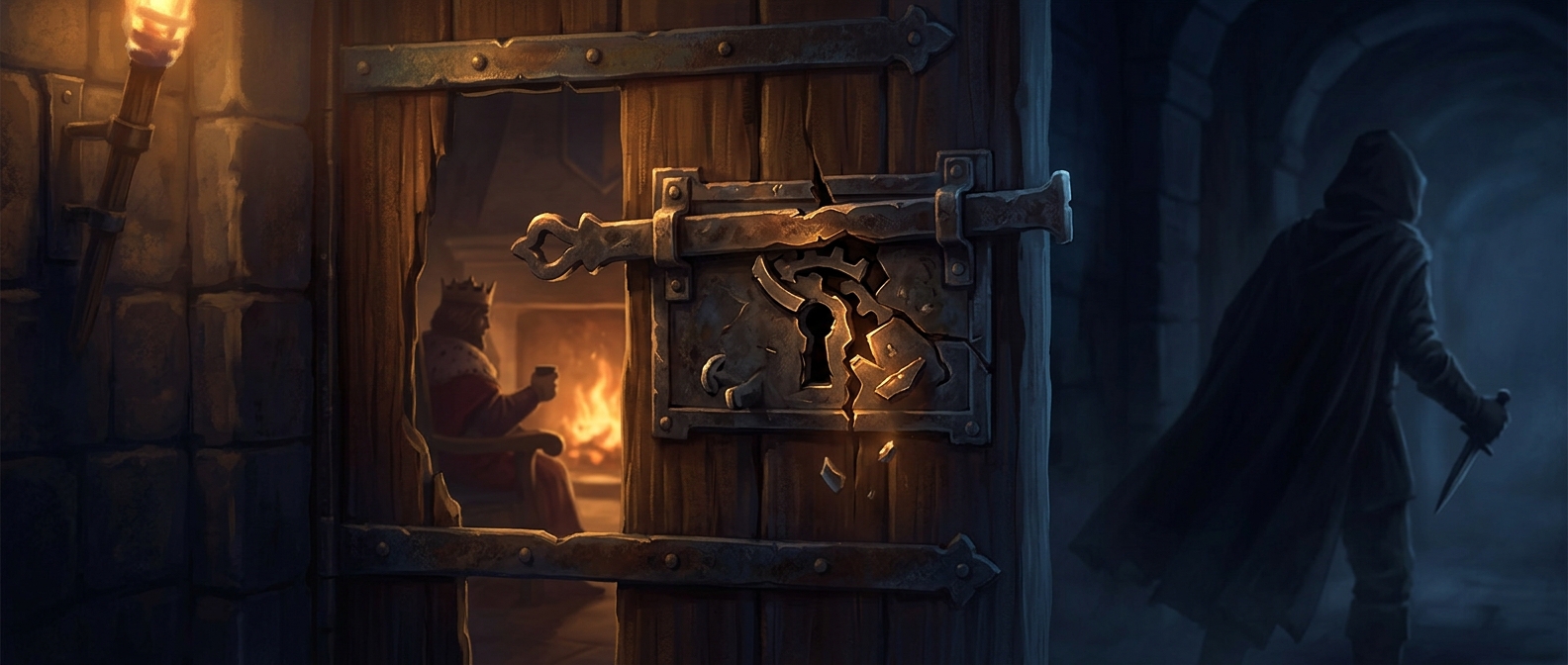
The escape depended on a small failure in a place built to keep people out. A heavy iron lock should have secured a door along the king’s route. But a local woman had broken it, leaving the door passable when assassins arrived. The defect turned a barrier into an exit at the moment it mattered.
Why a drain could become an escape route
In a medieval building, a drain was not a designed emergency passage. It was part of the practical infrastructure that carried waste water away, often through a narrow, dark channel with little room to move. But if the usual doors and corridors were dangerous, even an unpleasant service route might offer a chance to get beyond the building unseen.
The broken lock mattered because it kept that route accessible. The king could reach the sewer drain and flee through it while the attackers were closing in. His escape was not the result of a carefully prepared plan so much as the convergence of a usable passage and a door that no longer did its job.
An ordinary defect, extraordinary consequences
Locks and drains seem like minor details beside a royal assassination plot. Yet in a crisis, the shape of a building and the condition of its fittings can determine who has an exit and who is trapped. A damaged lock—likely an inconvenience in ordinary life—helped turn the sewer from hidden plumbing into a way out for a king.