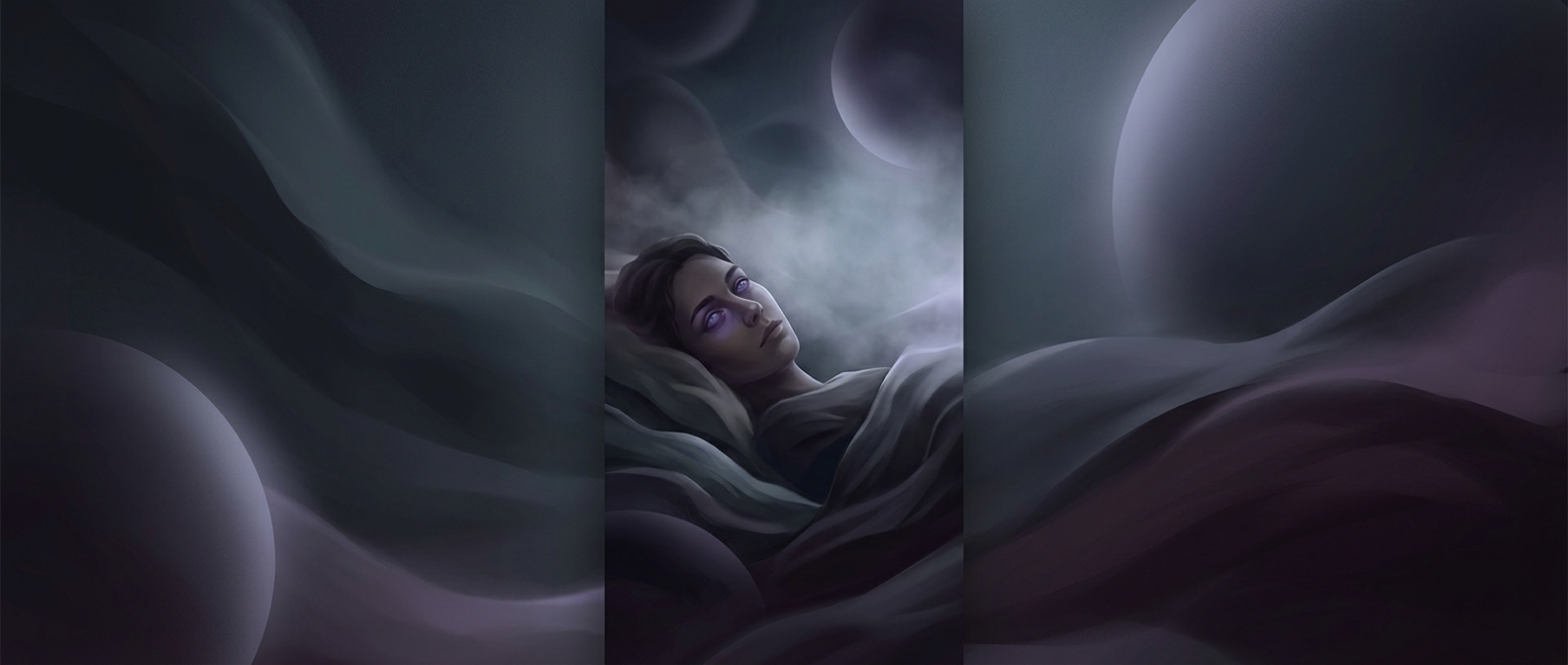
Sleep and eyelids run on separate controls
Falling asleep does not flip every muscle into the same state at once. Sleep is identified by changes in brain activity and responsiveness; eyelid position is a separate physical detail. The muscles that lift and lower the lids can therefore leave a narrow gap even while a person is asleep.
This is sometimes called sleep-related lagophthalmos. It differs from ordinary blinking: blinking briefly spreads tears across the eye, while closed lids help limit evaporation for hours at a time.
Why a small gap can matter
The exposed front surface of the eye, especially the cornea, depends on a thin tear film to stay moist and clear. With the lids partly open, that film can evaporate faster. The eye may become dry or irritated, and a person might wake with redness, a gritty feeling, or blurred vision that clears after blinking.
Some people notice nothing; others may have symptoms repeatedly. The size of the opening, room conditions, and how well tears protect the surface all affect the outcome. If the exposure is persistent or causes ongoing discomfort, an eye-care professional can check whether the surface is being harmed and discuss ways to protect it.
The striking part is that closed eyes are not what make sleep real: they are one of the body’s usual ways of shielding the eye while the brain rests.