Why a border road bends into a loop
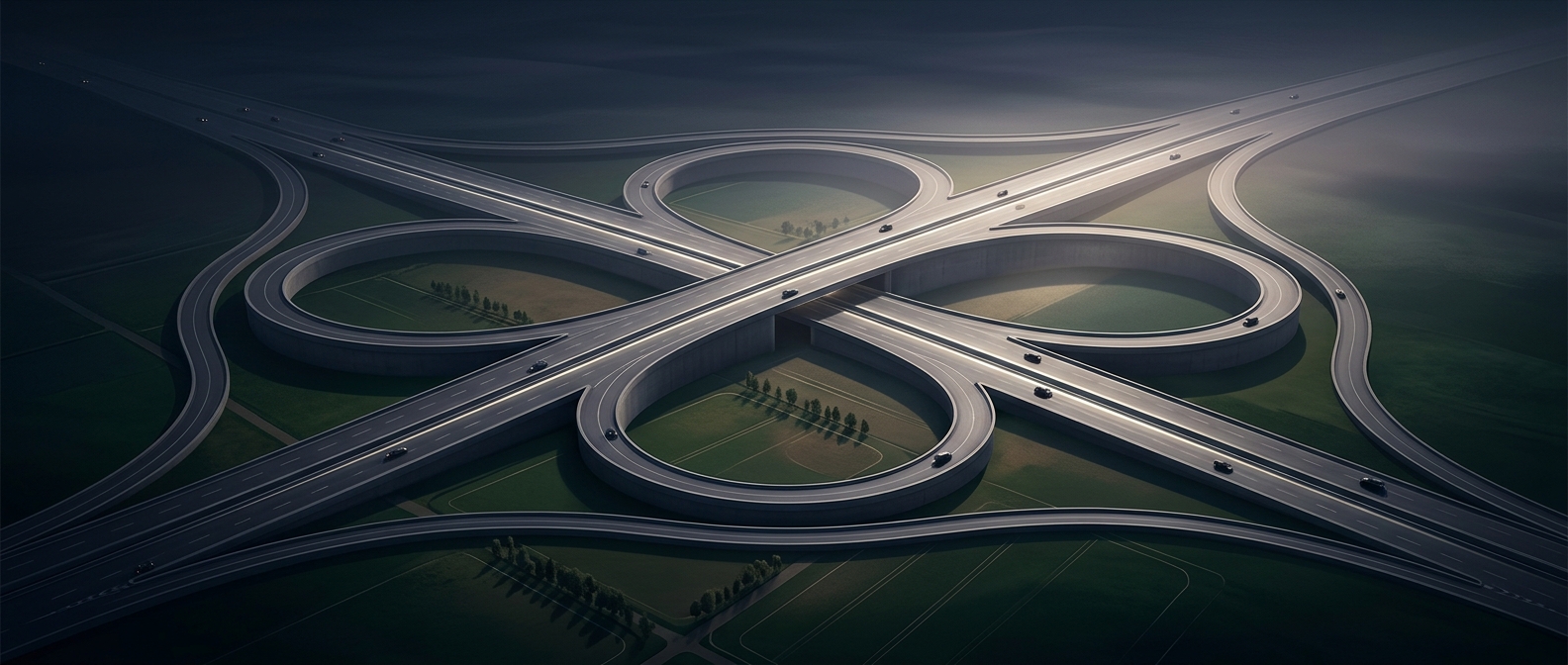
A checkpoint has to process vehicles in sequence: each car must reach the right inspection booth, stop, and then continue through the correct exit. If the approach were a straight road, the line could stretch far beyond the customs area and spill into ordinary traffic. A looping layout stores more waiting vehicles within a bounded site, much like folding a long queue back and forth.
The road itself manages the line
The curves do more than save space. They slow drivers before the booths and make the approach feel like one continuous, controlled route rather than several tempting shortcuts. That gives staff a clearer view of vehicles and helps keep cars from surging toward inspection points. Once a vehicle has been checked, its path can lead away from the waiting lanes without crossing the stream of traffic headed toward customs.
The geometry also creates a practical tradeoff: tight bends fit more pavement into the site, but vehicles still need enough room to turn safely, especially large trucks. The number and placement of booths, barriers, and exits must therefore work with the loop’s shape. The checkpoint’s queue is not just marked on the pavement; it is built into the road.