A bridge built like a barn
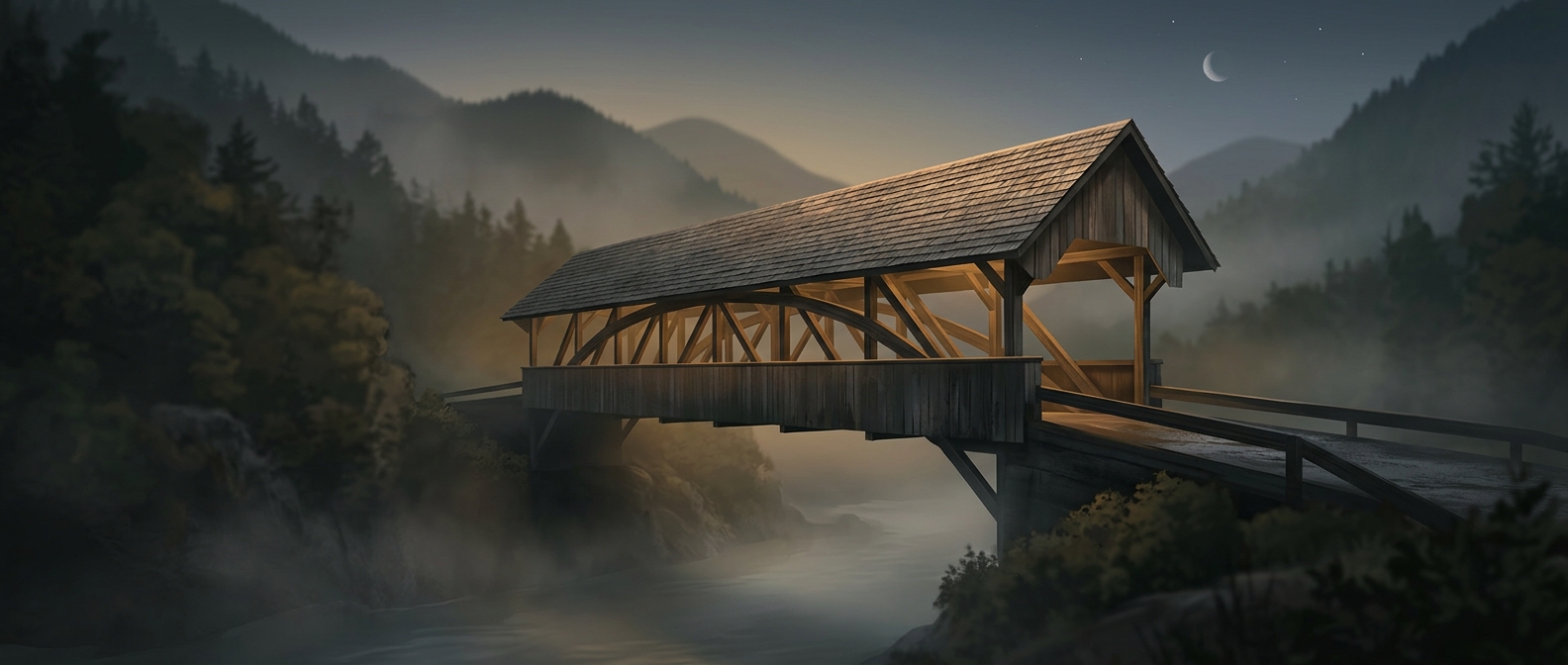
A covered bridge is a timber structure sheltered by a roof and side walls. The enclosure does more than protect travelers from bad weather: it keeps the bridge’s load-bearing wood drier, slowing the decay that can weaken its beams and joints.
Wood deteriorates when moisture repeatedly soaks into it and lingers. Rain and melting snow can seep into cracks and connections, where water is slow to evaporate. A roof sheds most precipitation before it reaches the deck and frame; the walls also limit wind-driven rain and drifting snow. By reducing wetting, the cover gives the timber a better chance to dry between storms.
Protection with a tradeoff
The shelter adds weight and construction work, and it does not make a bridge maintenance-free. Moisture can still enter, especially near the ends or through leaks, so the wood must be inspected and repaired. The cover also needs enough clearance for traffic and enough strength to withstand its own weight and weather loads.
That tradeoff made sense where timber was readily available and a bridge’s exposed framework would otherwise face years of rain and snow. The roof and walls function as a protective outer layer: instead of rebuilding the bridge’s main structure as often, builders could maintain the enclosure and preserve the wood beneath it. In effect, the bridge carries a small barn over the part most vulnerable to the weather.