Why Trapped Steam Can Sterilize Instruments
A medical sterilizer that uses pressurized steam is called an autoclave. Its job is to expose instruments to moist heat throughout—not merely to make the chamber hot. Steam transfers heat efficiently when it touches a cooler surface, then condenses into water. That heat disrupts the proteins and other structures microbes need to survive, including those of hardier bacterial spores.
Pressure matters because it lets water and steam reach temperatures above water’s normal boiling point. The added heat makes the sterilization cycle effective in a practical amount of time. Pressure is the means of raising the steam’s temperature; it is the heat, delivered for long enough, that does the killing.
Why the Load Has to Be Prepared
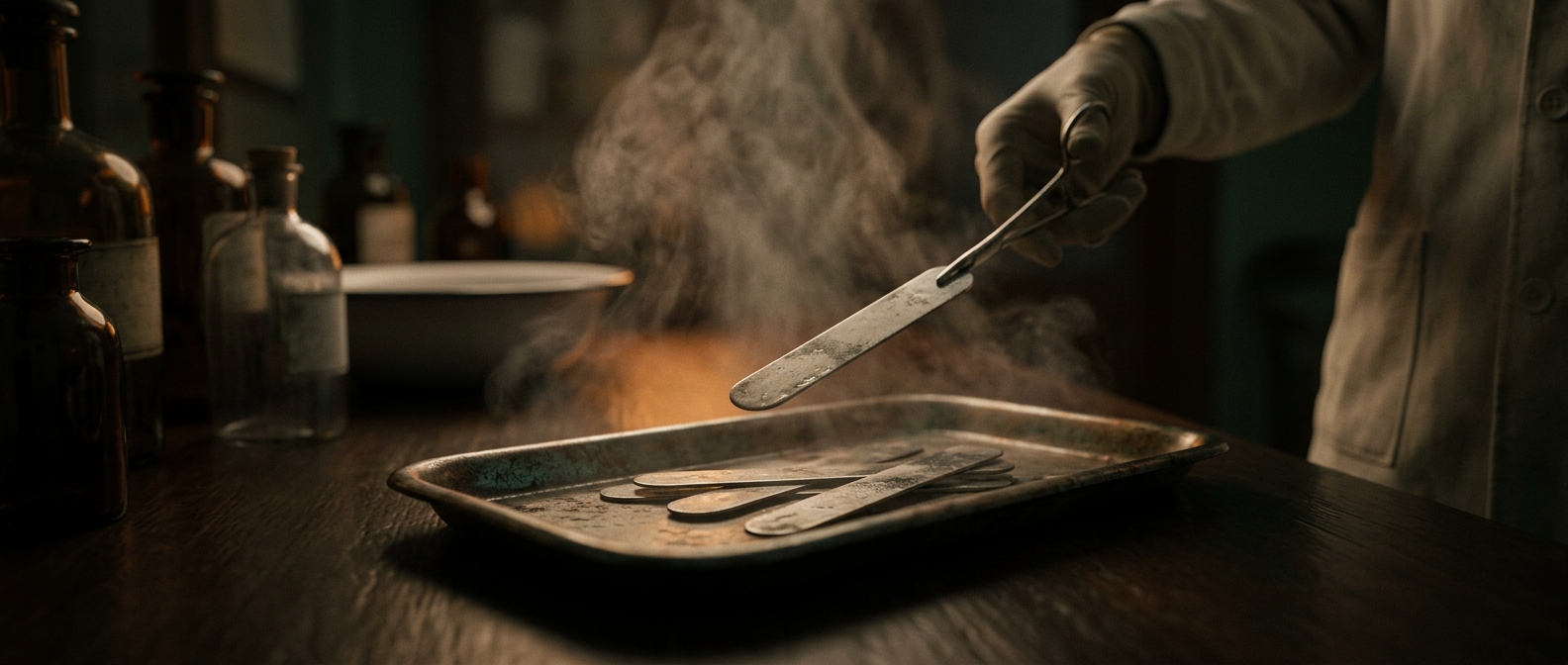
Steam cannot sterilize a surface it never reaches. Instruments are cleaned first to remove blood and other material that could shield microbes. They are then arranged so steam can move around and into them. If air remains trapped in a chamber or inside a wrapped load, it can block steam from making full contact, so autoclaves control how air is removed and steam enters.
The cycle also has to account for the load itself: a crowded chamber or dense bundle takes longer to heat through than an exposed instrument. Once the exposure is complete, many cycles dry the instruments so they can be handled and stored without their packaging becoming wet.
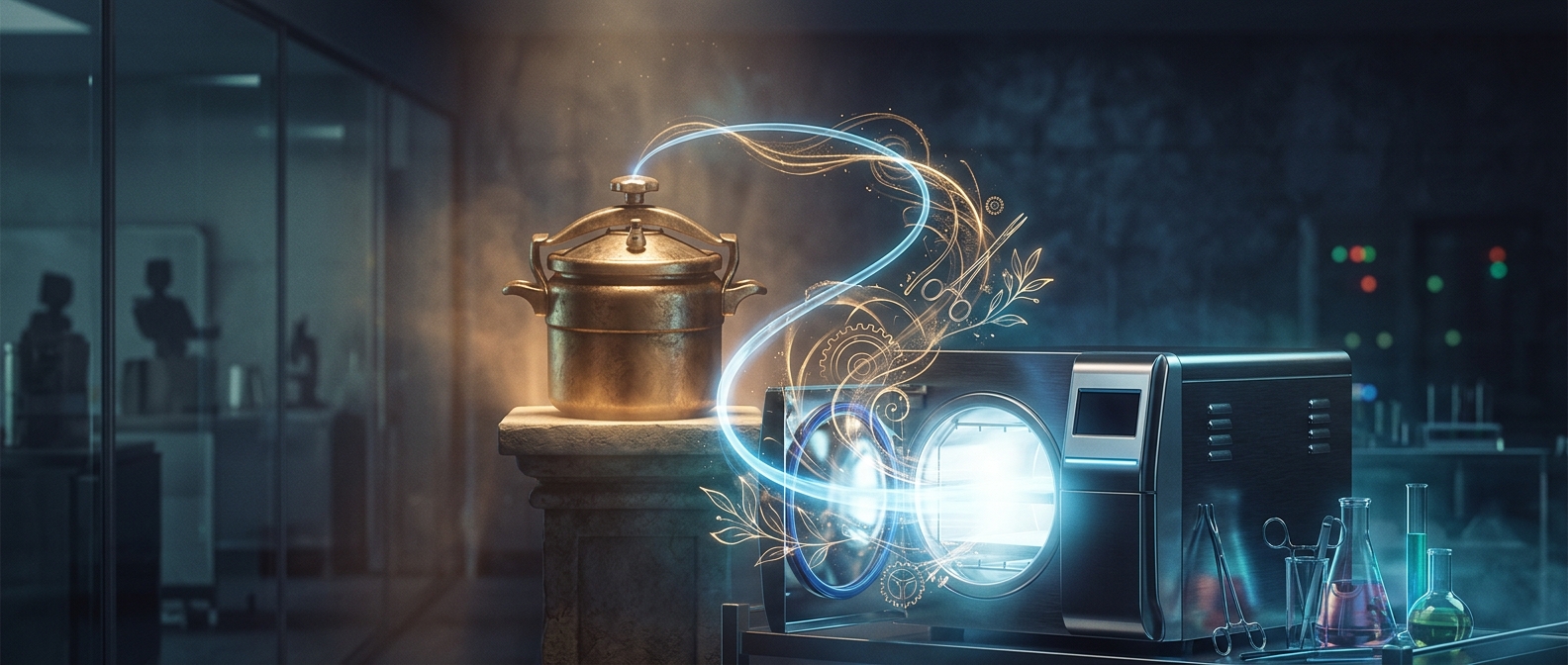
That is the practical lesson behind the pressure-cooker connection: trapping steam is only the beginning. Reliable sterilization depends on getting hot steam to every relevant surface and keeping it there long enough.