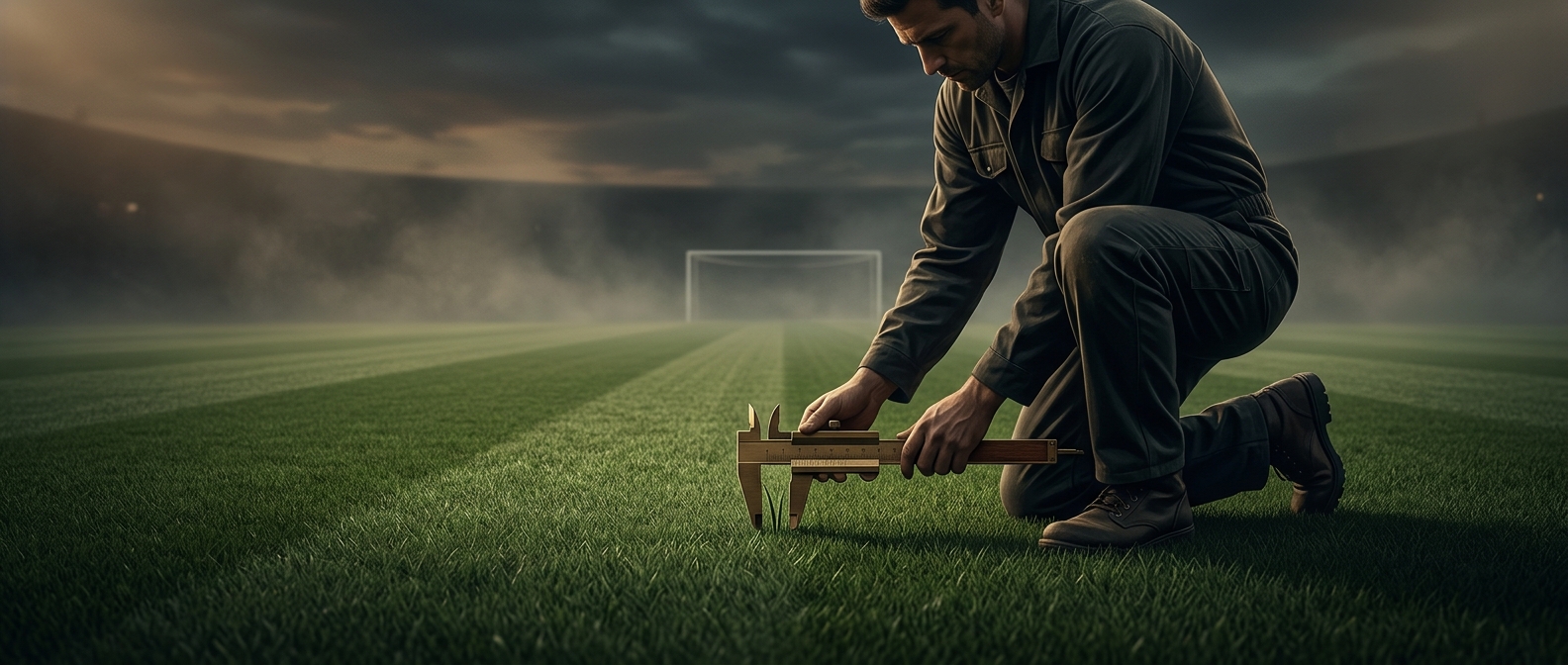
Why a few millimeters change the game
A soccer ball does not roll over grass as if the field were a hard, smooth floor. Each blade can brush the ball, and the thatch and soil beneath it give the surface some spring. Taller grass creates more contact and resistance, so a pass loses speed sooner. A closely cut surface offers less resistance, letting the ball travel faster—but it can also leave the ball skidding more readily, especially when the turf is damp.
The goal is a predictable roll
Field crews are not simply trying to make the grass as short as possible. They are balancing pace with control: players need to judge how far a pass will travel and how the ball will react when it lands. A consistent cut helps make those judgments reliable across the pitch. Uneven patches can make the same pass behave differently from one area to another, disrupting the rhythm of play.
Height is only one part of the surface
Mowing sets the grass’s height, but the playing surface also depends on its condition. Moisture changes how freely the ball moves, while worn or uneven turf can alter its bounce and roll. That is why maintaining a field involves more than cutting it to a target measurement: crews must keep the surface even enough that the ball’s behavior does not shift unexpectedly.
The small difference between a quick pass and a sluggish one can shape how a team chooses to move the ball. Grass height is therefore not just a groundskeeping detail; it helps set the field’s playing character.