How a Tablet Gets Its Gloss
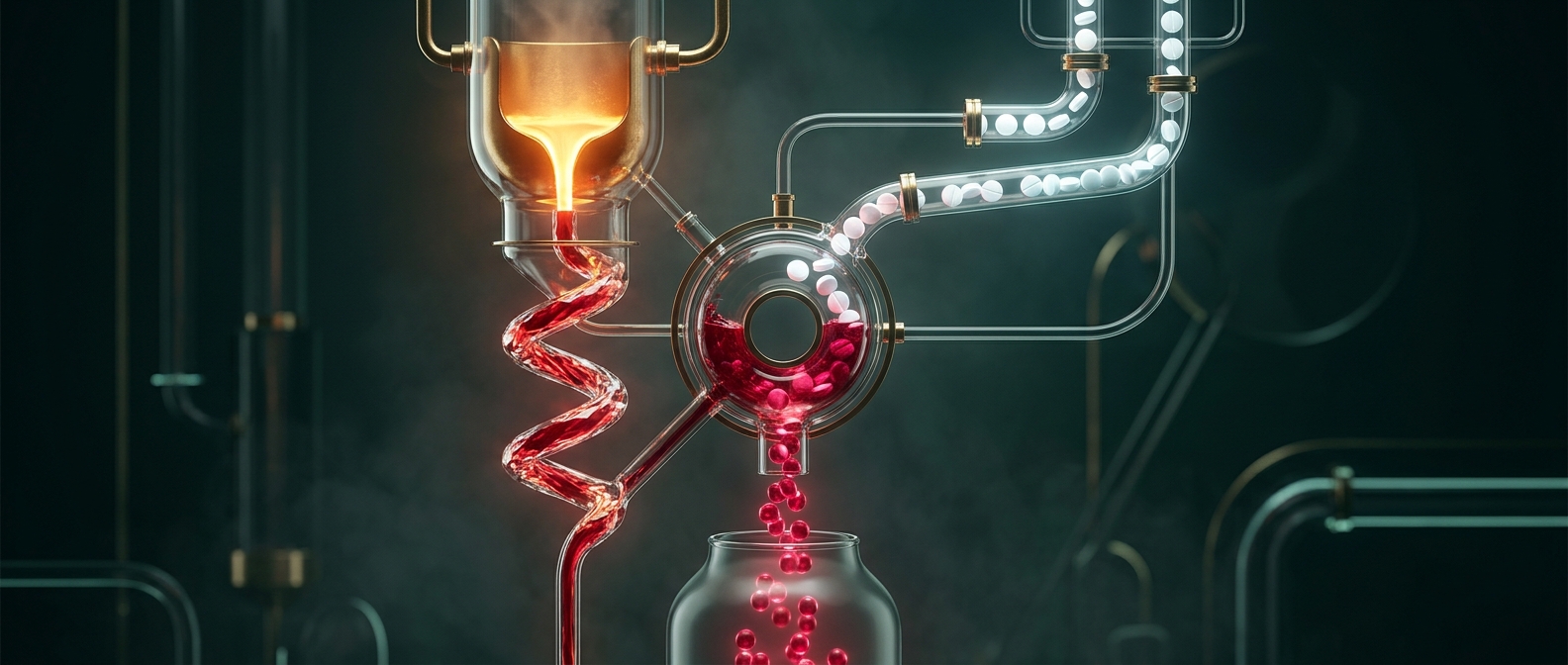
Compression presses a blend of drug and other ingredients into a compact shape, but the result can still have a slightly dusty, uneven surface. To finish some tablets, manufacturers add a small amount of carnauba wax—a hard, plant-derived wax—and polish the tablets, often by tumbling them so they rub against one another.
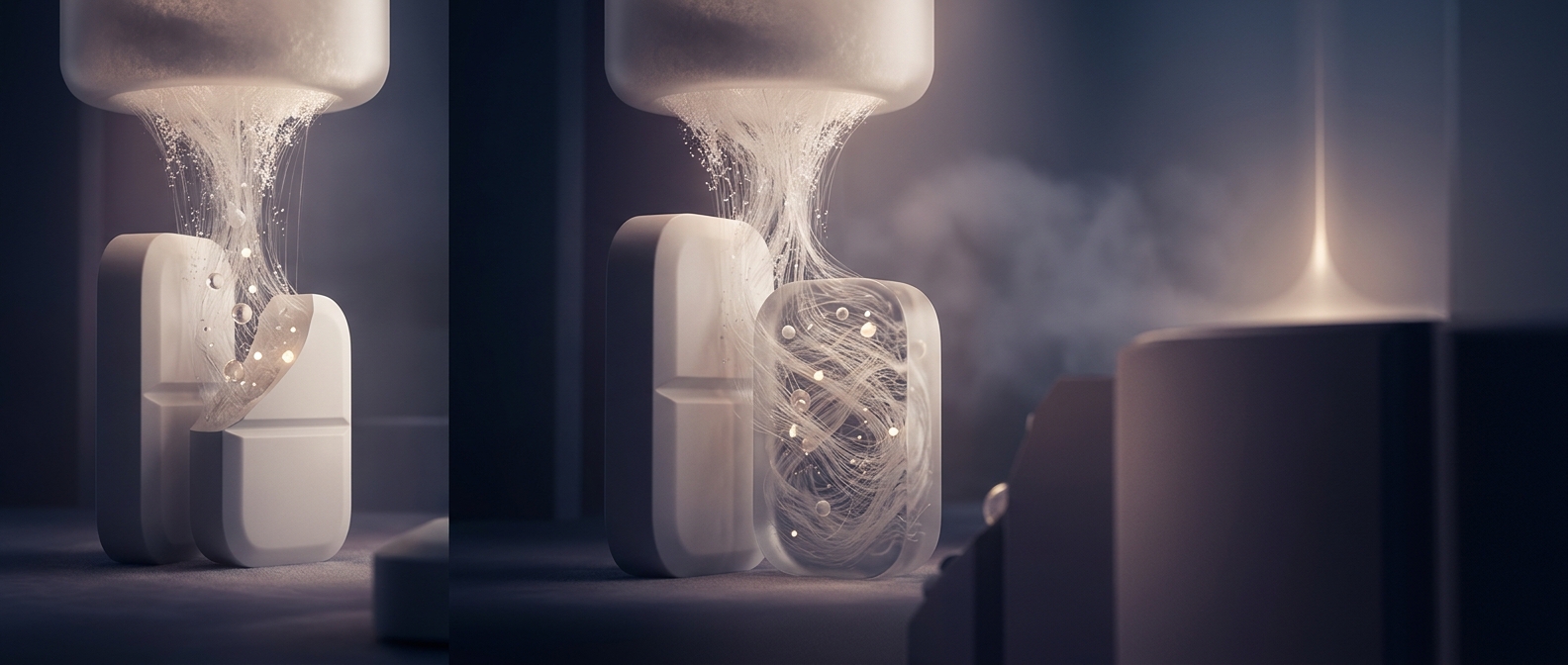
As the wax spreads into a thin layer, the polishing action picks up loose powder and smooths the surface. That smoother surface reflects light more evenly, which is why the tablet looks glossy rather than chalky.
A Surface Finish, Not a New Core
The wax is a finishing layer on the outside; it does not turn the compressed tablet into a different kind of medicine. Its visible effect comes from changing how the surface scatters light: rough spots scatter it in many directions, while a smoother, waxed surface sends more light back in a consistent way.
The shine is therefore a small clue to the tablet’s final manufacturing step. Beneath it is still the compacted tablet; the gloss comes from a very thin polish that also gathers stray surface powder.