How a red surgical field can tire the eyes
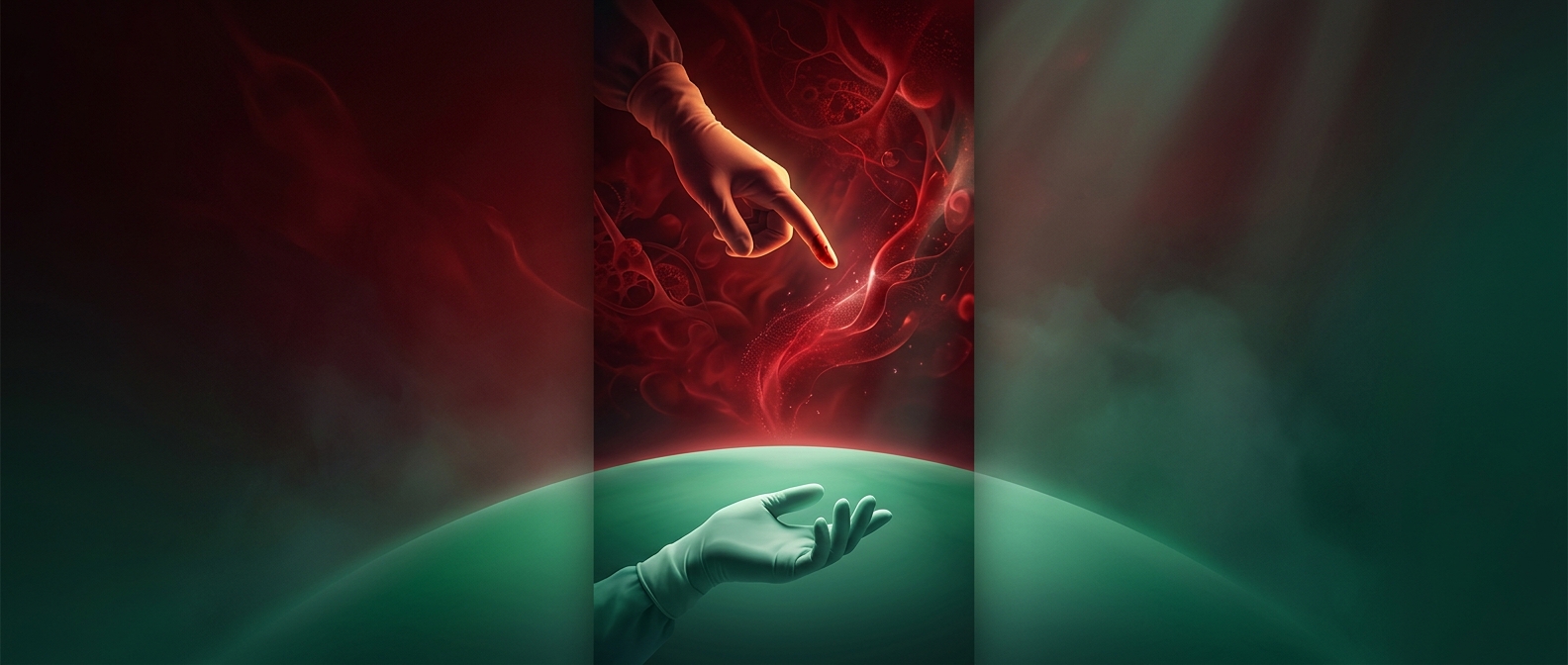
The retina does not report color as a simple list of separate signals. It also compares signals from different kinds of light-sensitive cells, including through a red-versus-green channel. During a long stretch of looking at red tissue, that channel adapts: its response to the steady red input can weaken, making small changes among reddish shades harder to notice.
That is a visual effect, not damage to the eyes. It is related to the faint complementary-color afterimage people sometimes see after staring at a bright color. In an operating room, even a modest loss of contrast can make the visual field feel less distinct.
Why green helps
Green provides a contrasting signal to the red-dominated view. Looking away from the tissue toward green clothing, drapes, or another part of the room gives the visual system a different color input, helping ease the red-green imbalance. When the surgeon looks back, subtle differences in the tissue may be easier to distinguish.
Green is therefore not a special kind of medical light, nor does it make every shade of red automatically clearer. It is a practical visual counterpoint in a workspace where red can fill the view for long periods. The useful detail is that a glance away from the operating field can serve the eyes much like a brief change of scenery—without changing what is happening in the surgery.