How right-handed tools can make ordinary tasks riskier
A tool is safest when its shape lets the hand apply force in a natural direction while keeping the work in view. Many common tools assume the right hand will do that job. For a left-handed person, the mismatch can mean twisting the wrist, crossing the arm over the work, or pushing against a blade or lever from an awkward angle.
Scissors show the problem clearly. Their offset blades are arranged so a right-handed grip presses them together and keeps the cutting edge visible. In the left hand, that pressure can work against the blades, while the upper blade may obscure the line being cut. The user may compensate by gripping harder or repositioning the material—small adjustments that make a slip more likely.
The mismatch is built into the mechanism
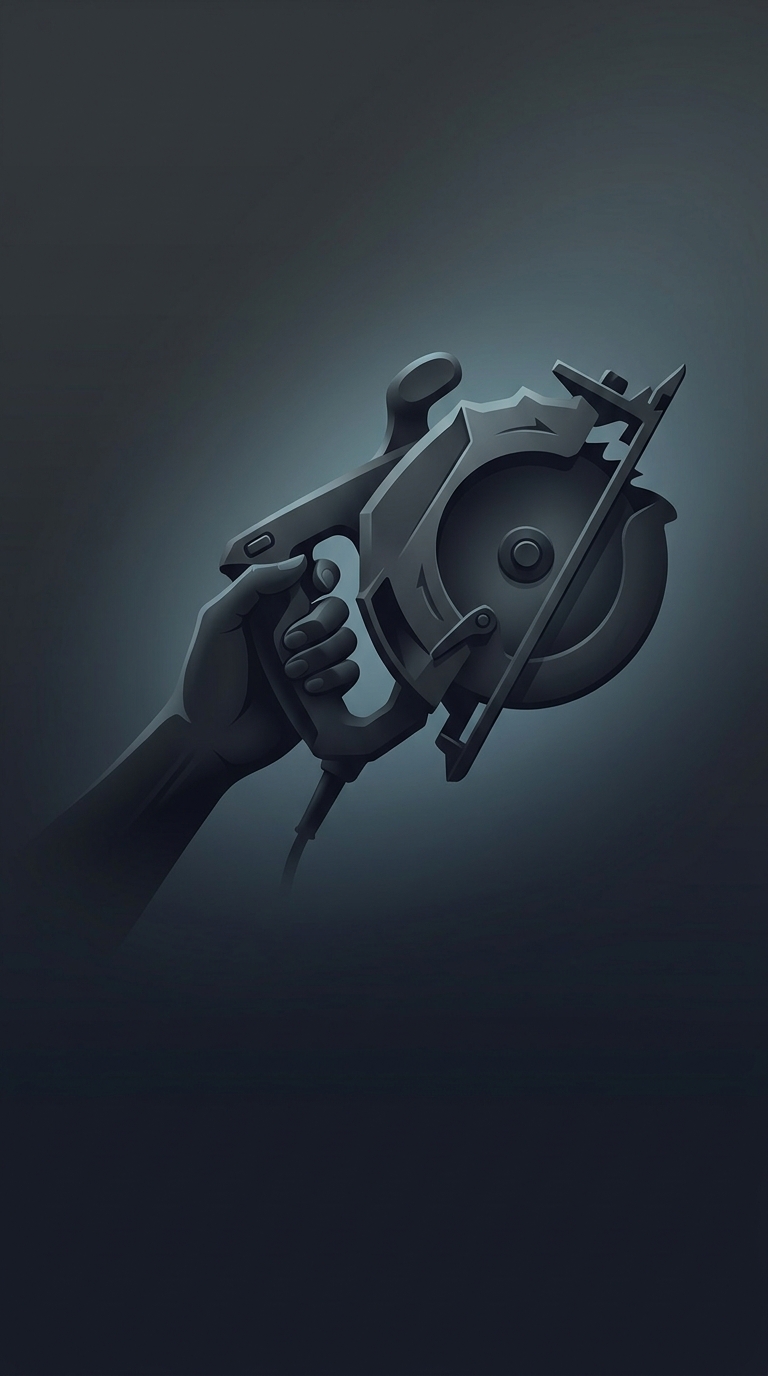
The same issue appears in tools with directional parts: a safety guard, trigger, crank, or handle may be easiest to operate from one side. A left-handed user can end up reaching across the tool or placing a hand nearer the moving or cutting part. Even when the task is familiar, repeated awkward movements can reduce control, especially when the material shifts or the tool catches.
That does not mean every left-handed person is at greater risk in every task. Experience, tool design, and the specific job all matter. The point is that an accident can arise from the setup, not from a lack of care or coordination. When a tool is designed around one dominant hand, the other hand may have to supply extra force and attention just to perform the same action.
A left-handed version, an ambidextrous design, or simply changing the work position can restore a clearer view and a more direct grip. The practical difference may be modest—until a blade slips or a control cannot be reached without letting go.