How the Two DNA Strands Stay Matched
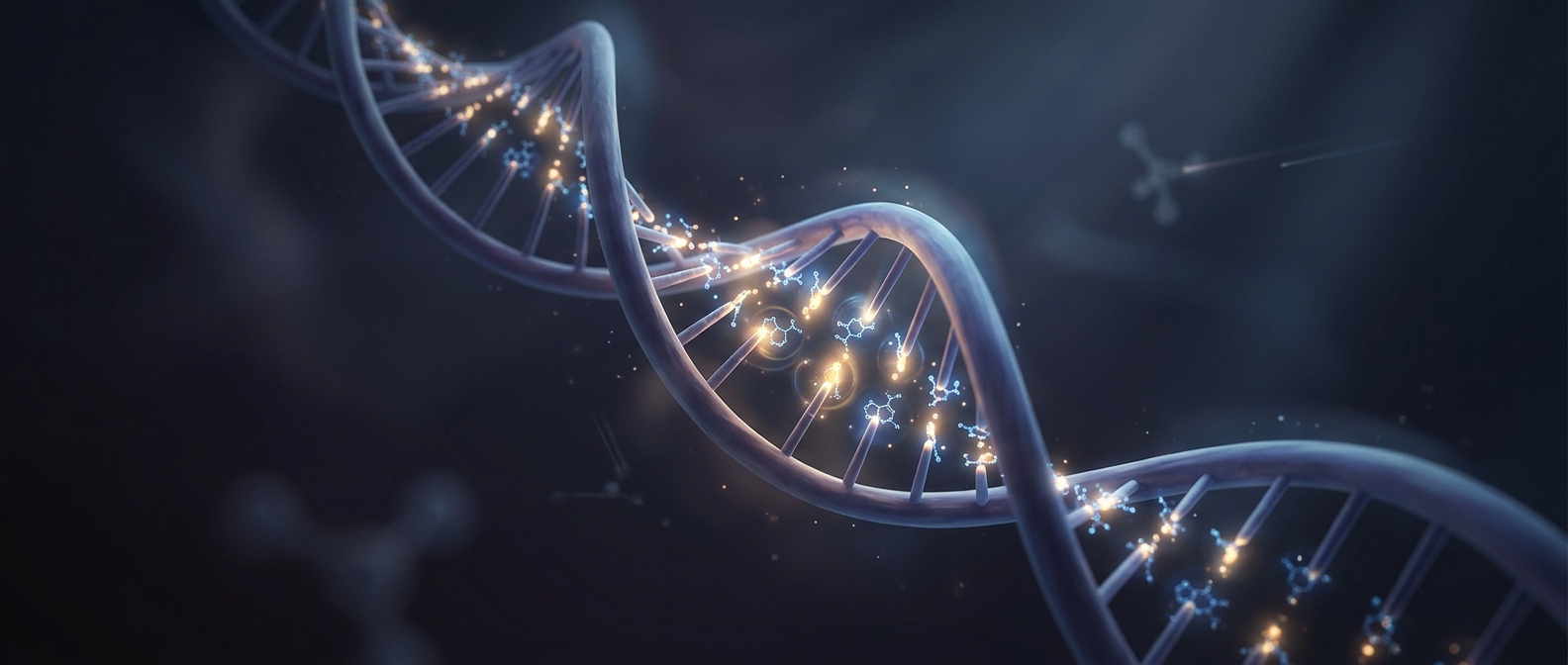
DNA’s sugar-and-phosphate backbones form the outside rails of its familiar twisted ladder. The bases point inward, where each can make a preferred match with a base on the opposite strand. Their shapes and chemical features make A–T and C–G pairings fit reliably, helping the two strands preserve the same sequence information in complementary form.
Hydrogen bonds are weak attractions between particular parts of molecules. One bond is easy to disrupt, but many aligned pairs help keep the strands associated. The stacked arrangement of neighboring bases also contributes substantially to DNA’s stability, so the double helix is not held together by hydrogen bonds alone.
A Fastener That Can Be Opened
That balance matters when a cell copies DNA. An enzyme called helicase moves along the molecule and separates the strands, disrupting the attractions between paired bases. Because the connections can be undone locally, the cell can open a small region rather than dismantling the entire DNA molecule at once.
Each exposed strand then serves as a template: a copying enzyme adds complementary bases, following the same pairing rules. The result is two DNA molecules, each with one original strand and one newly made strand. The matching pattern is what lets the cell reproduce genetic information without having to copy the original sequence by guesswork.