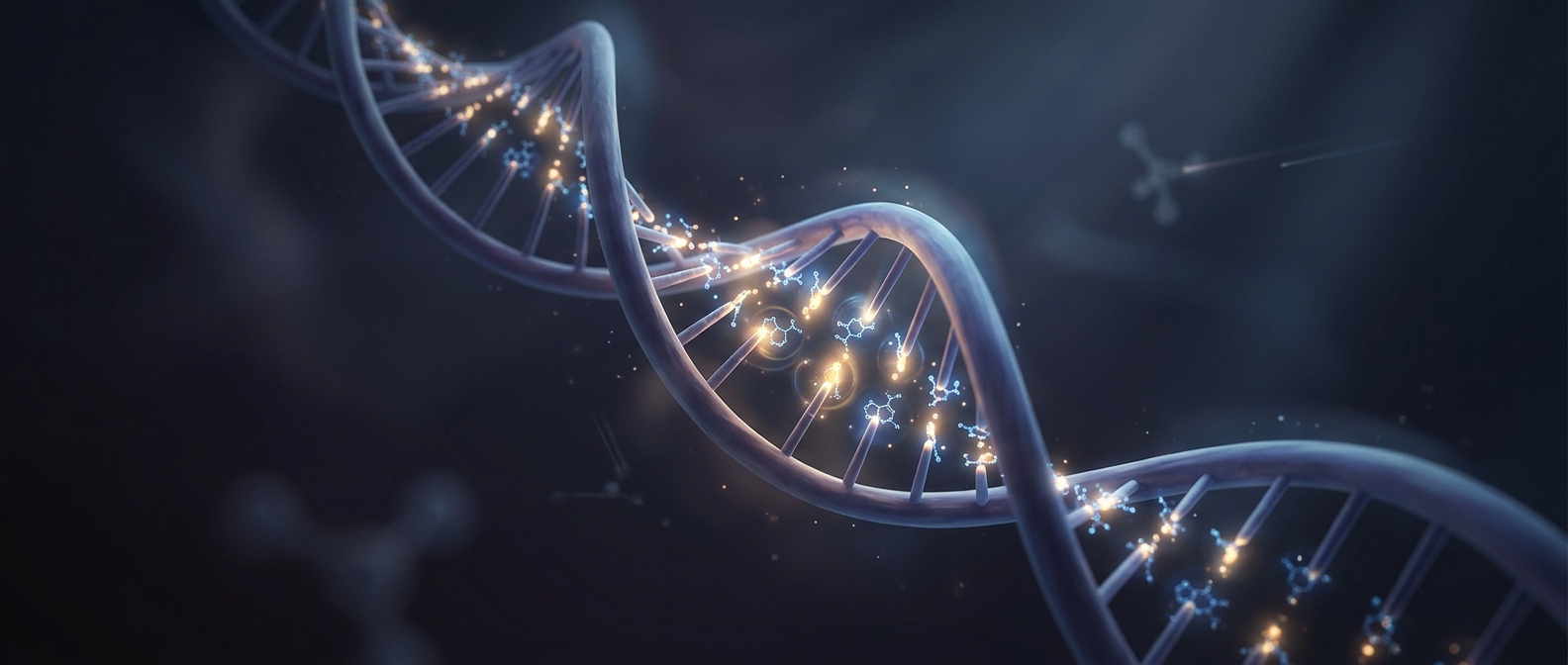
How DNA switches influence gene activity
A gene is not used simply because its sequence is present. A cell must first make a working copy of that sequence, a molecule called RNA. Regulatory DNA helps govern that step by providing places where proteins can bind and either encourage or restrain the copying process.
Some regulatory regions, called enhancers, can act from a distance. Proteins bound to an enhancer may help bring it into contact with a gene’s promoter—the nearby region where RNA copying begins. DNA can bend and fold, bringing those separated stretches close together. The effect depends on which proteins are present and how they interact, so the same gene can be active in one cell type and quiet in another.
Why the control system matters
This arrangement lets cells with nearly the same DNA carry out different jobs. A liver cell and a nerve cell, for example, can keep different sets of genes active without changing the underlying genetic instructions. Regulatory changes can also alter how much of a gene is used, or when, rather than changing the protein recipe itself.
That distinction matters in health: some genetic differences affect the control regions around a gene, not its protein-coding sequence, and can still influence how the gene behaves. But “noncoding” does not automatically mean “functional.” The genome contains many stretches whose roles remain unclear, and regulatory effects depend on the surrounding cellular context. The key is that DNA outside a protein recipe can help determine which instructions a cell actually reads—and that choice can shape what the cell does.