How a Thimble Turns a Push Into Pressure
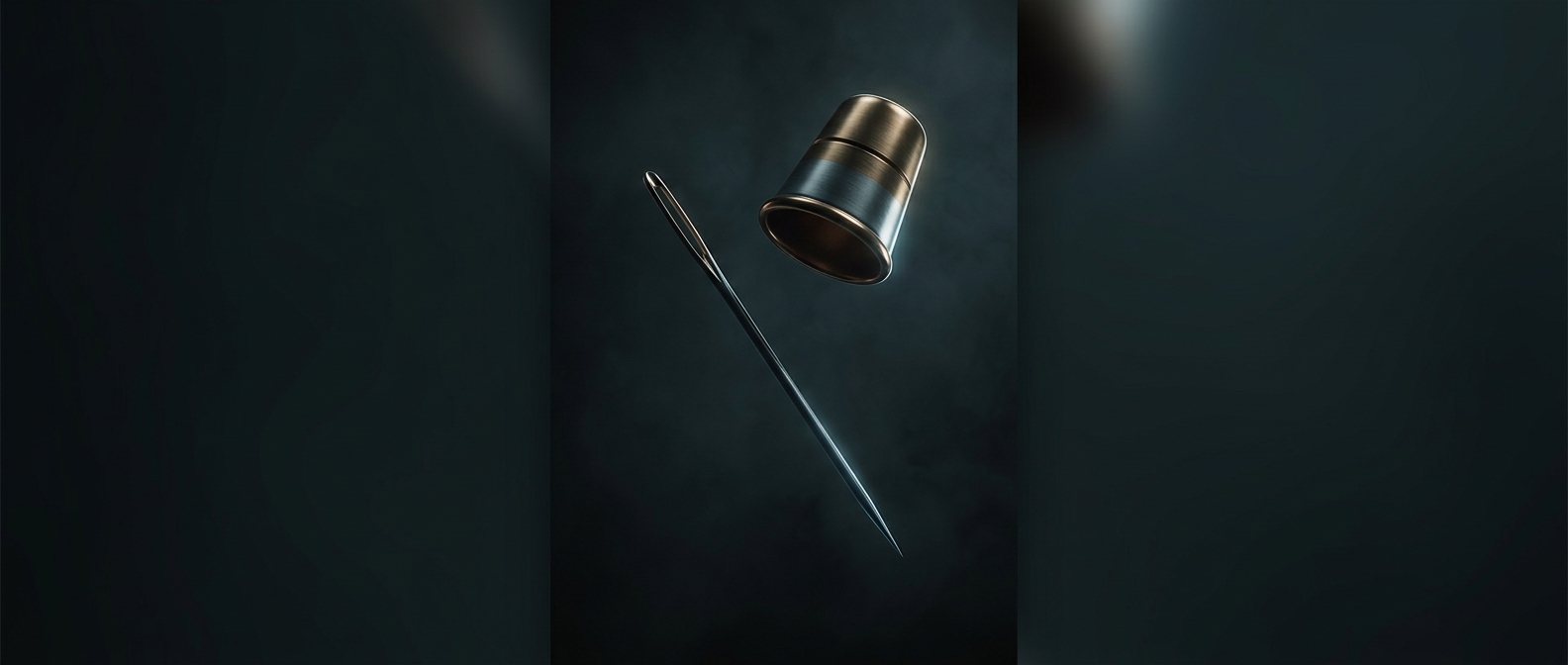
When a needle meets dense material, the hand has to push hard enough to drive its point through. Without protection, the needle can slip or pass through the cloth and press into the finger behind it. A thimble gives that pushing finger a rigid surface to brace against, so the needle bears on the cap instead of directly on the skin.
The difference is how the force is delivered. A needle concentrates pressure at its tiny point; a thimble spreads the push across a broader area of the fingertip. Small indentations on many thimbles help keep the needle from skidding sideways as the sewer pushes. The cap does not make a needle harmless, but it puts a durable barrier where the work repeatedly brings metal and finger together.
Protection That Still Lets the Finger Work
A thimble has to be snug enough to stay on while the finger moves, yet leave the hand able to feel and guide the needle. In use, the finger behind the needle supplies the push, while the other hand controls the needle and fabric. This makes the protected fingertip part of the sewing tool: it can apply steady force without serving as the needle’s stopping point.
That matters most when the material resists a pass. Each push through thick cloth or leather can bring the needle back against the same finger, so even a small slip can become a puncture. The thimble’s value is its simple placement: it puts a hard stop between the needle’s point and the finger doing the pushing.