Why a wringer could pull a hand inward
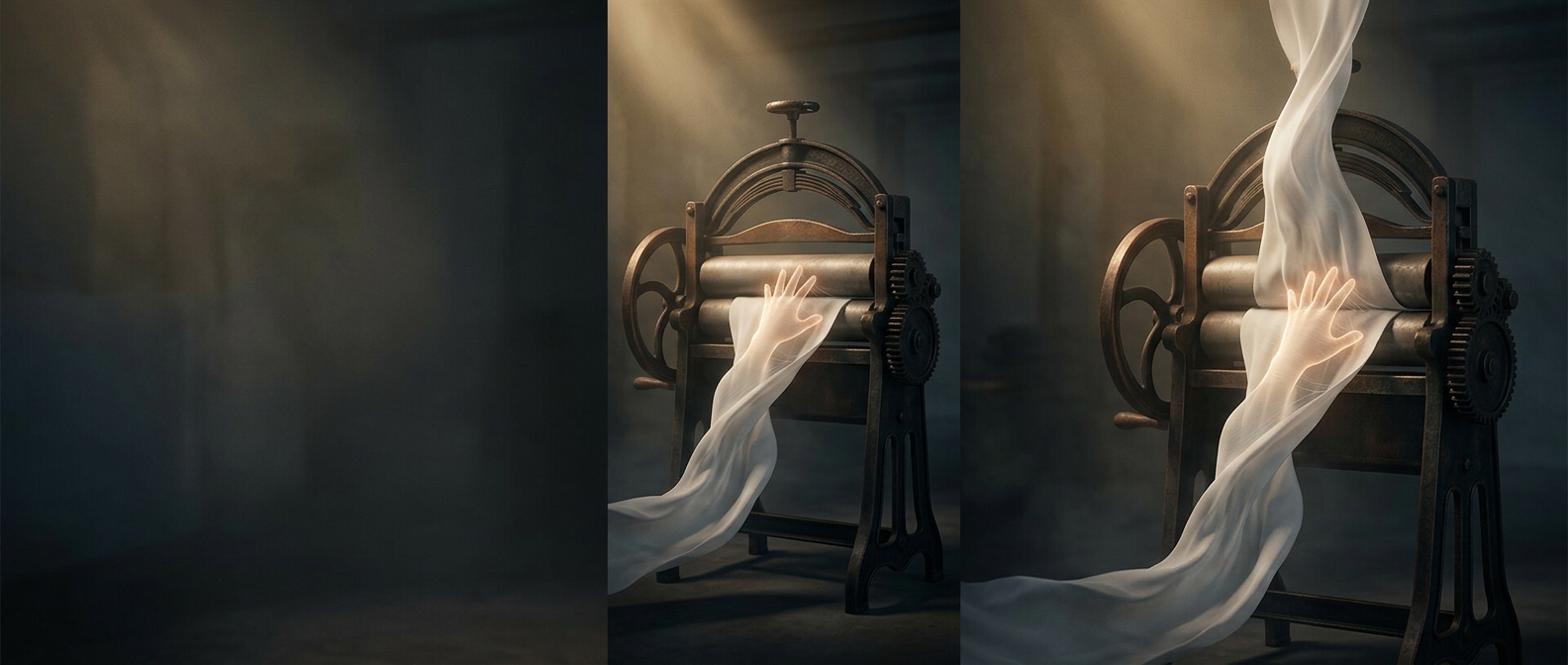
A wringer worked by feeding wet laundry between two closely spaced rollers. Their pressure pushed water out of the cloth, while friction carried the fabric through. But friction did not distinguish a shirt from a hand: once skin or a sleeve entered the narrowing gap, the turning rollers could keep drawing it forward.
The danger came from the geometry as much as the force. The space between the rollers grew smaller toward the point where they met, leaving little room to pull an object back out. A person might reach to guide a bunched garment or free tangled fabric; if a finger caught, the rollers could compress it before the motor was stopped. Loose clothing could create the same problem by snagging and pulling the wearer toward the machine.
A small opening made a big difference
Wringer washers were designed to handle heavy, waterlogged fabric, so the rollers had to grip firmly enough to keep laundry moving. That useful grip also made a jam or accidental contact difficult to undo by hand. The machine’s ordinary operation therefore depended on keeping fingers, sleeves, and other loose material clear of the roller opening.
The risk was not that the washer behaved unpredictably: it was that the same steady pull used to squeeze water from cloth could act on anything caught in its path. A hand near the rollers could become part of the load before the operator had time to react.