A barrier built for the classroom
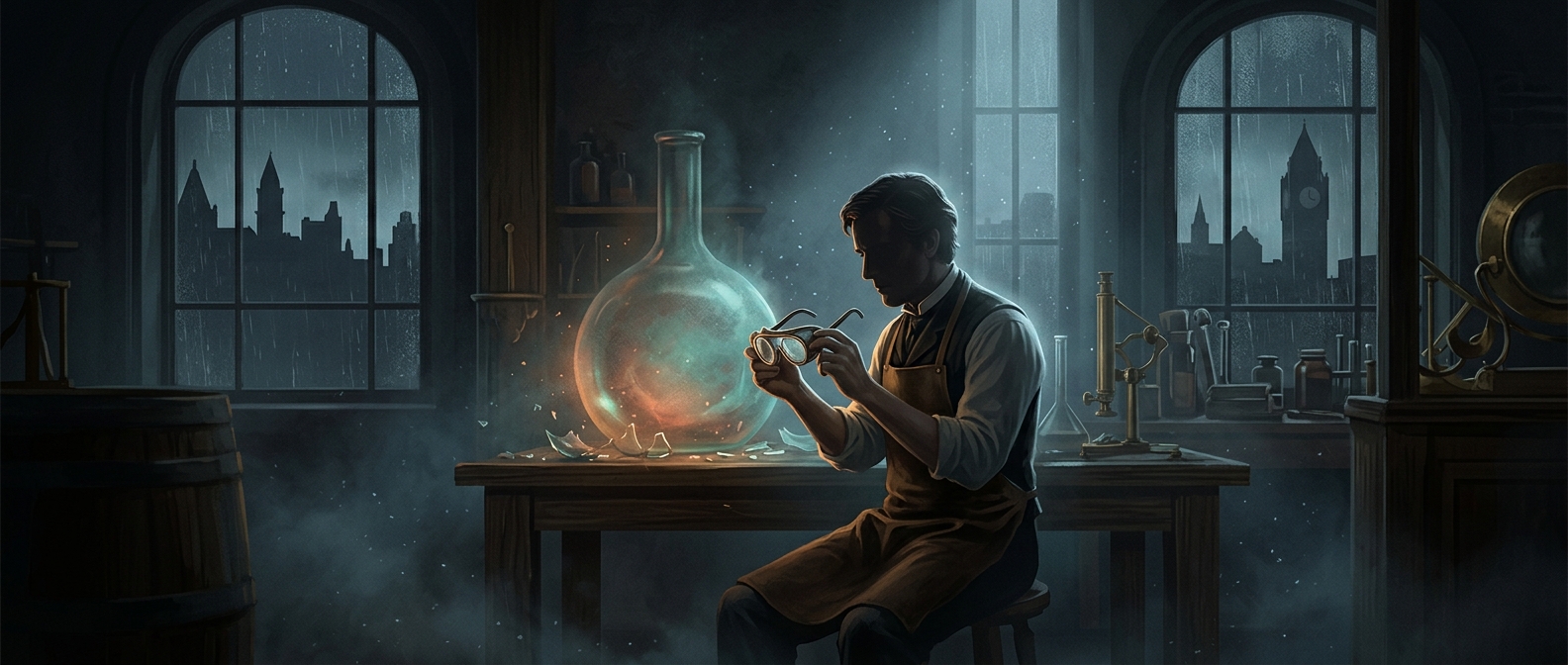
A laboratory accident can send more than liquid splashing: a small fragment can travel directly toward someone’s eyes. For a teacher watching students work close to an experiment, the problem was not just how to clean up afterward. It was how to put a barrier in the path of debris without preventing students from seeing the work in front of them.
In the 1880s, Powell Johnson addressed that problem with goggles made from two layers—wire mesh and cloth. Set in front of the eyes, the layers could intercept flying material before it reached them. The design turned protection into something students could wear during an experiment, rather than relying only on caution or on keeping people farther away.
From improvised fix to protective equipment
The important step was making the response repeatable. An accident revealed a specific vulnerability; Johnson’s goggles offered a physical defense that could be used in the next lab session and in others like it. He patented the design, giving the improvised classroom solution a formal place as a piece of protective equipment.
The goggles did not make experiments harmless. They changed what stood between a student’s eyes and the hazards of hands-on work: instead of an unprotected line of exposure, there was a layered barrier. That is the enduring logic behind eye protection in a lab—when an experiment can throw material outward, protection has to be positioned where the material is headed.