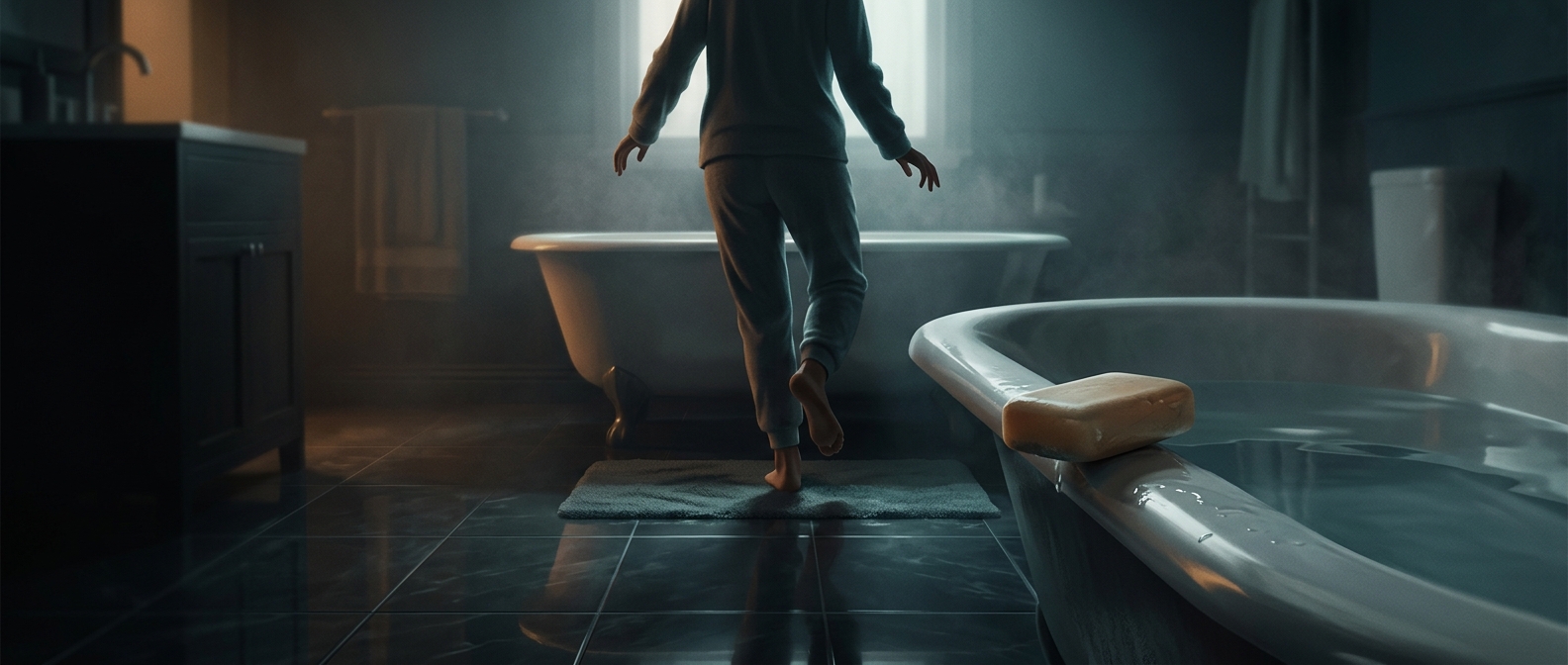
Why the step out of the shower is unusually tricky
A shower exit combines several small challenges at once. The bather shifts weight from one foot to the other, often lifts a leg over a tub edge, and steps onto a surface that may be wet. Water—and especially soapy water—can reduce friction, the grip that helps a foot stay planted. If the foot slides before the body has finished transferring its weight, there may be little time to recover.
The movement can also disrupt balance. Standing on one leg briefly is harder when a person is tired, unsteady, or reaching for a towel. A wet floor makes that ordinary reach consequential: leaning changes where the body’s weight falls, while a sliding foot cannot provide a stable base.
Why the landing matters
Bathrooms often have hard, unforgiving surfaces. A fall onto tile or a tub can therefore cause more serious injury than a stumble onto a cushioned floor. The risk is not only the initial slip; it is also what the person strikes on the way down, such as a fixture, tub edge, or nearby hard surface.
A grab bar fixed securely to the wall can offer support during the weight shift, unlike a towel bar, which is not designed to bear a person’s weight. A nonslip surface can improve footing, but it must stay firmly in place—an unsecured mat can itself slide. These details matter most at the transition from wet bathing area to dry floor, where a single step has to do several jobs at once.