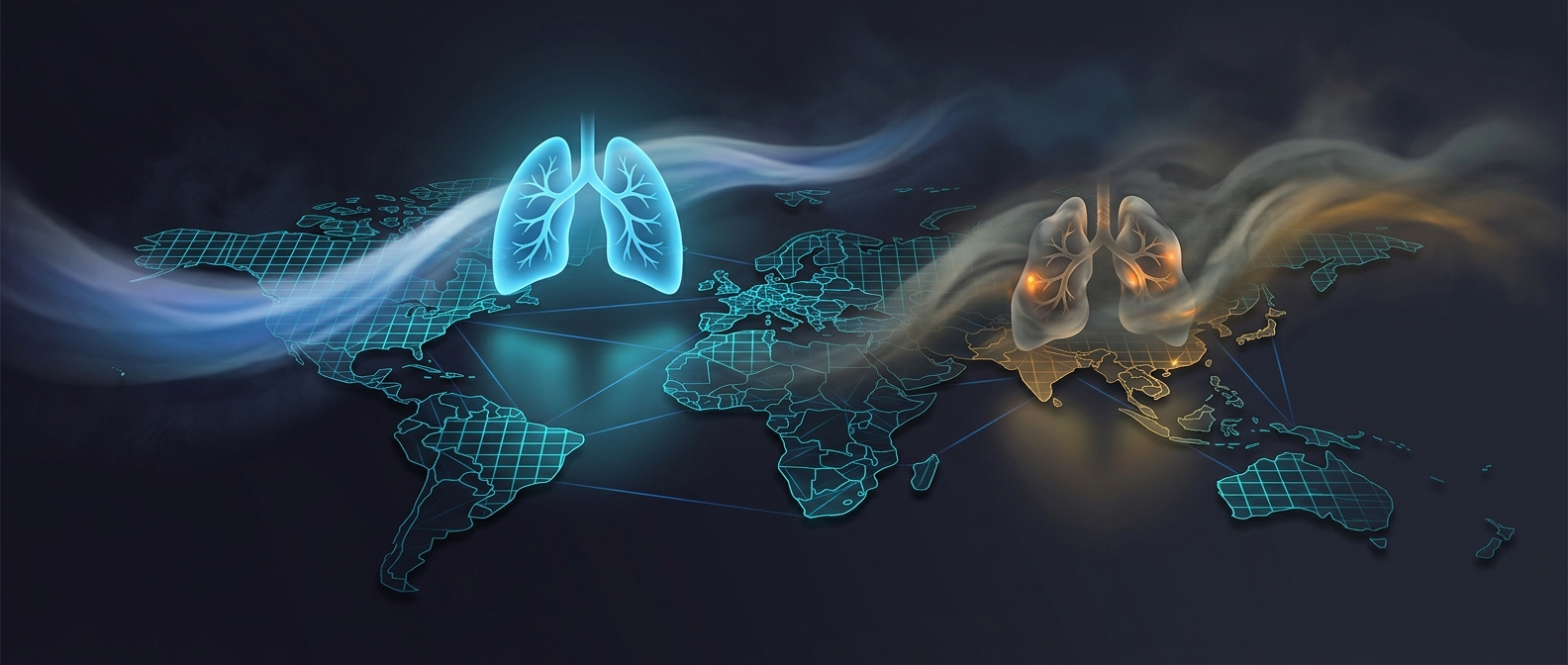
How polluted air reaches the airways
Pollution near a home is not a single substance. Vehicle exhaust and industrial activity can release gases and tiny particles that travel through outdoor air and enter buildings through doors, windows, and ventilation. Some pollutants can also form in the air after emissions mix with sunlight and other chemicals.
Once inhaled, these substances may irritate the lining of the airways. In someone with asthma, already-sensitive airways can become more swollen or produce extra mucus, making them narrower. That can worsen coughing, wheezing, or shortness of breath. Exposure may also contribute to asthma developing, particularly over time, though a person’s surroundings are only one part of a more complicated risk.
An address shapes exposure, not fate
The amount a person breathes depends on more than how close a home is to a road or factory. Wind, building design, ventilation, and time spent indoors or outdoors all affect how much pollution reaches the lungs. Two homes in the same neighborhood can therefore have different indoor air, while pollution can also travel beyond the place where it was produced.
This is why location matters at a community scale: residents cannot individually control every source carried into the air around them. Cleaner air can reduce one pressure on vulnerable airways, even though it cannot prevent every case of asthma or replace medical care.