Why Kilimanjaro changes so dramatically
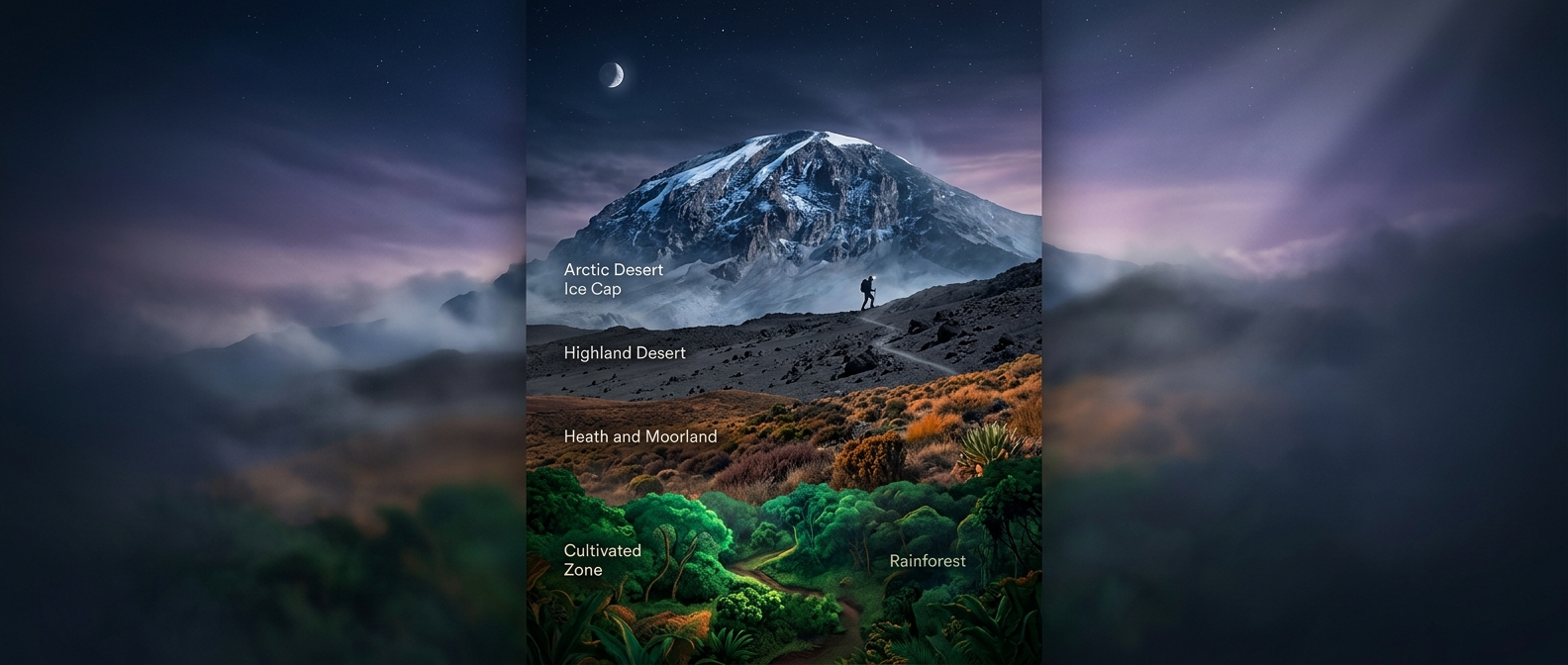
Kilimanjaro rises almost 6,000 meters above sea level, so climbing it is like traveling through several climates stacked vertically. Near the base, warm air and moisture support dense forest. Higher up, cooler conditions favor open moorland and then sparse, rocky terrain. Near the summit, the air is thin and temperatures can fall below freezing—even though the mountain stands near the equator.
The air itself drives the change
As air rises up a mountain, it encounters lower pressure and expands, which cools it. The temperature drop is gradual, but over Kilimanjaro’s great height it adds up to a striking shift. Moist air also tends to release rain or snow as it rises, helping create the lush lower slopes and drier landscapes above them.
The result is not simply a change in scenery. Each band brings different conditions for the body: hikers may sweat in the forest, then face wind, cold, and reduced oxygen as they climb. The summit’s freezing environment is alpine rather than literally Arctic, but it feels like a different world from the humid trail below.
A climb through living zones
Because the mountain’s slopes pass through these distinct elevation bands, a trek can move from leafy forest to high-altitude scrub and bare volcanic ground without crossing a continent. That compact journey is part of Kilimanjaro’s striking appeal—and a reminder that altitude can matter as much as latitude in shaping a place’s climate.