How macaques follow a moving shape
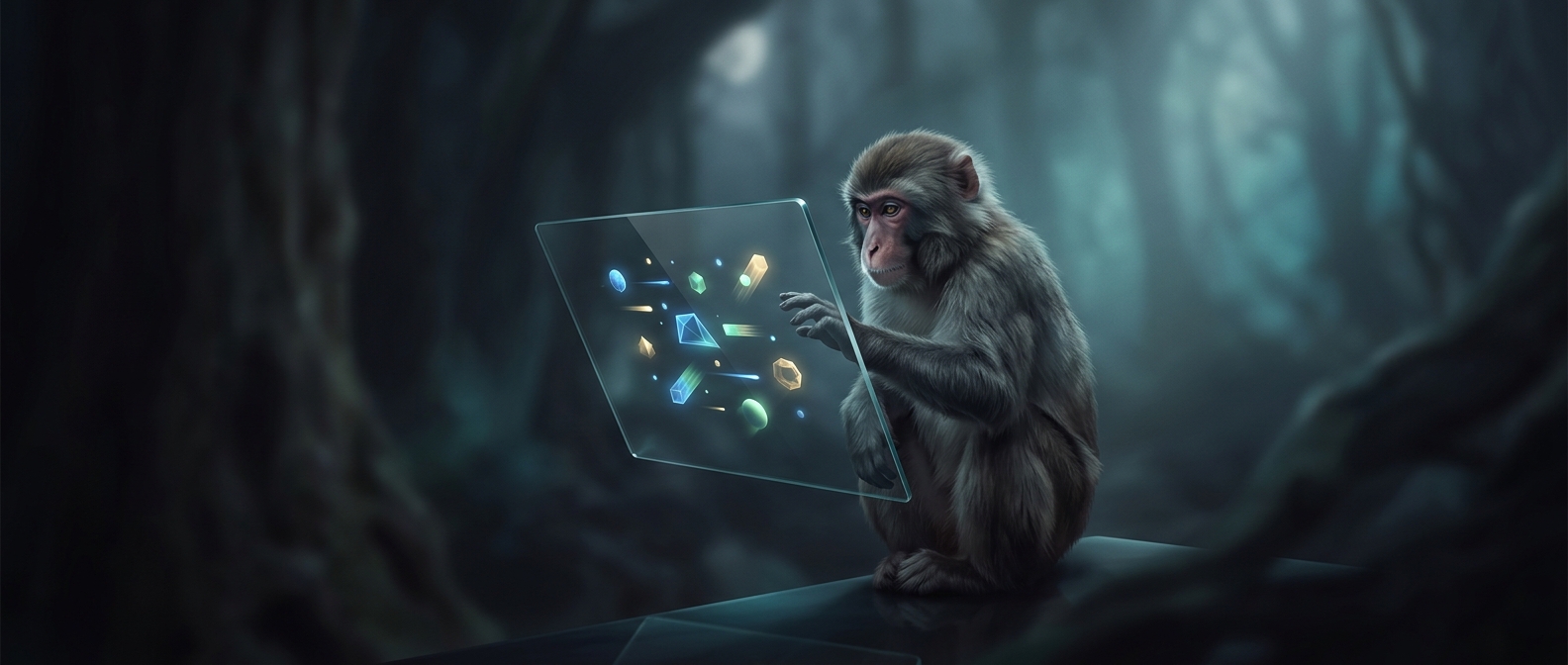
A shape sliding across a screen gives the visual system a small but important problem: where will it be next? Macaques can follow artificial shapes with their eyes and anticipate their movement, rather than merely reacting to each new position after it appears. Their predictions in these tasks can be about as accurate as those of human toddlers.
The ability relies on reading motion over time. As a shape changes position, the brain can estimate its direction and speed, then use that estimate to guide where the eyes look next. This is why a moving object can seem easy to track even when the eyes are not fixed on its exact current location: the visual system is continually catching up and looking ahead.
What the screen can—and can’t—show
The result matters because the shapes are artificial. Macaques do not need to recognize a familiar animal or object to track a path; they can respond to motion itself. That makes screen-based tests a useful way to study a basic visual skill shared across primates.
But matching toddlers’ accuracy on a tracking task does not mean macaques understand a screen as a window onto a real world, or that their broader reasoning is the same as a child’s. It shows something narrower and more concrete: when a simple shape moves, a macaque can use its recent path to anticipate where to look next.