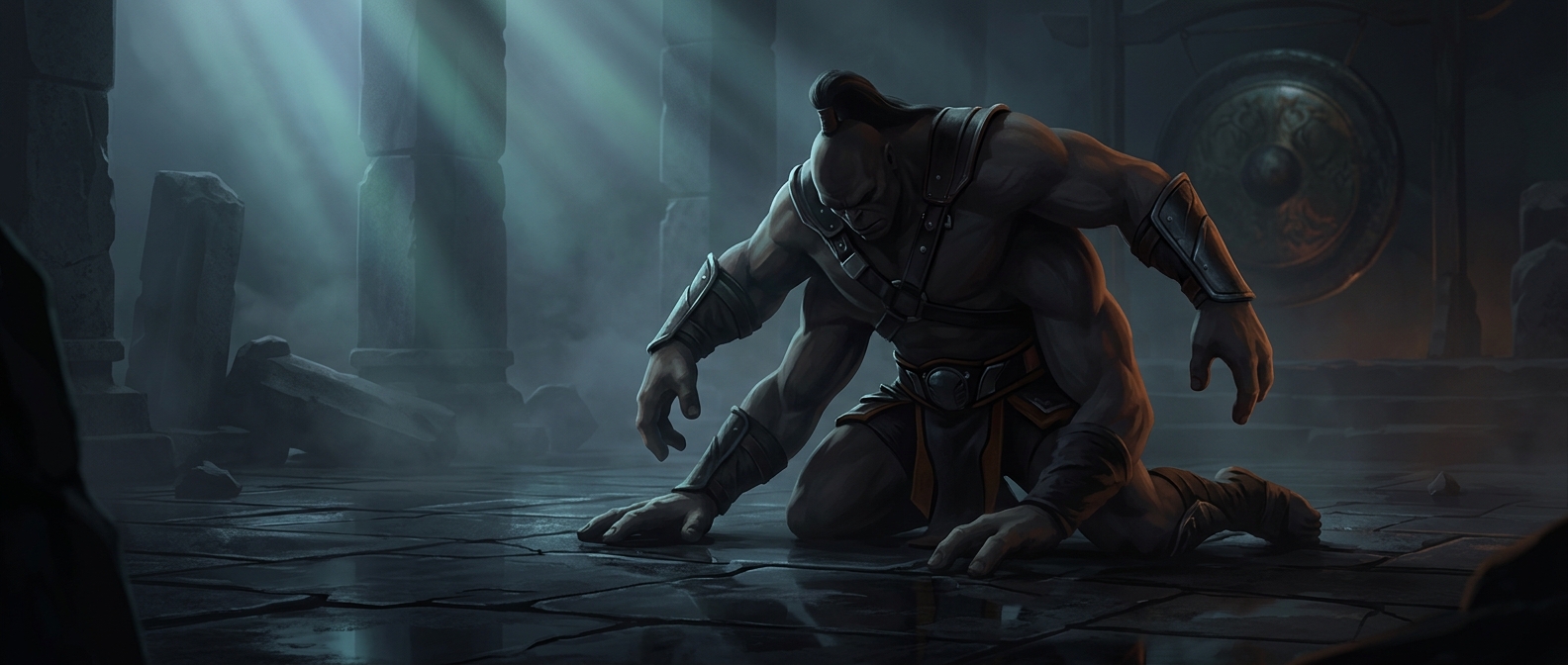
Why Goro’s Size Doesn’t Set the Rules
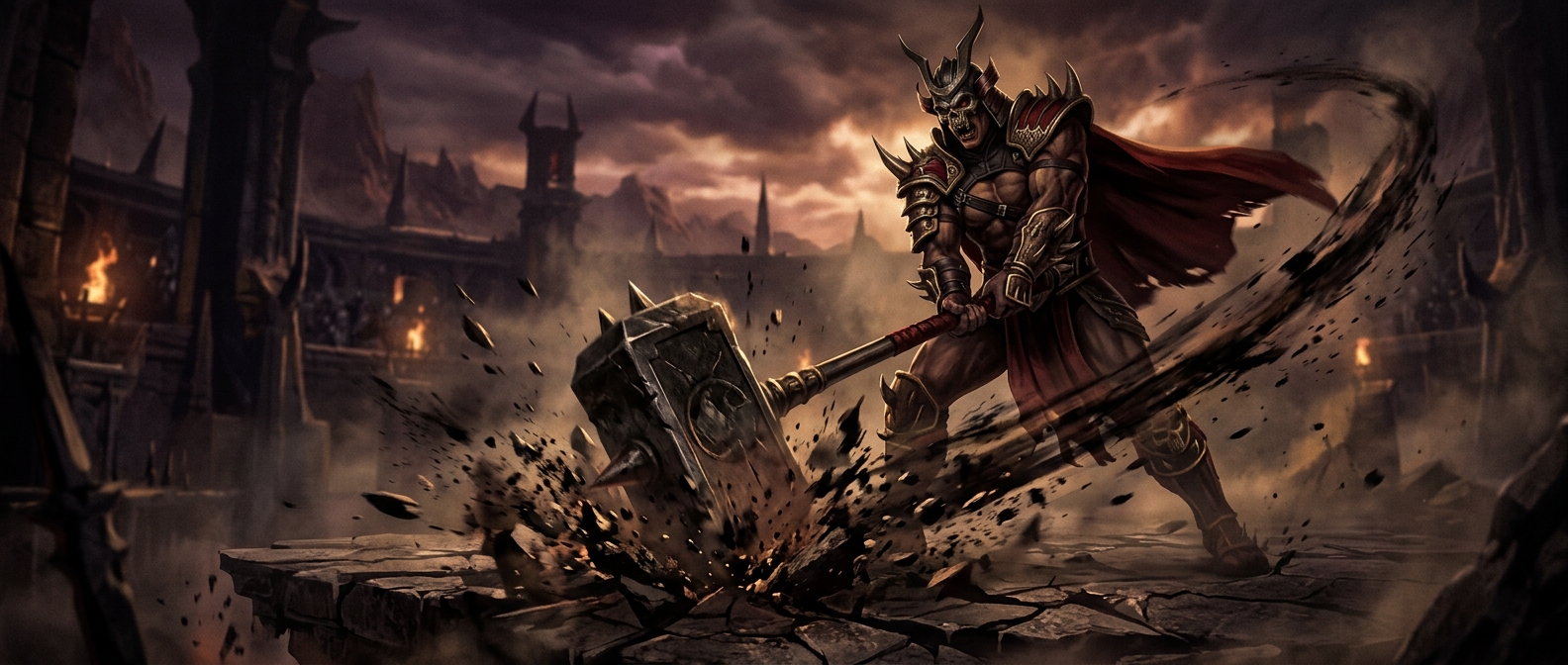
Goro is designed to look like a physical problem: a towering Shokan warrior with four arms, facing a human-sized fighter. But Mortal Kombat is governed by move timing and hit detection, not by how intimidating a character appears. A jump kick can connect while Goro is still preparing an attack or recovering from one, turning his imposing reach into a liability if he leaves an opening.
That contrast is part of the joke. The player does not need a special weapon or a complicated combo; a basic move can work because the game evaluates the kick by when and where it lands, not by the difference in body size.
A Boss Can Be Intimidating—and Learnable
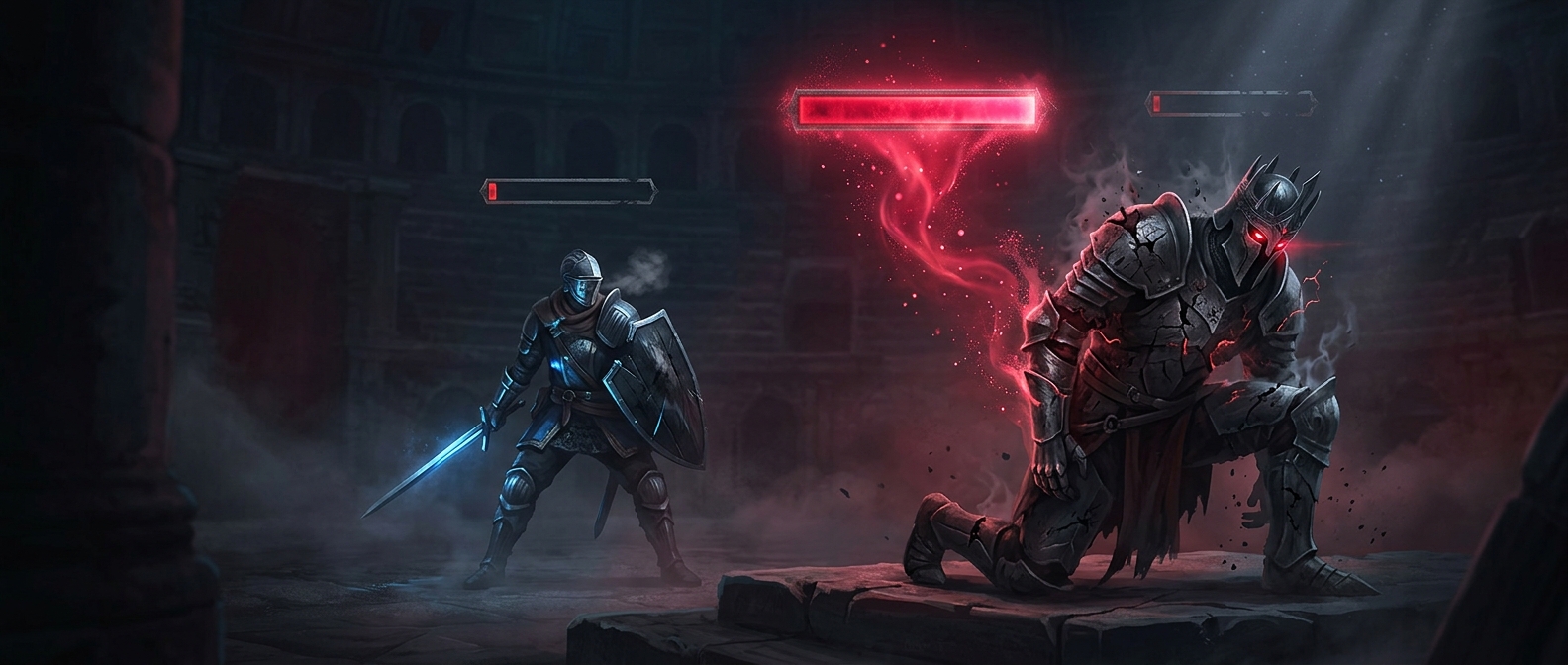
Goro’s role is to feel like a major obstacle, but he is still controlled by a limited set of attacks and responses. Once a player recognizes a safe moment to jump in, repeating a simple tactic can be more effective than trying to trade blows at close range, where Goro’s strength and extra arms make him seem most dangerous.
That is a familiar fighting-game tension: a boss’s spectacle invites the player to expect overwhelming power, while the underlying system rewards observation. The memorable image is not just a giant losing to a kick. It is the moment the game’s apparent mismatch gives way to a practical lesson: timing can matter more than size.