The Hard Part Is Making It Look Ordinary
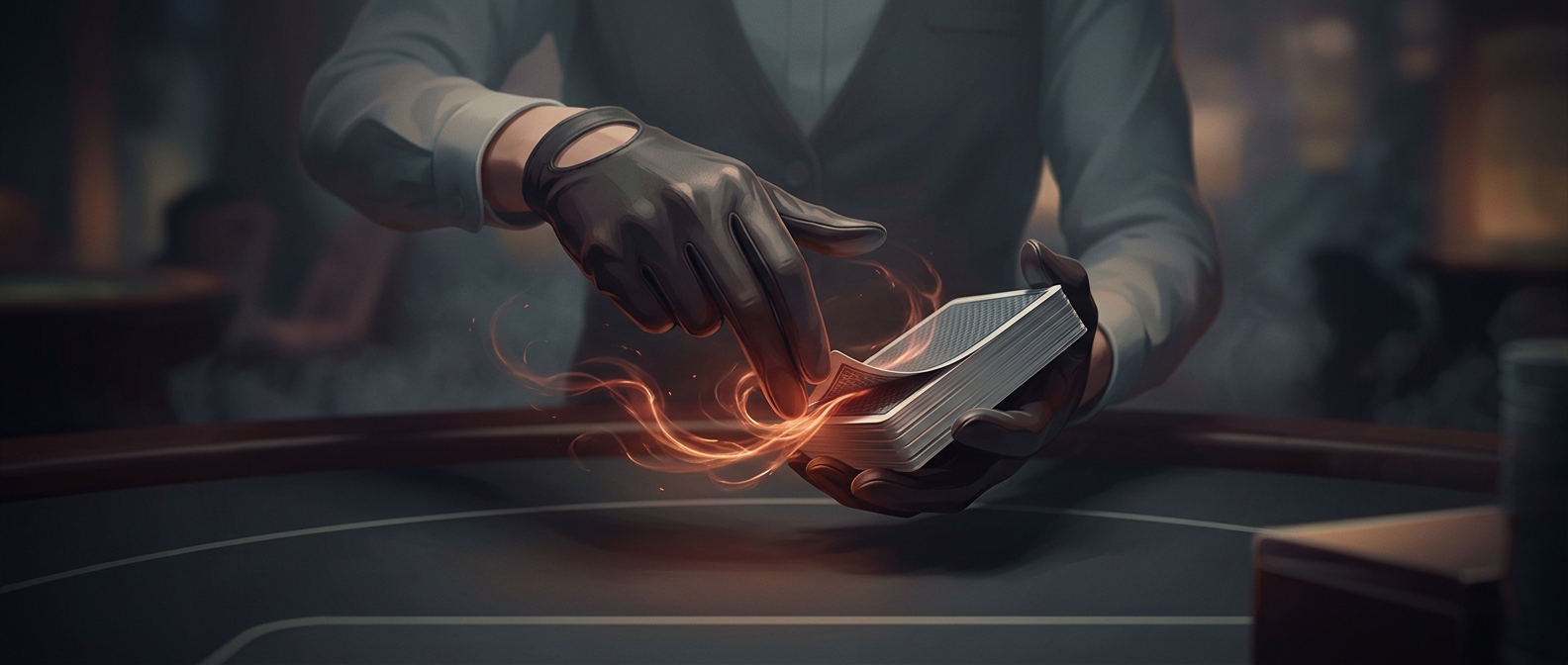
A bottom deal is not simply a matter of reaching beneath a deck. The dealer must make the card leave the pack while the remaining cards still look and behave as if nothing unusual happened. That means controlling two things at once: the hidden card’s movement and the visible shape of the deck.
The hand holding the cards helps cover the action, while the dealing hand takes the card in a motion meant to resemble every other deal. If the pack shifts, opens, or pauses noticeably, the movement can attract attention even when no one sees the card itself. Small differences in rhythm matter, too: a special-looking motion on the crucial deal can be more revealing than the card’s path.
Why Practice Alone Is Not Enough
The technique depends on coordination, but also on consistency. A cheat has to keep the deck steady, release the intended card cleanly, and preserve the same pace across repeated deals. The challenge grows when the game requires quick dealing or when the dealer must track who receives which card. A move that works only in a slow, carefully staged demonstration is much less useful at a real table.
That is why the bottom deal is associated with practiced card handling rather than brute speed. Its purpose is to make an exceptional action blend into a routine one. In a legitimate performance, the audience may know a deceptive move is coming; in a gambling setting, the same concealment is meant to hide that the deal has been manipulated. Either way, the telltale sign is often not a dramatic flourish but a tiny inconsistency in an otherwise ordinary motion.