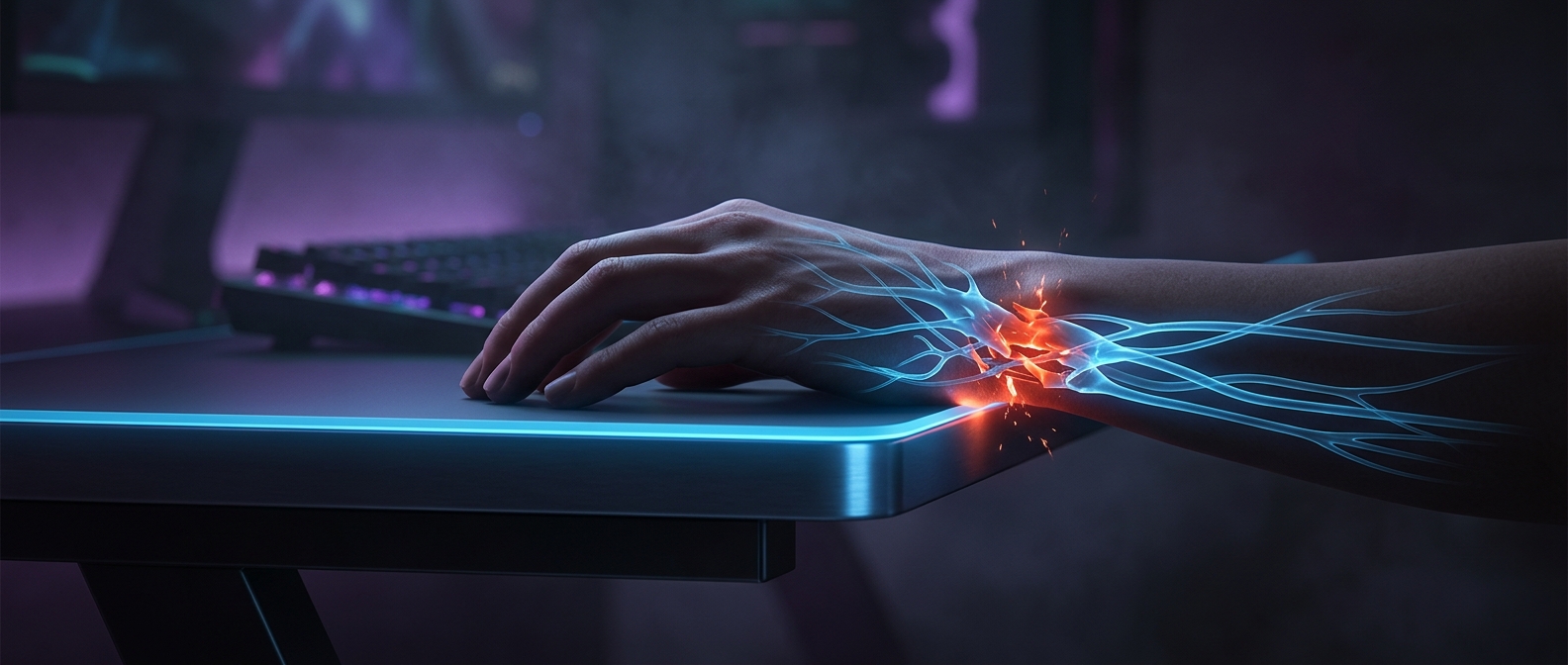
Why wrist angle matters at a desk
The carpal tunnel is a narrow passage in the wrist formed by bones and a tough band of tissue. The median nerve runs through it alongside tendons that move the fingers. When the wrist stays sharply bent, pressure inside the passage can rise, irritating the nerve. That can bring tingling, numbness, or pain into the thumb, index finger, middle finger, and part of the ring finger.
Small setup changes can reduce strain
A keyboard or mouse that sits too high, too far away, or at an awkward angle can keep the wrist bent while you work or play. Try bringing the input device close enough that your elbows can stay near your sides, and adjust its height so your wrists are roughly straight rather than cocked up, down, or sideways. Let your hands move from the forearms instead of planting the heel of each hand and reaching with the fingers.
Taking brief breaks and changing position also gives your hands a chance to move differently. A wrist rest may help during pauses, but pressing the wrist into a hard edge while typing or gaming can add pressure instead of relieving it.
Notice the pattern, not just the posture
Wrist position is one possible contributor, not the only explanation for hand symptoms. If numbness or pain keeps returning, wakes you at night, or affects your grip, consider getting medical advice rather than assuming the desk is the whole cause. The practical lesson is simple: a comfortable setup should let your hands work without holding the wrist at a sharp angle for long stretches.