How the Channel F made games replaceable
Before interchangeable game cartridges, many home consoles came with games built into the machine. To play something different, buyers often needed another console. Fairchild Semiconductor’s Channel F changed that arrangement when it launched in 1976: players could insert a separate cartridge to run a different game on the same hardware.
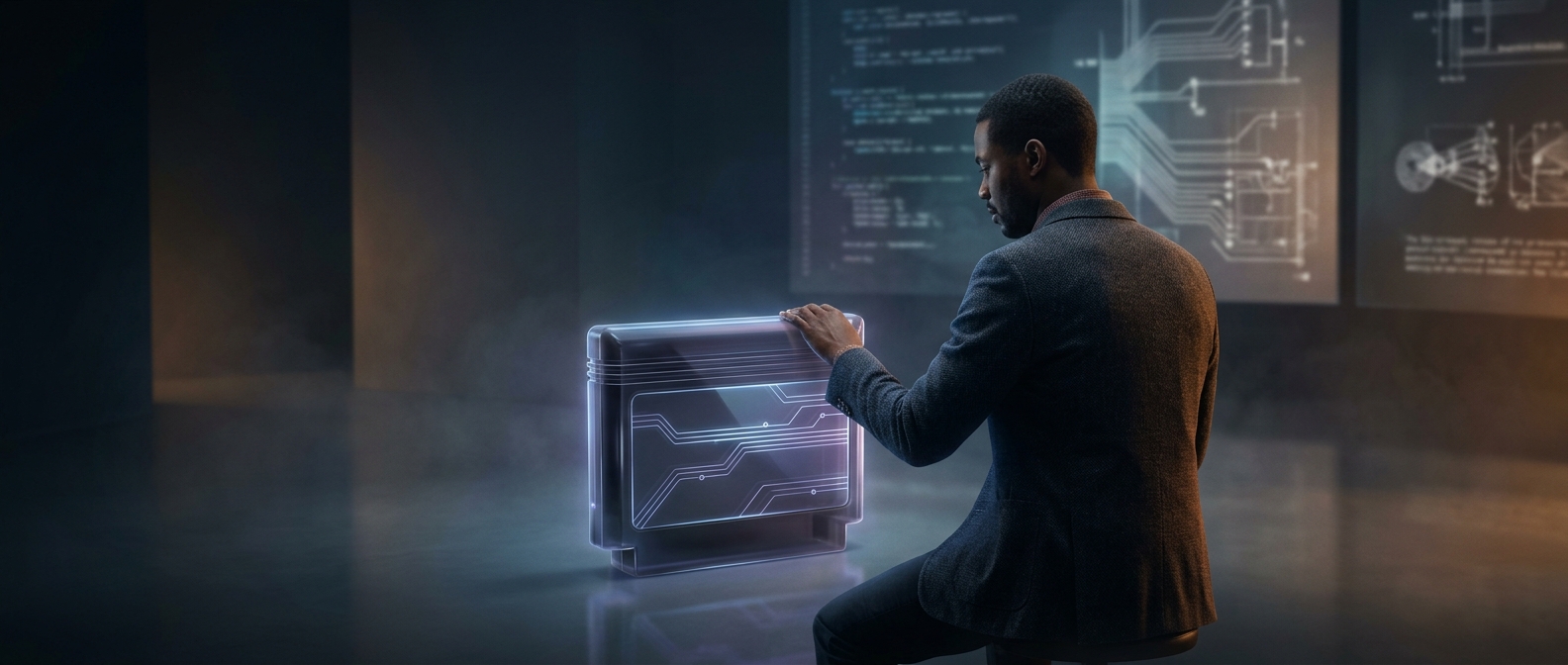
Jerry Lawson, Fairchild’s chief hardware engineer, led the team that developed the system. Each cartridge held read-only memory, or ROM—a chip containing game instructions that the console could read but not rewrite. The console’s processor ran those instructions, while the cartridge supplied the particular program and game data. Swapping cartridges therefore changed what the console did without replacing its core electronics.
A small format change with a lasting effect
The cartridge was more than a convenient container. It made a home console a platform for multiple separately sold games, including titles made after the machine itself had been purchased. That approach helped establish a familiar pattern: one console, a growing library of games, and a physical object that carries each game’s software.
The Channel F was developed by a team, not by Lawson alone; his contribution was leading the engineering work behind the system and its cartridge technology. Yet his role received little public recognition for years. The design’s legacy is easy to overlook precisely because the basic ritual it enabled—choose a cartridge, insert it, and play—became ordinary.