How a Rumble Pak Changed the Controller Race
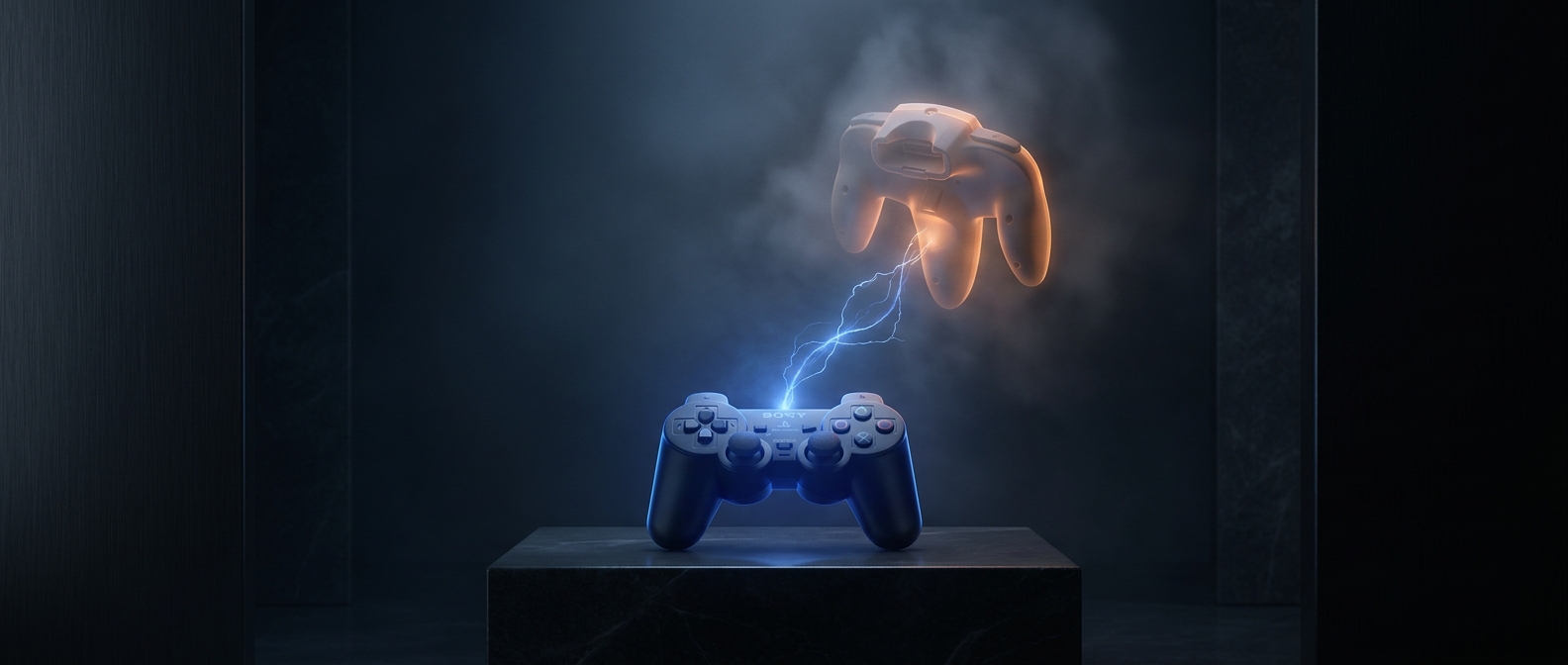
Nintendo made vibration a visible part of console gaming with the N64 Rumble Pak, an attachment that shook when a game sent it a signal. Sony’s answer was to build the effect into the PlayStation controller itself. That avoided requiring players to plug in an accessory and made vibration available as a normal part of a game’s control design.
The resulting DualShock paired that vibration with two analog sticks. Sony had already introduced a PlayStation controller with analog sticks; the DualShock brought the sticks and rumble together in one widely adopted design.
Two Motors, Two Kinds of Feedback
Inside each grip was a small electric motor with an off-center weight. As the weight spun, it made the controller vibrate. The two motors used different weights, so a game could create a stronger or lighter sensation by activating one or both.
That gave developers a way to make events felt as well as seen. A collision, explosion, or rough stretch of road could produce a distinct jolt, while the player kept both hands on the controls. Vibration did not tell players exactly what had happened; it added a physical cue they could interpret alongside the image and sound.
A Design That Became a Baseline
Integrating the motors made rumble part of the controller rather than an optional add-on. It also gave game makers a standard feature they could plan around, helping vibration spread across later console controllers. The lasting change was simple: a game could reach the player through the controller’s movement, not just through what appeared on screen.