Without signals, the intersection becomes a negotiation
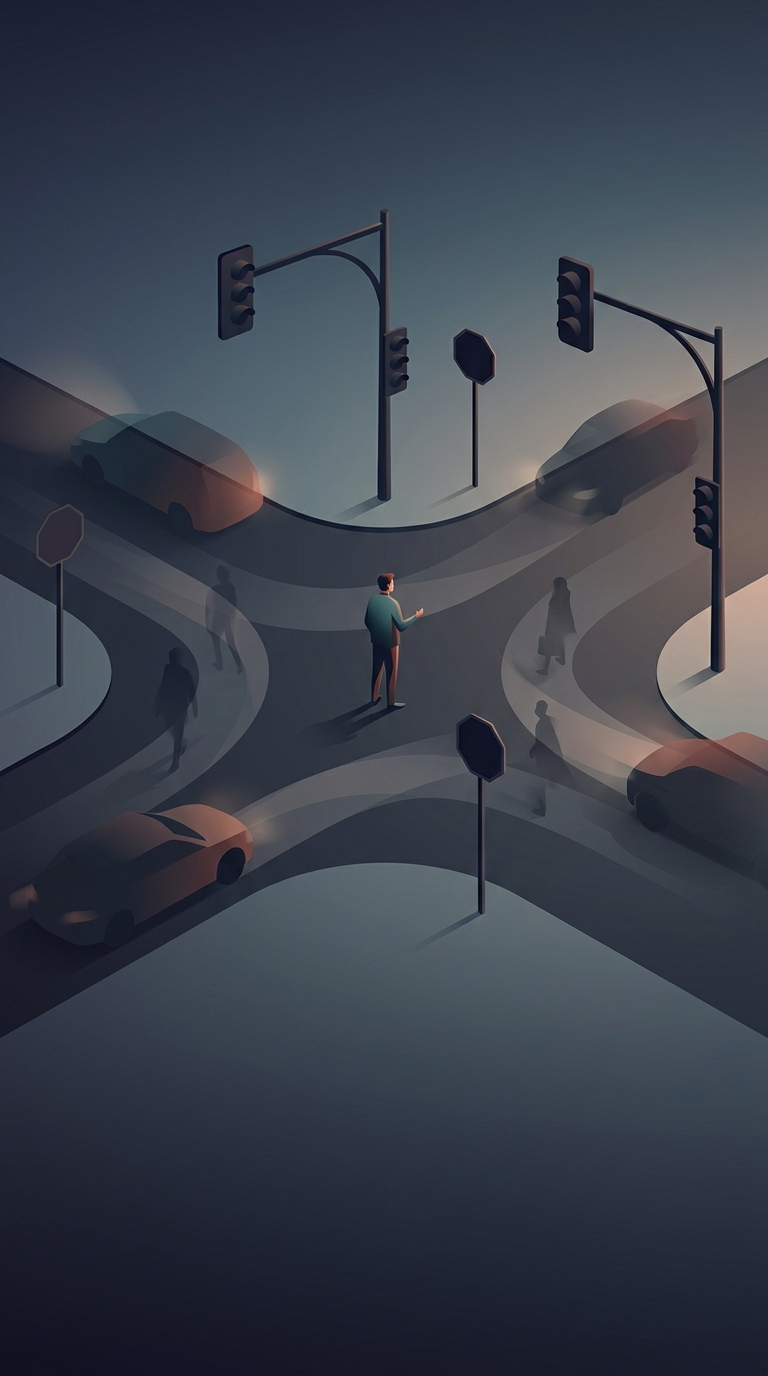
At a deliberately redesigned, low-speed intersection, removing lights, stop signs, and painted lane lines takes away the obvious instructions that tell each person when to move and where to go. Drivers can no longer rely on a green light or a marked lane to settle every encounter. They have to read the situation: Is someone approaching from the right? Is a person about to cross? Has another driver slowed to let them through?
That uncertainty can make people more cautious. Drivers tend to reduce speed when the space no longer feels like a road that guarantees them priority. Eye contact, pauses, and small adjustments—braking, edging forward, or yielding—become part of how people coordinate. The goal is not confusion for its own sake, but a street that encourages attention and shared responsibility rather than fast, automatic movement.
The design has to make caution possible
This approach works only when the physical setting supports it. A compact intersection, short crossing distances, clear sightlines, and low vehicle speeds give people time to notice one another and respond. If traffic is fast or heavy, or if the layout is hard to read, removing instructions can leave users unsure rather than attentive.
Nor does taking away signs erase the rules of the road. Legal duties to yield and protect pedestrians still apply, and some people—especially those who rely on clear visual or tactile cues—may need distinct guidance. The essential change is that the street itself, not just a signal or painted line, must communicate how cautiously to move. At its best, the result is an intersection where drivers slow enough to negotiate passage instead of treating a green light as permission to rush.