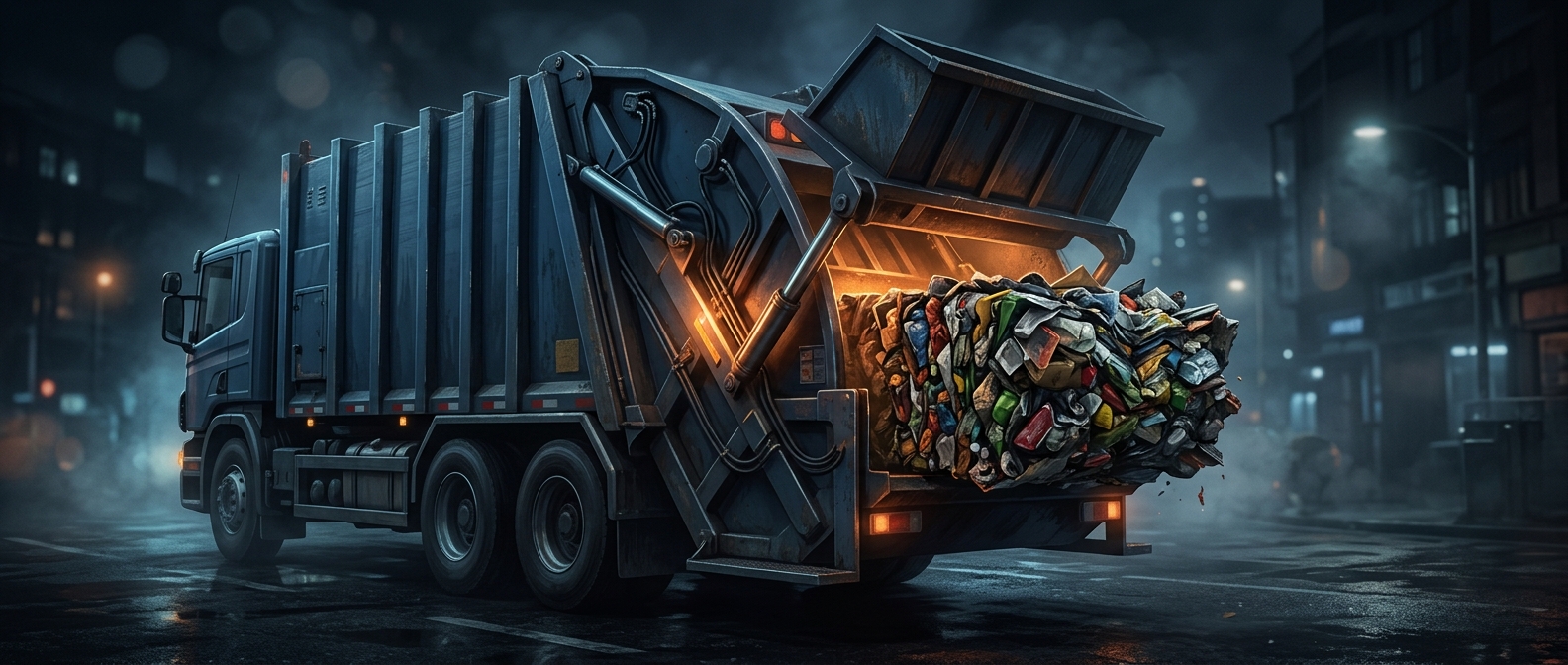
A crushed cell can make its own heat
A lithium-ion battery stores energy by moving charged particles between layers inside each cell. If a compactor crushes or punctures those layers, they can touch and create an internal short circuit. The resulting current heats the cell; if it gets hot enough, the battery can enter thermal runaway—a self-accelerating reaction in which heat causes further damage and more heat.
The battery may vent hot gases and ignite. Because a truck’s load is compressed, the damaged cell can be buried among paper, plastic, and other combustible waste. Those materials give the fire fuel, while the tight, obstructed space makes the battery hard to spot and reach.
Why the truck is a difficult place to fight it
Stopping the compactor does not necessarily stop a battery that is already overheating. Nor does putting out visible flames guarantee the cells have cooled: a damaged battery can continue reacting or flare up again. Crews may need to unload the waste in a controlled location so they can expose the burning material and keep cooling it.
That response can take a collection truck out of service and create a hazard beyond the vehicle itself. The practical prevention point is simple: batteries should go to an appropriate battery collection or recycling program, not into household trash. A small battery can be difficult to identify once buried in a load—but after crushing, it can turn an ordinary pickup into a fire scene.