A heat-pump experiment takes an unexpected turn
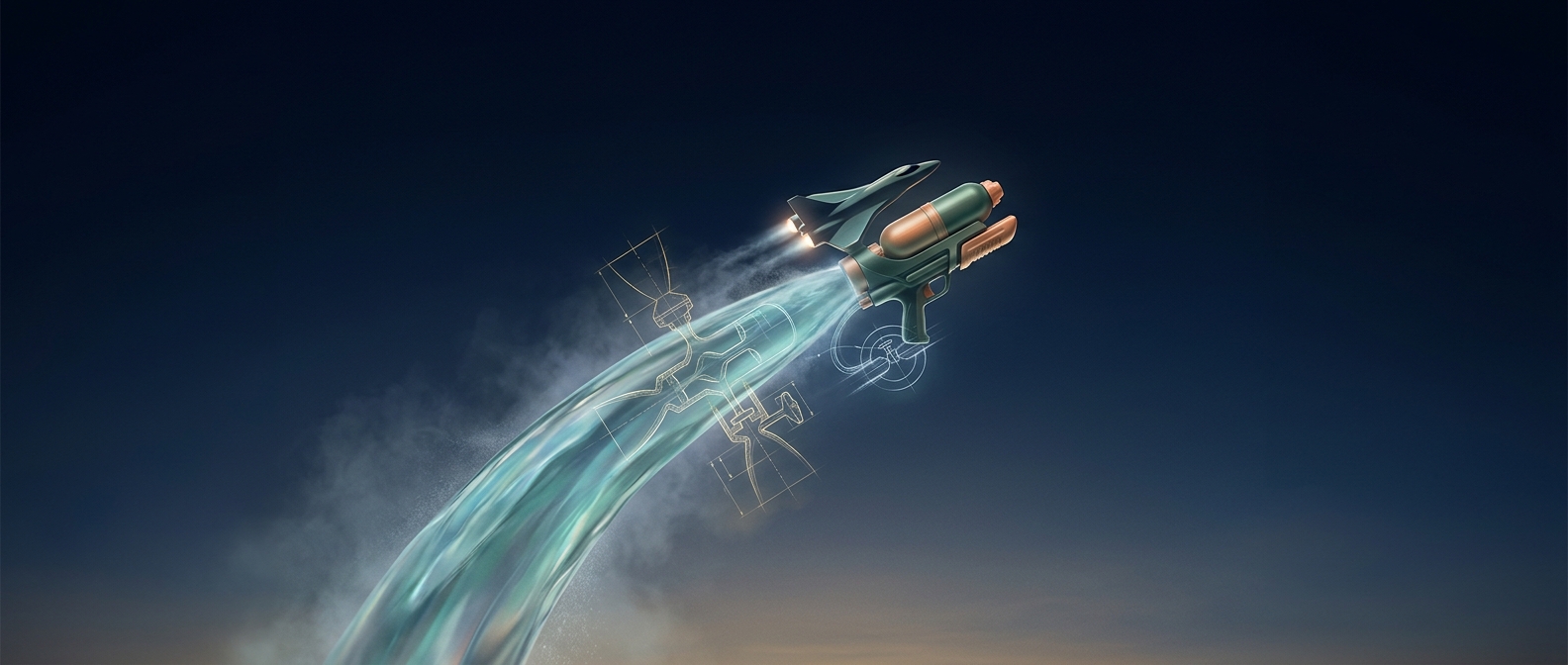
In the early 1980s, aerospace engineer Lonnie Johnson was working on technology for NASA’s Galileo mission to Jupiter when an experiment at home produced a forceful stream of water. Johnson had been exploring a heat pump—a device that moves heat from one place to another—and testing a design that used water. The water shot across the room, suggesting that the same pressurized flow could make a far more powerful squirt gun.
Turning pressure into play
The key was not simply storing more water. Johnson’s design used air pressure to push water out in a sustained stream. In an ordinary squirt gun, a trigger-operated pump sends out a small amount with each squeeze. A pressurized reservoir can instead drive water through the nozzle continuously while the trigger is held, giving the stream greater reach and making the toy feel more like a tiny hose.
That effect depended on fitting the parts together: a reservoir to hold water, a way to build pressure, and a nozzle that directed the escaping stream. Johnson’s experiment supplied the spark, but turning it into a dependable toy meant adapting the idea into a product that could be filled, pressurized, and operated by hand.
From a laboratory accident to a familiar toy
The invention became the Super Soaker, a name that made its central difference easy to understand: it could send water much farther than the small squirt guns many children already knew. Johnson’s path from aerospace engineering to toy design was not a change in the underlying skill. Both jobs involved using pressure and fluid flow to make a device perform as intended. In this case, a test of how to move heat helped reveal a way to move water—and turned an engineering problem into backyard play.