A Puzzle Looked Like a Place to Hide a Message
A crossword is built from intersecting answers: one word crosses another, and each clue points toward a solution. That structure makes a puzzle more than a page of entertainment. It can also look like a ready-made container for concealed text—especially to officials scanning newspapers for information that might aid an enemy.
During wartime, a newspaper could reach many readers quickly, while a printed message might pass through ordinary channels without looking like a dispatch. Officials feared that someone could exploit the puzzle’s clues or filled-in answers to disguise instructions. The concern was about the format’s potential use, not proof that ordinary solvers were exchanging secret plans.
Censorship Reached Into the Games Page
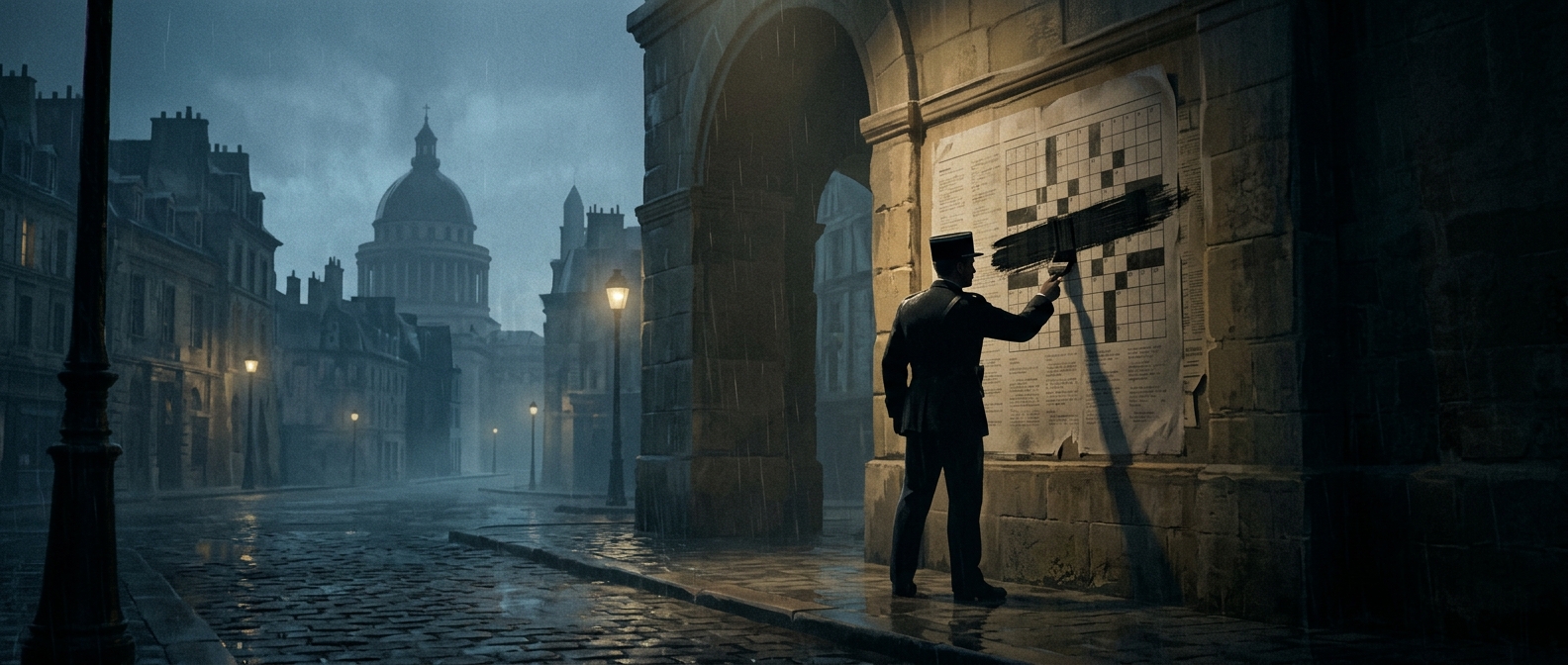
Temporarily banning crosswords shows how broadly wartime censorship could be applied. A puzzle did not need to name a battlefield or discuss military plans to attract scrutiny; officials could treat any widely circulated material as a possible security risk if it offered a way to conceal meaning.
The measure also exposed a tension familiar to newspaper readers: the same printed page could be harmless recreation for most people and, in a censor’s eyes, a possible channel for a hidden message. A pastime was swept up in the effort to control what could travel through print.