The Pyraminx turned a tetrahedron into a puzzle
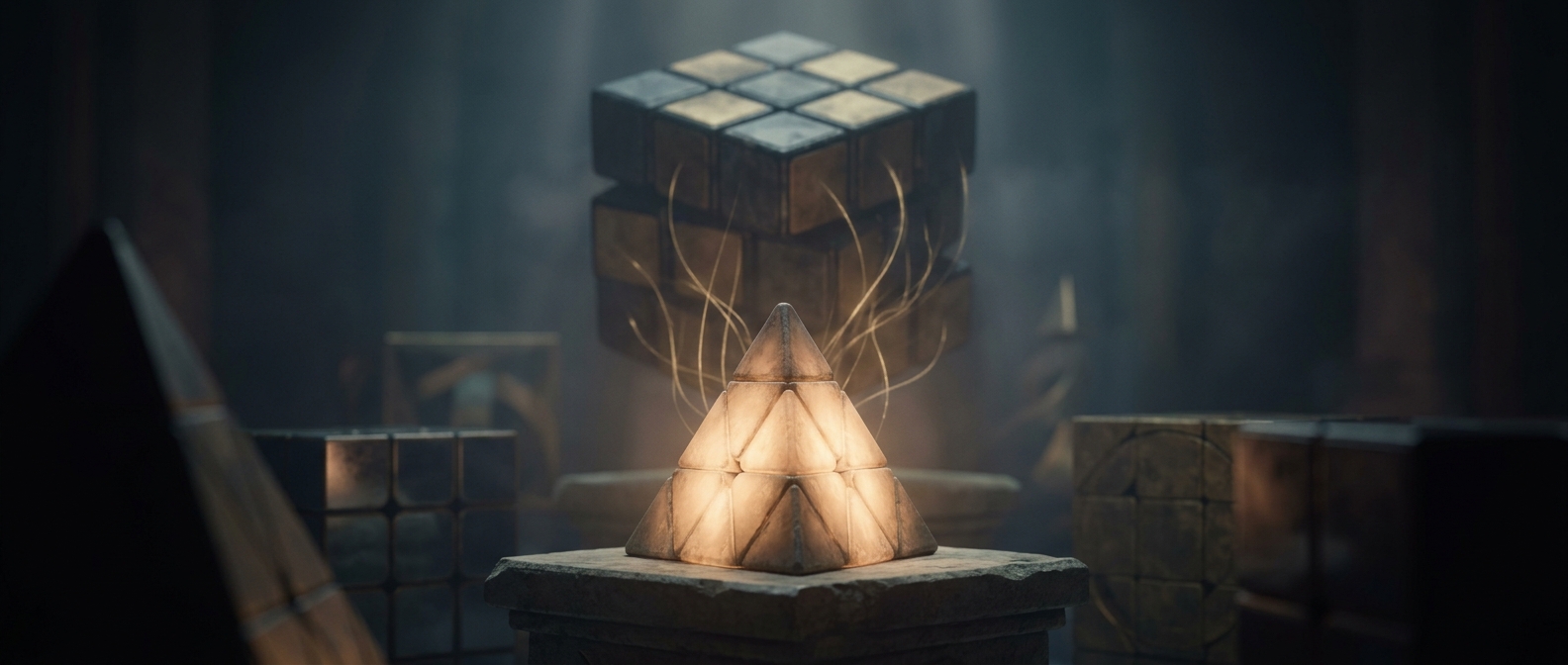
The triangular twisty puzzle is the Pyraminx, designed by German inventor Uwe Meffert. Its shape is a tetrahedron—a solid with four triangular faces—rather than a cube. Meffert patented the design before the Rubik’s Cube became a worldwide sensation, but the earlier patent did not make his puzzle equally famous.
Why its turns work differently
Each face of the Pyraminx can rotate, scrambling the colored pieces. The small tips at the corners turn independently, while the larger face turns rearrange the puzzle’s edges and other pieces. That gives the puzzle a distinctive visual rhythm: a turn slices across a triangular face instead of rotating a square layer around a cube.
The tips can make the puzzle look more complicated than it is. They move only a small part of the puzzle, so solving them is separate from restoring the arrangement of the larger pieces. The main challenge is to plan turns that put pieces where they belong without undoing progress elsewhere—a familiar twisty-puzzle problem expressed in a different geometry.
A patent is not the same as a phenomenon
A patent records an invention; it does not guarantee that stores, manufacturers, or the public will take notice. The Rubik’s Cube later benefited from a wave of attention that made its shape and challenge instantly recognizable. The Pyraminx remained a distinct branch of the same puzzle idea: a much older-looking triangular silhouette, built around the satisfying logic of scrambling and restoring pieces by turning the whole object.