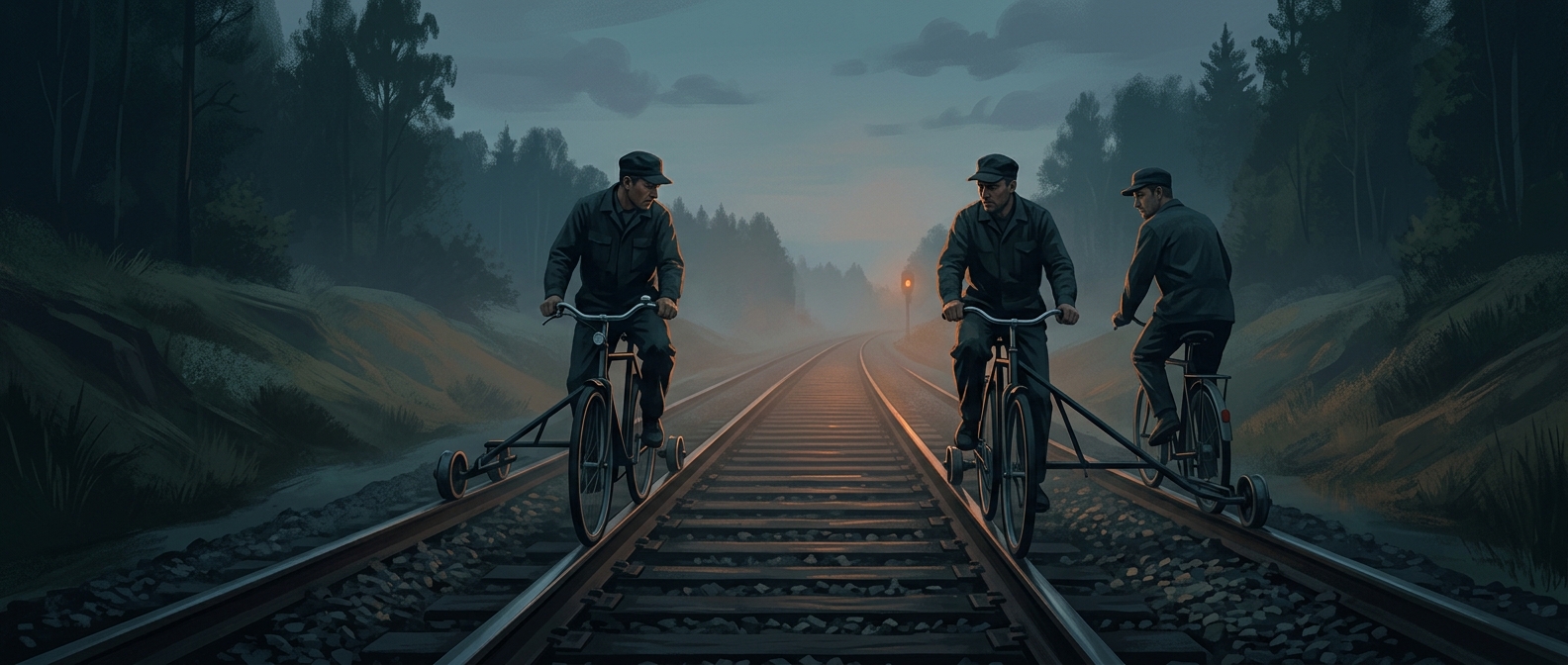
A bicycle that could not leave its lane
A rail bicycle used the railway itself as its guideway. Its wheels rode on the rails, and flanges—raised rims at the wheel edges—helped keep it aligned. Pedaling turned a long inspection route into a ride rather than a walk, letting workers move between points where they needed to examine the track or nearby equipment.
That arrangement was efficient but rigid. On an ordinary bicycle, a rider can steer around an obstacle or pull onto a shoulder. On rails, the bicycle follows the track, and getting clear may mean lifting it off. The route that made travel quick also limited the rider’s options.
The track had to be treated as a train route
“Active” railway tracks were not simply a convenient path: trains used them. An inspection bicycle therefore could not safely be treated like a cyclist sharing a road. Its use depended on the railway controlling access to the stretch being examined; a train arriving on the same track would leave the rider very little room to escape.
The tradeoff was plain: pedal power helped inspectors cover distance, but the railway’s own traffic rules and hazards governed the trip. The bicycle made the journey along the rails easier—not the rails any less a train’s territory.