Why a small crash takes over a quiet room
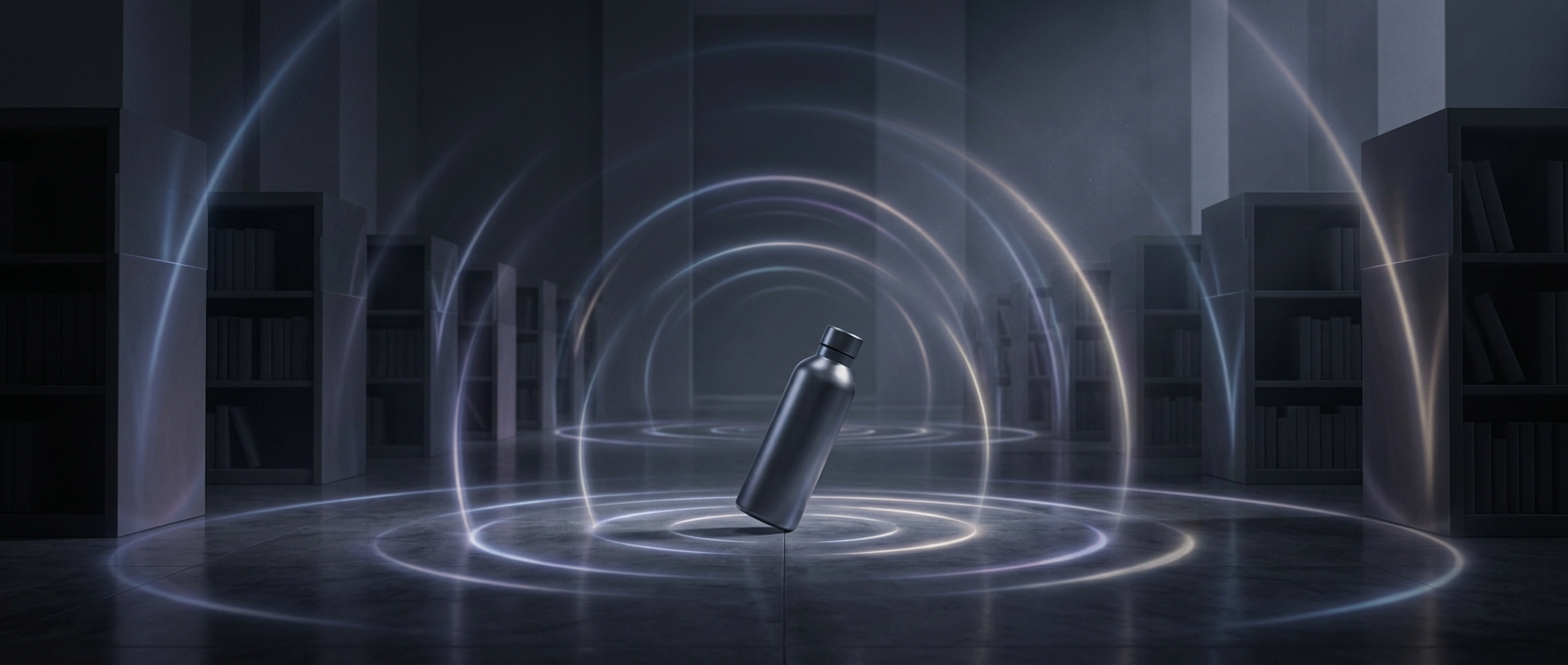
A bottle hitting the floor produces a sudden burst of sound: a sharp impact followed by rattling, bouncing, or rolling. In a busy kitchen, other sounds compete with that burst. In a quiet room, there is little to mask it, so its abrupt onset stands out—and the same physical impact can seem much more dramatic.
Your ears notice change, not just volume
Hearing is not a simple meter that reports sound in isolation. The brain continually sorts incoming sound against the surrounding acoustic scene. A crash that rises far above a low background is an obvious event; amid conversation, running water, and clattering dishes, some of its details can blend into the noise.
That contrast also captures attention. A sudden, unfamiliar impact signals that something has changed, prompting the brain to focus on it before you have even identified the source. The sound may feel enormous partly because it has become the room’s main event, not because the bottle produced more sound than it would have in daylight.
Quiet reveals the sound’s details
With fewer competing noises, you may hear the bottle’s impact, its smaller rebounds, and the final scrape or wobble separately. Those details can make the episode seem longer and more vivid. The room’s shape and surfaces still affect how the sound carries, but quiet itself does not physically amplify the crash.
The practical surprise is that a familiar object can command attention simply by arriving against a nearly silent background: one clink, followed by the little sounds you would never have noticed in a busy room.