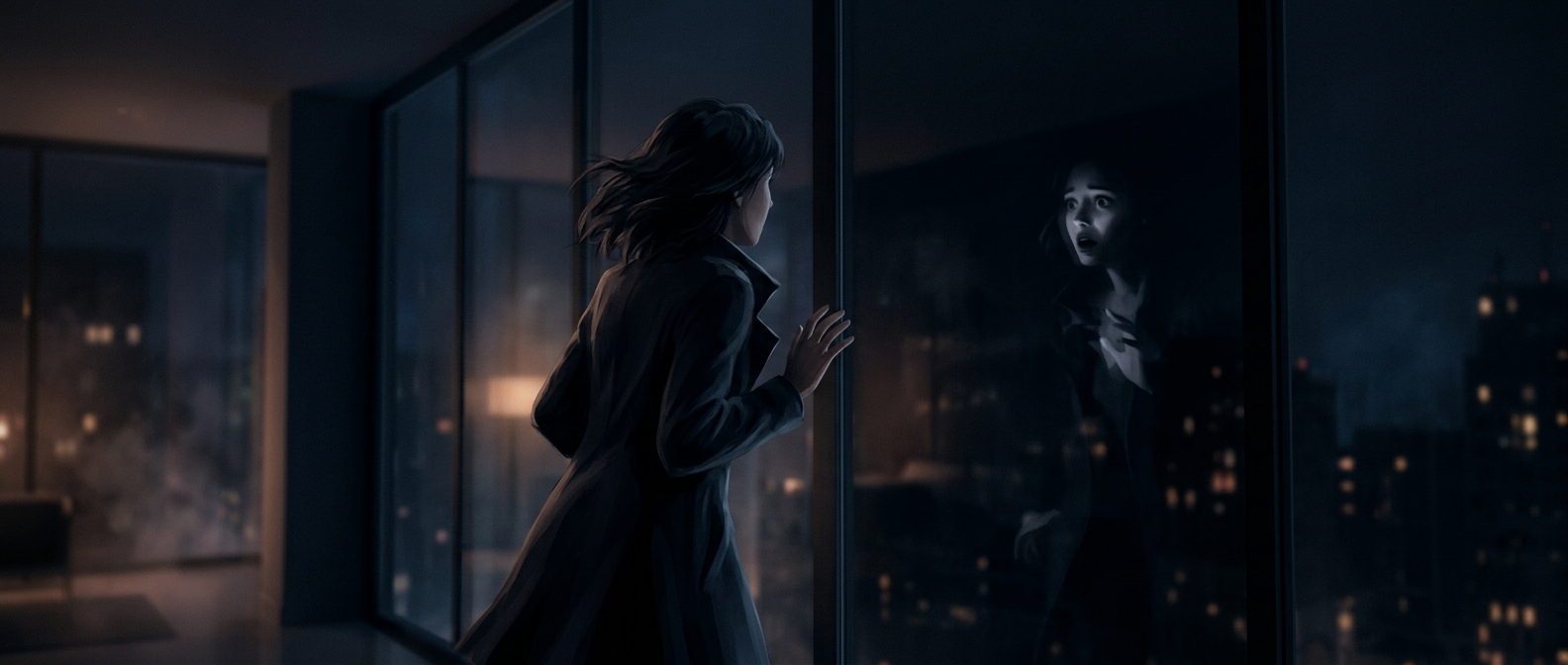
Why a familiar face becomes uncertain
In bright light, the eyes deliver enough detail to distinguish features such as the edges of the nose, the shape of the mouth, and the spaces between them. In dim light, that information is weaker. The visual system is especially good at detecting broad shapes in low illumination, but fine detail and color become harder to judge.
A face is still recognizable, but its details are less secure. The brain uses context and expectations to interpret incomplete visual signals; when the evidence is ambiguous, its best guess can shift from moment to moment. A shadow may seem to deepen, or a feature may appear to move, even though the reflected face has not changed.
Why staring can intensify the effect
Holding your gaze on one spot does not give the visual system a perfectly steady picture. Tiny eye movements continue, and dim, low-contrast details can fade or fluctuate in perception. When you keep looking for a long time, those small changes can make the face seem to alter or lose its familiar arrangement.
That mismatch is especially jarring because the image is plainly your own reflection, yet it does not look quite right. The startle comes from uncertainty in perception, not from the mirror changing: the brain recognizes the face while struggling to settle on what its shadowed details mean. Turning on a light restores the missing visual information, giving the brain a clearer match.